★★★★★
“job well done good communication throughout the job very clean and tiddy when the job is finish flat roof replacement many thanks.”
Sumit Bal
West Kirby is a town of bungalows, and a storm treats a low roof differently. Here is what the wind and a cloudburst do to eaves, verges and box gutters, and how we make it safe and put it right.
A bungalow has no upper storey to shelter its roof and no height to hide its faults. The whole covering sits low and close to the wind, and the edges that matter most in a gale, the eaves and the verges, are nearer to the ground than on any house. That is the shape of most of West Kirby, and it is why storm damage here tends to begin at the perimeter rather than in the middle of a slope.
The other half of the picture is water. Many bungalows and chalet bungalows here have a dormer built into the slope, and the channel that carries rain past it, often a box gutter beside the chimney, takes the whole slope above in one narrow run. In a cloudburst that channel is asked to do far more than it was laid to do, and it is the first place a storm turns into a wet ceiling.
Low roofs make people bold. The eaves look reachable and a ladder looks sensible. It is still a wet, wind-loosened edge, and the right order of events is the one set out on our storm damage roof repairs page: make the roof safe from proper access, write down what failed, then repair in dry weather.
The components a gale usually finds first, and the repairs that follow them.
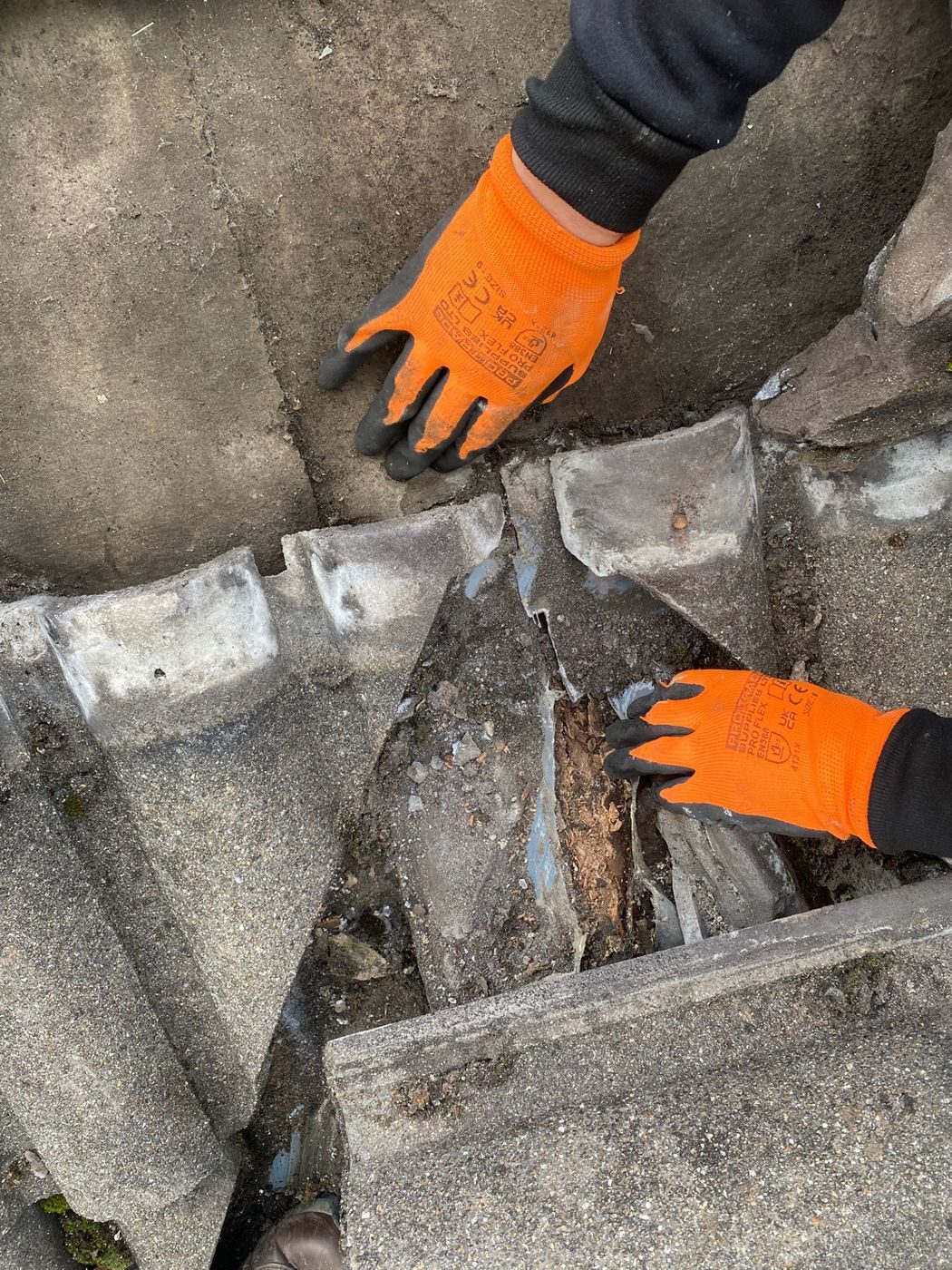
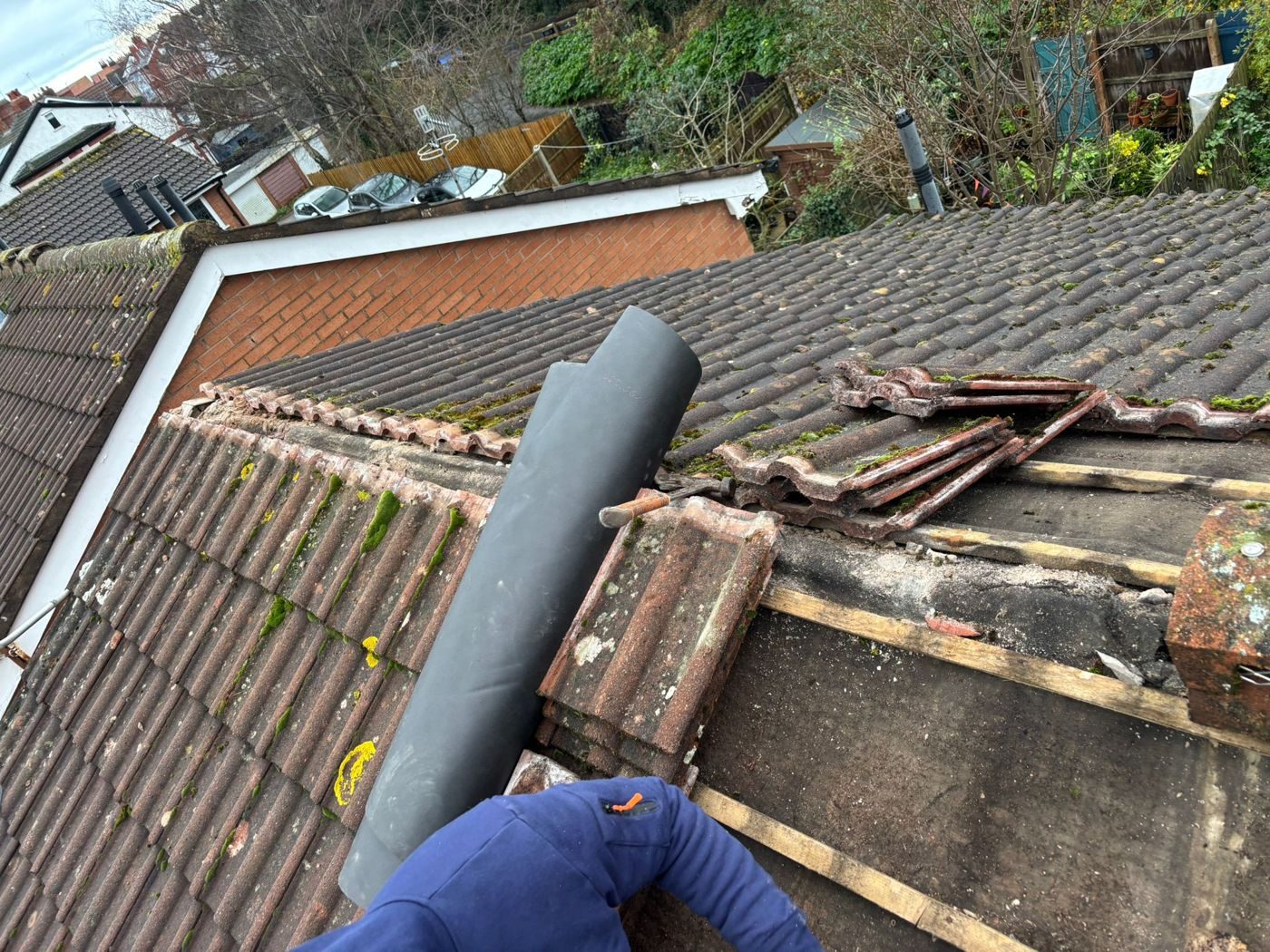
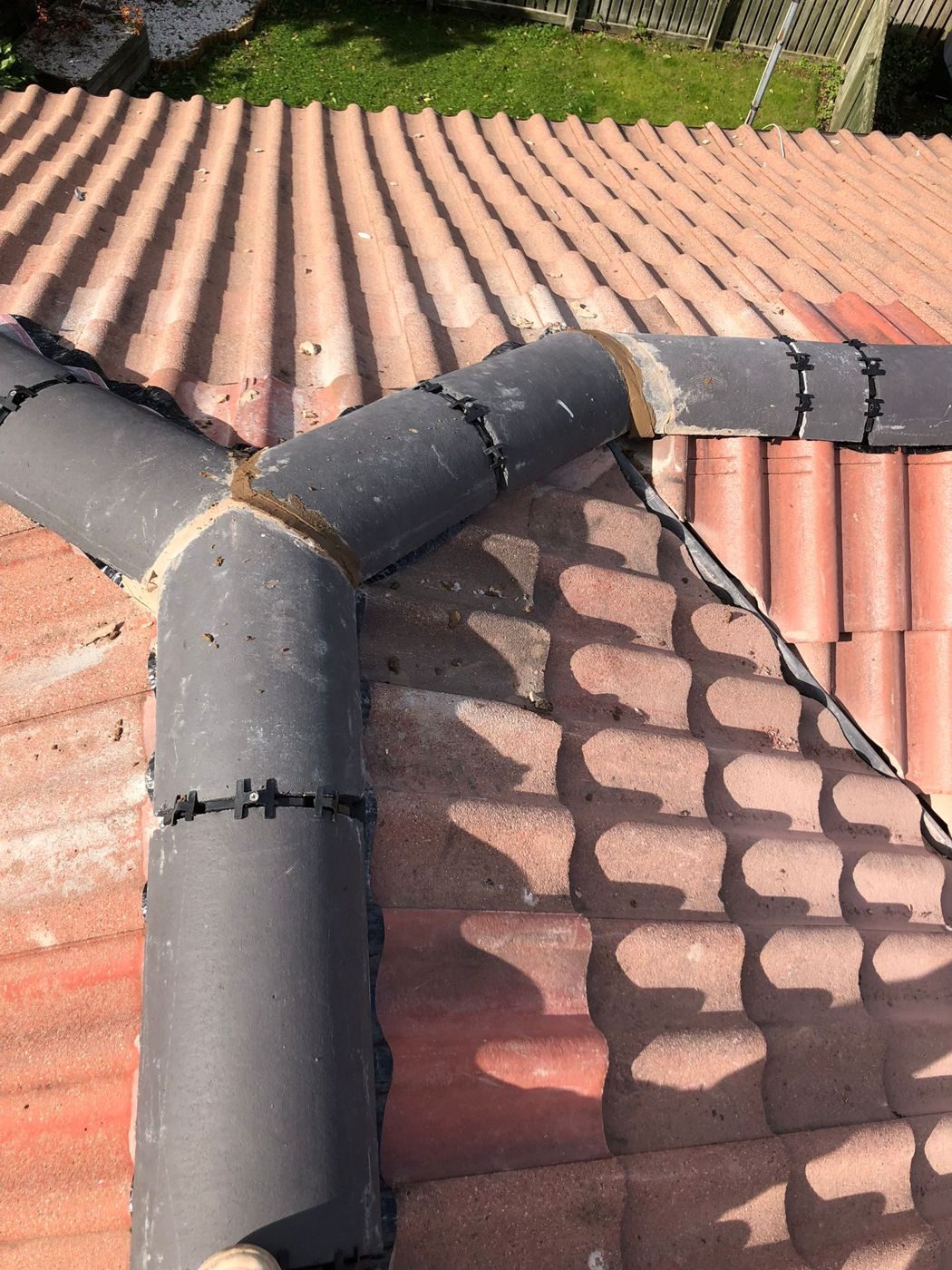
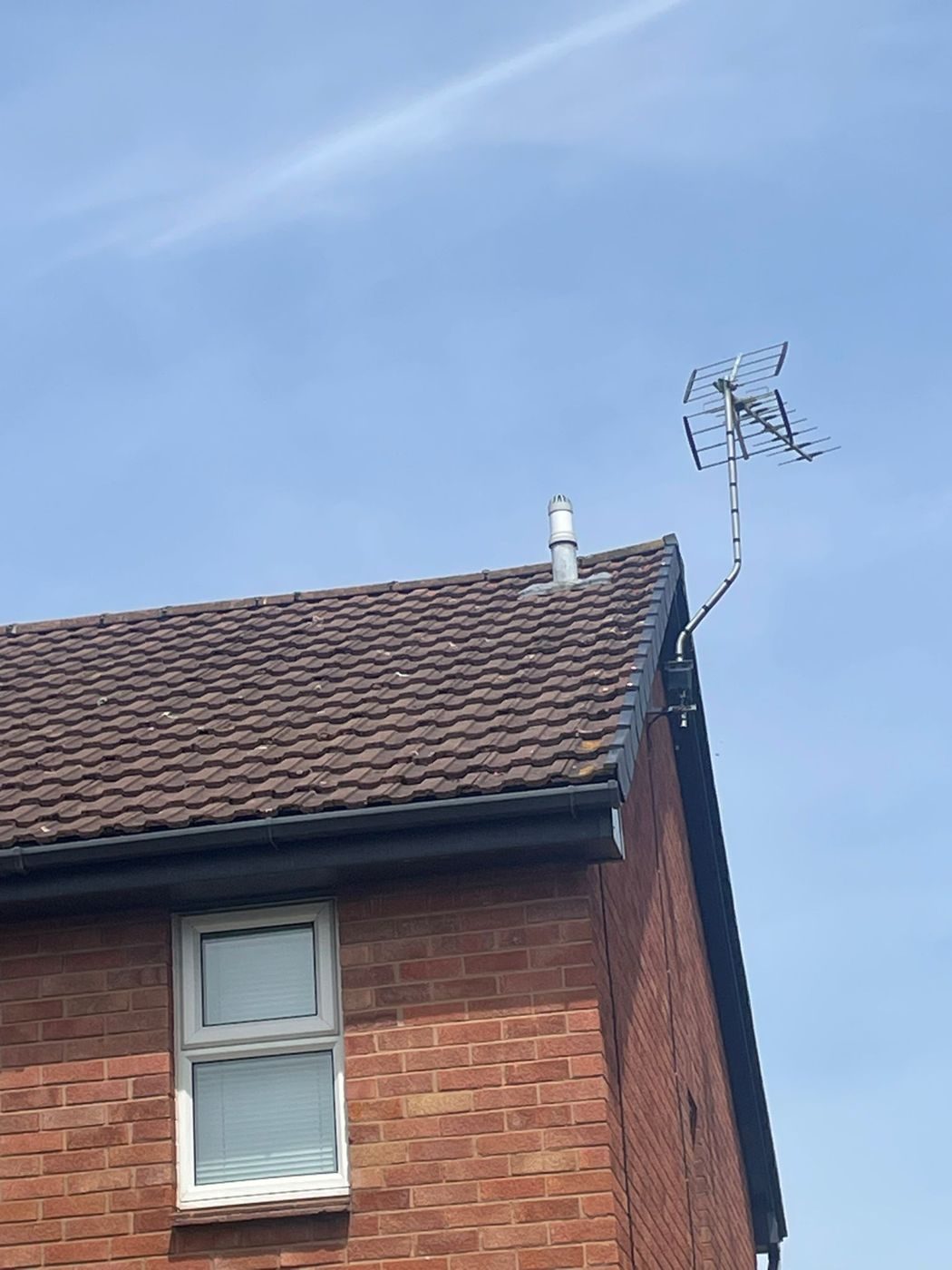
Photographs of our own work. None of them is a storm job — they show the parts that fail and how they are put right. More on the storm damage hub.
Wind does not need to be dramatic to hurt a single-storey roof. Because the slope is short, air that has run across open ground meets the eaves and the gable edge almost at once, and it gets underneath. Suction lifts the first course above the gutter, works at the verge mortar and the end tiles, and loosens the cloaking at the apex. Those are the parts that go first, and on a bungalow they are all within a few courses of each other.
Then comes the rain. A box gutter or secret gutter beside a stack is a small channel with a lot to carry: the slope above, the dormer roof and the chimney back gutter often all discharge into it together. If it has silted up with leaf and moss, or was laid with too little fall, a heavy downpour does not run away. It stands, tops the upstand and finds the laps, and the water arrives in the ceiling near the chimney breast within minutes because the roof void is so shallow.
This is why we look at the eaves, the verge and the channel beside the stack as one inspection. A blown verge lets wind in under the tiles while a full box gutter lets water in beside them, and the two can arrive in the same night. Sorting out only the one you can see leaves the other waiting for the next front.
A bungalow is easier to read from the ground than a house, and a phone zoomed in from the lawn or the drive will show more than you expect. Stand back, sight along the slope rather than straight at it, and look at the edges before the middle. Do not climb to get a better angle; a clear photograph from the ground is exactly what we ask for when you ring.
Inside, the shallow void means a stain appears close to the fault and quickly. Check the ceiling at the head of any dormer, beside the chimney breast and along the line where a sloping ceiling meets the flat one. Photograph anything you find before it is wiped away or moved, because that evidence stops existing once the make-safe goes on.
Getting to a bungalow roof is usually simpler than reaching a two-storey one, and we are glad to say so. On many plots a mobile tower or a single lift on firm ground will serve the job, and scaffolding is quoted separately only where the work really needs it. We would rather not quote for access nobody requires. The condition is that the platform reaches everything involved: if the box gutter, the dormer cheek or the far side of the stack is part of the repair, a tower in front of the chimney will not do.
The plots are generally wide enough to set a base, but the extensions are not always helpful. A flat-roofed rear addition, a conservatory or a garage can sit on exactly the ground a platform wants, and those get boarded and protected rather than loaded. What we will not do is work off a ladder against the gutter. An easy-looking roof still has an open edge, and that needs something to stand on and something to stop a fall.
The make-safe comes first: refixing or removing loose tiles and verge pieces before they drop, securing the lifted eaves course, and clearing a silted channel so water can leave the roof. Where an opening needs covering, it is done from a proper platform and fixed down, never thrown over. You then get a written report with photographs that names what failed, where and why, which is the kind of document your insurer asks for; we are roofers, not loss assessors, and we do not deal with insurers for you. See What Should Be in a Roofer’s Report for an Insurance Claim? for what that report should contain.
The permanent work follows in dry weather. On the roof itself that means re-bedding and mechanically fixing the verge and ridge, refixing eaves courses and renewing lead in the box gutter to a proper fall in lapped lengths, with the upstands chased in at the stack. Our roof repairs in West Kirby repairs page covers the pitched work and the chimney repairs in West Kirby page covers the stack and its flashings. For wind-failed components in general, The Parts of a Roof That Fail in Wind — and Why the Edges Decide a Claim sets out the order in which they go. If a flat rear section has peeled at an edge, our flat roof repairs in West Kirby roof page applies.
If water is coming in now, ring rather than fill in a form. Weekday emergency call-outs are answered around the clock; weekend cover runs from eight in the morning until seven in the evening. Please do not go up to look: describe what you can see from the ground.
Photograph everything before anybody tidies or moves anything, because that is the evidence. The steps for the hours after a storm are set out in what to do after storm damage to your roof, and the general picture is on our storm damage hub.
What an insurer means by a storm, why wear and tear turns claims down, what belongs in a roofer's report, who pays for the make-safe, and who is who in a claim. The aftermath itself — what to do first, what to check — is covered in detail on our roof repairs section and linked throughout rather than repeated here.
“job well done good communication throughout the job very clean and tiddy when the job is finish flat roof replacement many thanks.”
Sumit Bal“Excellent service from Buddy and the team in installing a new garage roof in a really professional manner. Was kept updated at all stages and given good advice as to our options. Would highly recommend”
Peter Aspinall“Very professional efficient team great communication
Would definitely recommend made the process quick and easy will definitely look to keep for any future need
Thankyou”
Every town has its own page, written around the roofs that are actually there. Start with the main storm damage page.
Describe the roof and roughly where you are, and we will come back to you — usually the same day. If water is coming in now, please call instead.
Prefer to talk? Call 07464 259566 · WhatsApp 0044 7464 259566 · Email Evensbuddy@yahoo.com
We work across Chester, Cheshire and the Wirral from our base at Elton, just north of Chester.
2 Manley View
Elton
Chester
CH2 4QF
Almost all of our work happens at your property rather than here, so please call before travelling.
Monday – Friday — 24hrs — Emergency Call-Outs
Saturday — 8:00 – 19:00
Sunday — 8:00 – 19:00
Weekday emergency call-outs are answered around the clock. Weekend cover is 8:00 to 19:00.