★★★★★
“job well done good communication throughout the job very clean and tiddy when the job is finish flat roof replacement many thanks.”
Sumit Bal
Northwich stands on the Cheshire saltfield, so a crack after a gale is not always the gale’s doing. We make the roof safe, record what the storm did, and say plainly when the cause is the ground.
A gale arrives, the next morning there is a crack above the chimney breast or a gap along the ridge, and the obvious conclusion is that the wind did it. In Northwich that conclusion deserves a second look. The town sits on the saltfield, with ground that has been settling over old workings and brine pumping, and the flashes at Ashton’s and Neumann’s are the visible proof of how far it can go. Housing at Witton, Leftwich, Barnton, Hartford, Davenham and Rudheath shares that history underneath it.
None of that means every crack is a mine. Most are ordinary: clay shrinking in a dry summer, a tree drawing water from the soil, a drain leaking into the ground, brickwork moving with the temperature. What matters is that a storm and a settled building can leave marks that look alike, and the difference decides what gets repaired, how, and what your insurer is shown.
This page is about telling the two apart. It builds on our wider guidance on storm damage roof repairs, and it assumes you have read how a roof fails in wind in The Parts of a Roof That Fail in Wind — and Why the Edges Decide a Claim. Here we cover what to look for from the ground, how we reach a roof in Northwich, and when the right person to call after us is a structural engineer.
The components a gale usually finds first, and the repairs that follow them.
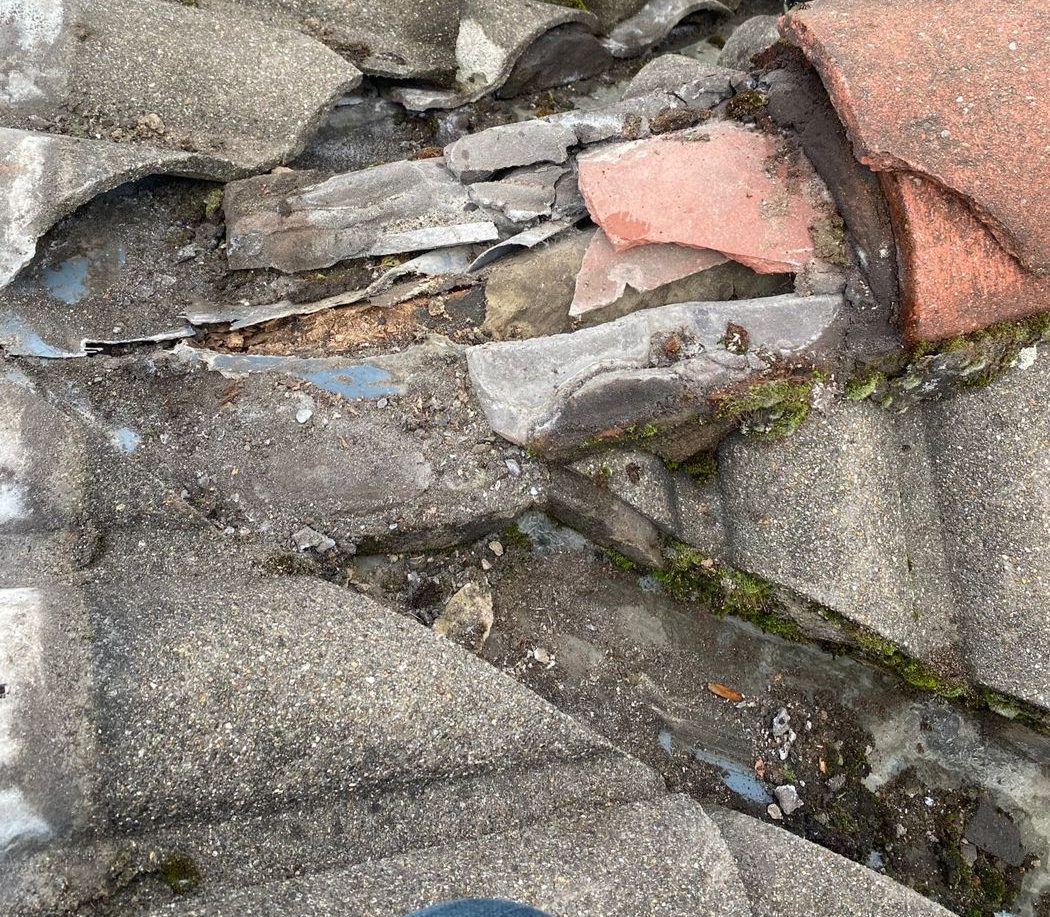
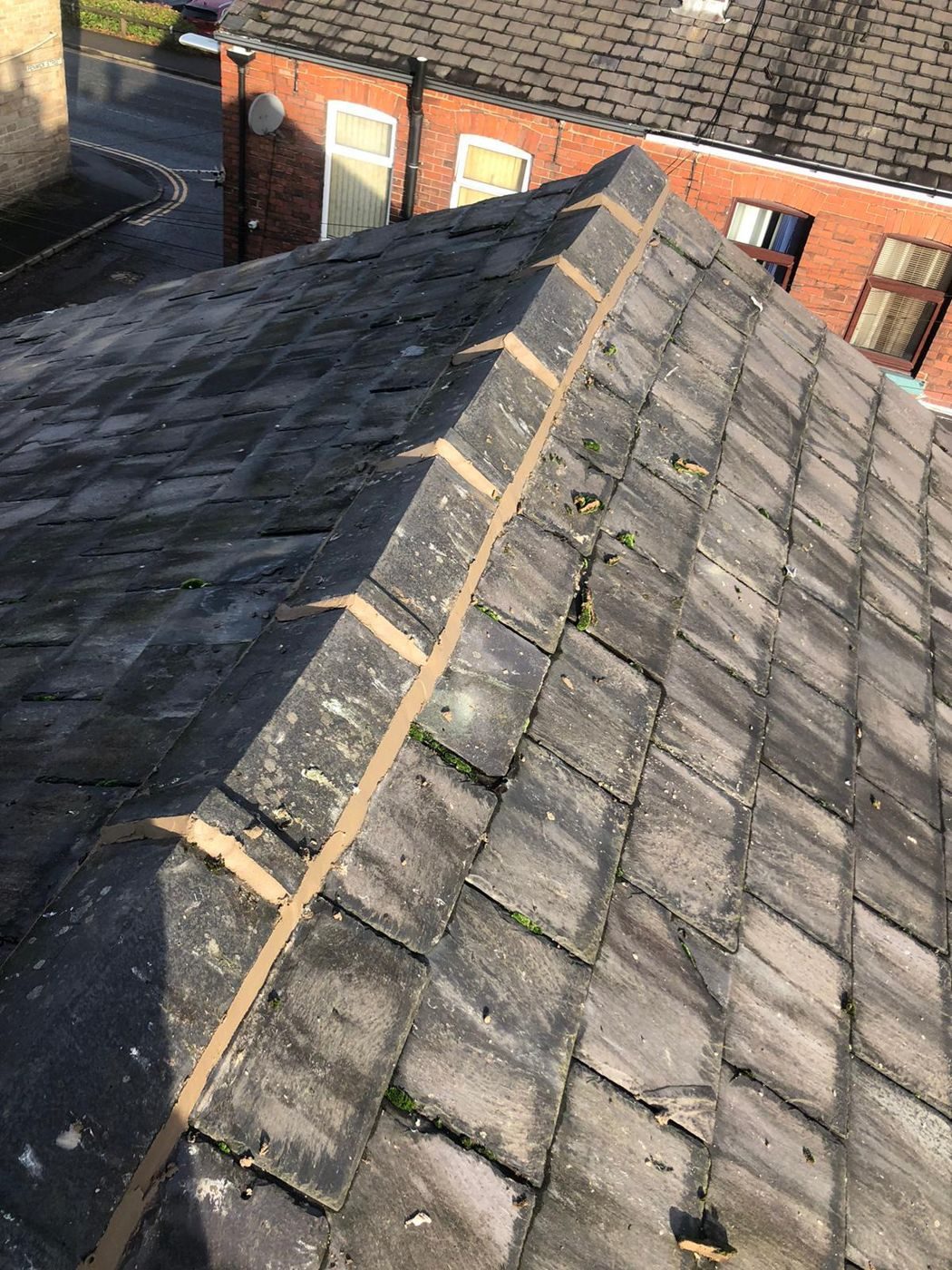
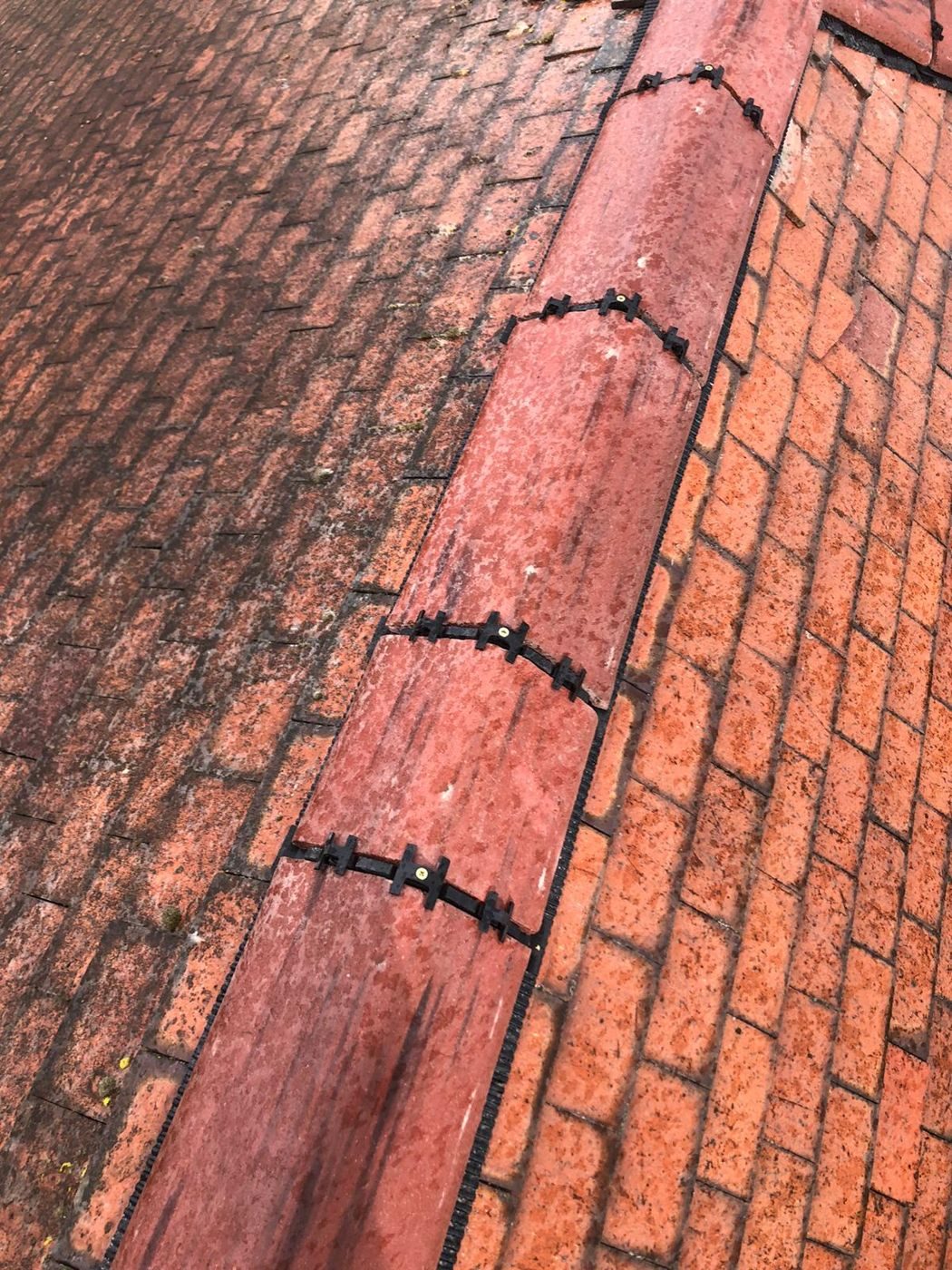
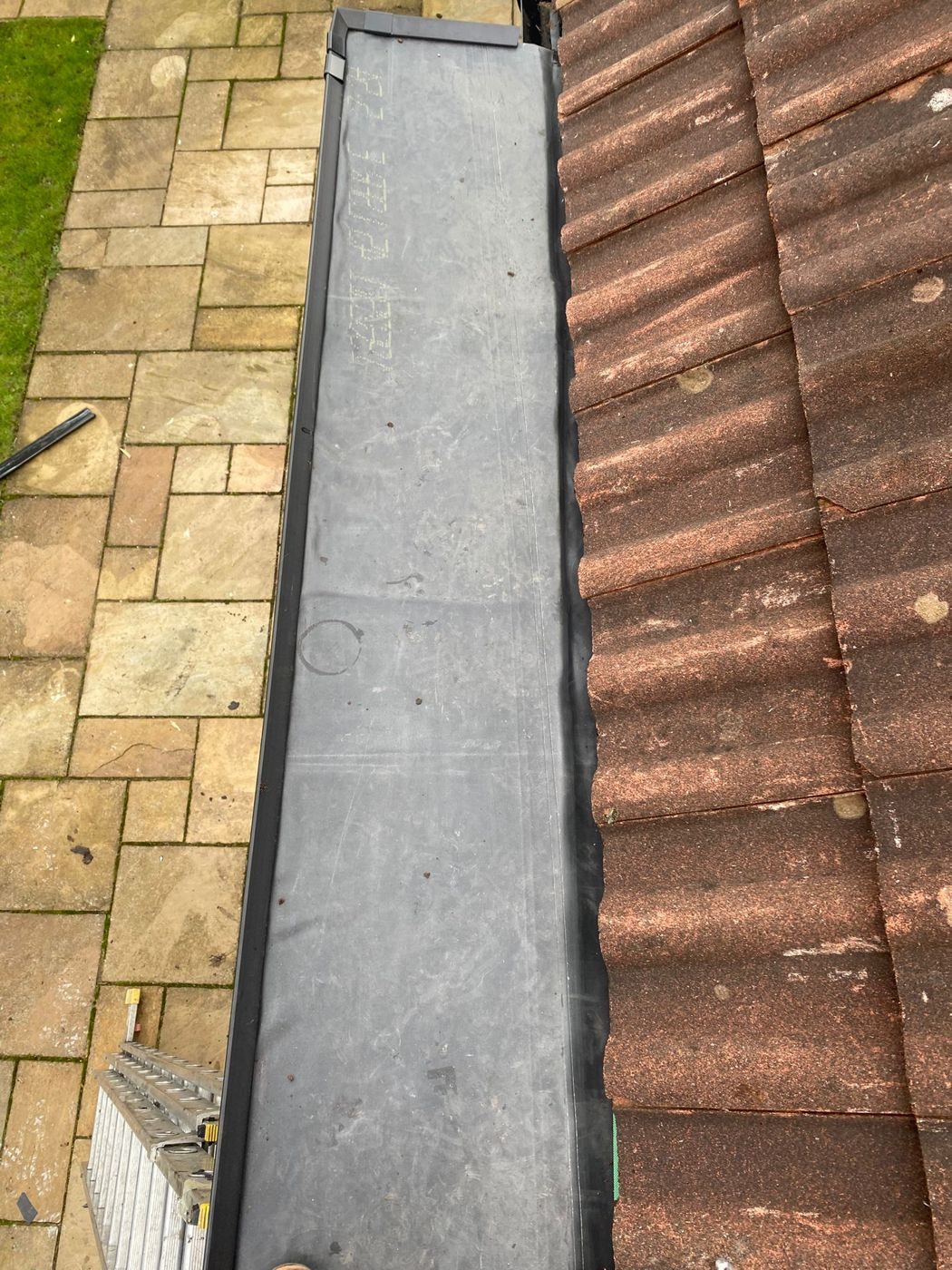
Photographs of our own work. None of them is a storm job — they show the parts that fail and how they are put right. More on the storm damage hub.
Wind damage and movement damage behave differently, and the clearest difference is symmetry. A gale works on an elevation as a whole, so what it lifts is usually at an exposed edge: the ridge line, the verge facing the weather, flashings on the windward side. Movement concentrates at a single corner, one end of a gable, or one side of a chimney, because that is where the building has dropped or turned. A ridge cracked in a clean line at one end only, or lead pulled from its chase on one side of a stack, points towards the ground rather than the sky.
Then look at the crack itself. A fresh break has sharp edges, bright clean faces and loose dust beneath it, and no dirt, cobweb or paint has crossed it yet. An old one is rounded, grubby and often weathered green or black inside. Be careful, though, because a storm can reopen an old crack as easily as it makes a new one. A gap that was already there and was widened overnight is both old and new, and it is exactly the case that needs honest writing up rather than a quick label.
The most telling sign is continuity. Weather stops where the weather stops, but ground movement does not, so a crack that runs out of the chimney, across the roof line and on down the gable wall is not a storm crack. Sticking doors, a gap opening between a stack and the ridge on one side, or a hairline in the plaster upstairs on the same line all add weight. We note them, we photograph them, and we do not pretend they are something they are not.
Stand back on the drive or in the garden and look along the roof rather than at one spot. Compare one end of the ridge with the other, and the left side of the chimney with the right. Look at the gap where the stack meets the roof, and look for fresh debris on the ground, because new mortar crumbs and broken tile on the path say something happened recently, while a clean path and a long-standing crack say otherwise.
Photograph everything before anyone tidies up, with a coin or a pencil beside any crack for scale. If you can, take the same picture again after a few weeks from the same spot. A crack that has not changed is telling you something, and so is one that has. Please do not climb up to look closer.
Ground conditions decide how a scaffold or tower goes up in Northwich more than they do in most towns. Low ground by the Weaver and around the flashes holds soft and made ground, and standards set straight onto it can settle and take the platform out of true. So we spread the load on sole boards, and on the worst ground on a run of boards rather than a single plate under each leg. Scaffolding is quoted separately, and on a low single-storey roof it is often not needed, which we will say.
In the older streets around Witton and the town centre, frontages stand right on the footway, and a pavement platform needs a licence from Cheshire West and Chester Council. There is one more question we ask at the survey, which is whether the house is already being monitored or has a claim running on it. A scaffold is itself a load, and tie holes can disturb tell-tales, so anyone doing that monitoring should know before we start.
The make-safe is the same whatever the cause: refix or remove what is loose, close the opening, get water out of the building. Then we write the report, covered in What Should Be in a Roofer’s Report for an Insurance Claim?, recording what has failed, its condition, and where the pattern looks like weather and where it looks like movement. Where the two cannot be separated, we say so, and Storm Damage or Wear and Tear? Why Roof Claims Get Turned Down explains why that distinction matters to the person reading it.
For the permanent work, we repair to tolerate a little more movement rather than fight it. That means a mechanically fixed dry ridge rather than rigid mortar in a joint likely to open again, and lead fixed along its top edge and left free below. Our roof repairs in Northwich and chimney repairs in Northwich pages set out those details. If what we find looks like a building still moving, we will not keep selling repairs. We are roofers, not surveyors, and that call belongs to a structural engineer. This is not legal advice, and Building Control at the council is the place to ask about work below roof level.
If water is coming in now, ring rather than fill in a form. Weekday emergency call-outs are answered around the clock; weekend cover runs from eight in the morning until seven in the evening. Please do not go up to look: describe what you can see from the ground.
Photograph everything before anybody tidies or moves anything, because that is the evidence. The steps for the hours after a storm are set out in what to do after storm damage to your roof, and the general picture is on our storm damage hub.
What an insurer means by a storm, why wear and tear turns claims down, what belongs in a roofer's report, who pays for the make-safe, and who is who in a claim. The aftermath itself — what to do first, what to check — is covered in detail on our roof repairs section and linked throughout rather than repeated here.
“job well done good communication throughout the job very clean and tiddy when the job is finish flat roof replacement many thanks.”
Sumit Bal“Excellent service from Buddy and the team in installing a new garage roof in a really professional manner. Was kept updated at all stages and given good advice as to our options. Would highly recommend”
Peter Aspinall“Very professional efficient team great communication
Would definitely recommend made the process quick and easy will definitely look to keep for any future need
Thankyou”
Every town has its own page, written around the roofs that are actually there. Start with the main storm damage page.
Describe the roof and roughly where you are, and we will come back to you — usually the same day. If water is coming in now, please call instead.
Prefer to talk? Call 07464 259566 · WhatsApp 0044 7464 259566 · Email Evensbuddy@yahoo.com
We work across Chester, Cheshire and the Wirral from our base at Elton, just north of Chester.
2 Manley View
Elton
Chester
CH2 4QF
Almost all of our work happens at your property rather than here, so please call before travelling.
Monday – Friday — 24hrs — Emergency Call-Outs
Saturday — 8:00 – 19:00
Sunday — 8:00 – 19:00
Weekday emergency call-outs are answered around the clock. Weekend cover is 8:00 to 19:00.