★★★★★
“job well done good communication throughout the job very clean and tiddy when the job is finish flat roof replacement many thanks.”
Sumit Bal
In Frodsham the question after a gale is often what came down onto the roof rather than what the wind took off it. Here is how we tell the two apart, clear the debris safely and put the roof right.
Frodsham lives under trees, and so do its roofs. The wooded hill behind the town reaches right into the gardens, which means a gale here does two jobs at once. It lifts what is loose on the roof, as it does everywhere, and it strips the canopy and throws the result at the slope. The second job is the one that makes Frodsham different, and it is the one that tends to be misread afterwards.
A branch on a roof looks like an obvious cause, and usually it is. But a limb that has landed on a roof can be the whole story or only part of it, and a ridge that moved in the same gust may have nothing to do with the tree at all. Our storm damage roof repairs covers wind on its own; trees add a layer on top of that, and this page is about that layer.
What follows is how we deal with it: telling impact from wind, reading the roofs under the canopy before the storm as well as after it, getting a tower or scaffold in around the branches, and clearing the debris before any repair begins. Our existing roof repairs in Frodsham page covers the slow work trees do on a roof in this town, and we have not repeated it here.
The components a gale usually finds first, and the repairs that follow them.
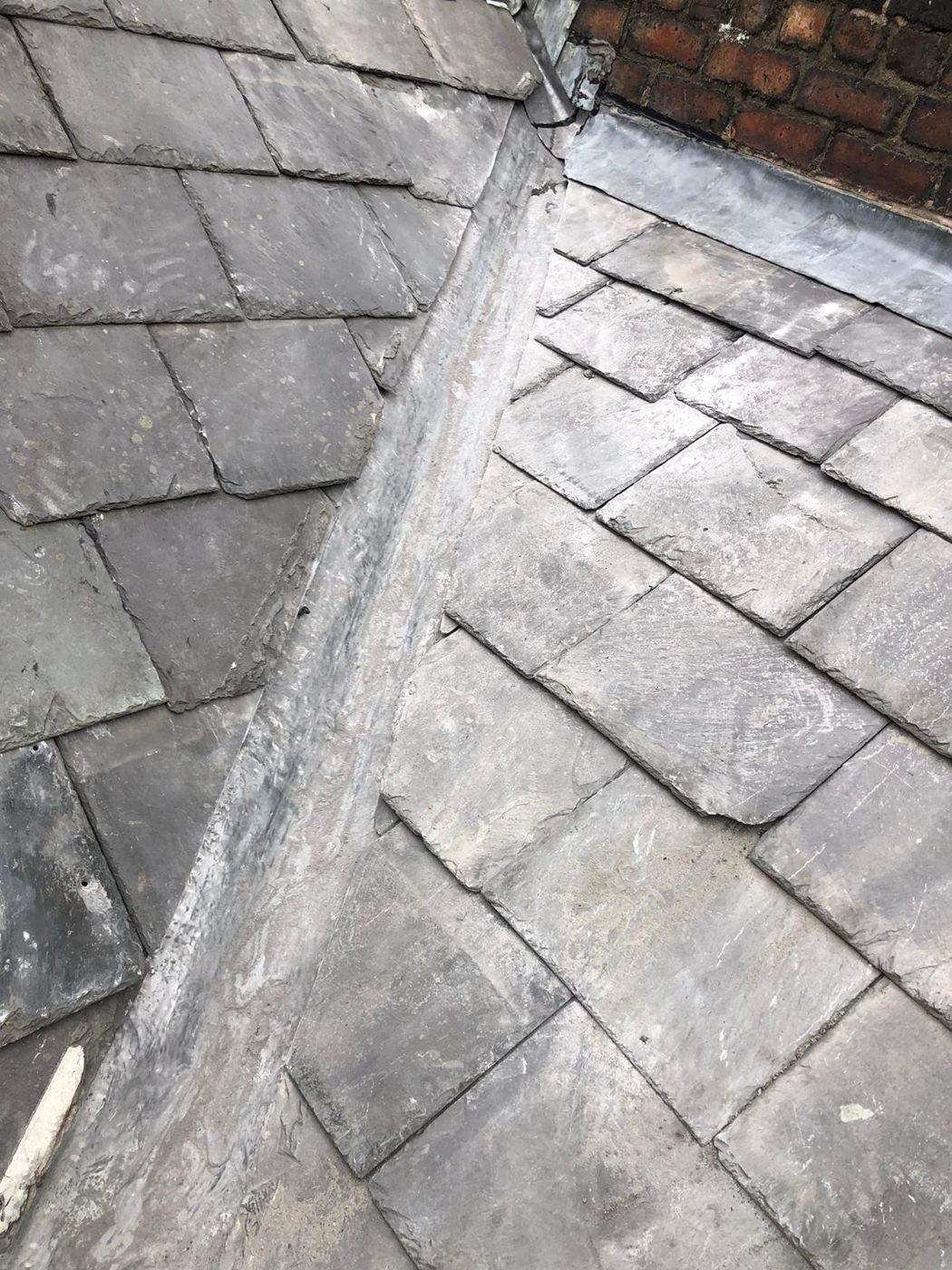
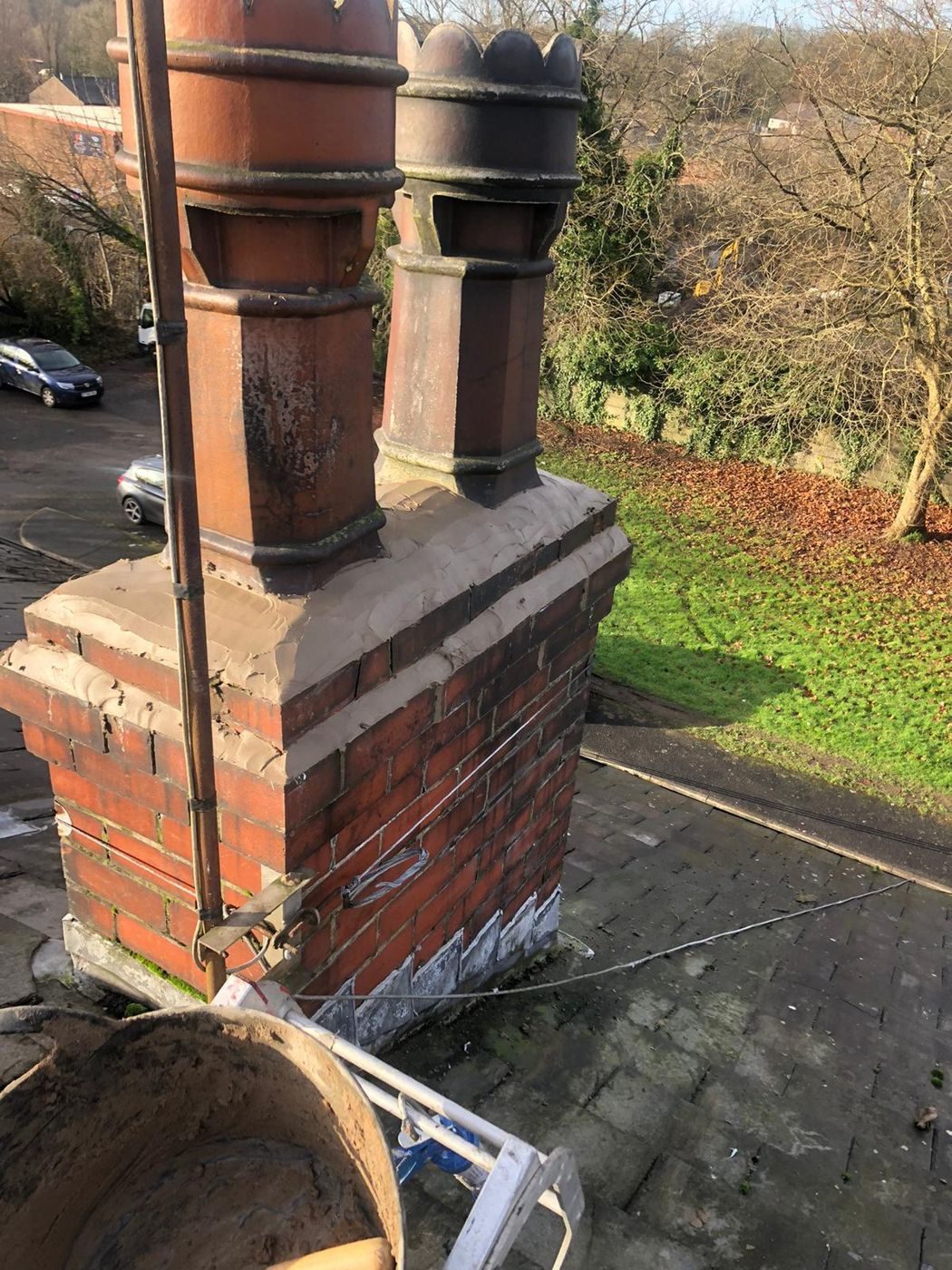
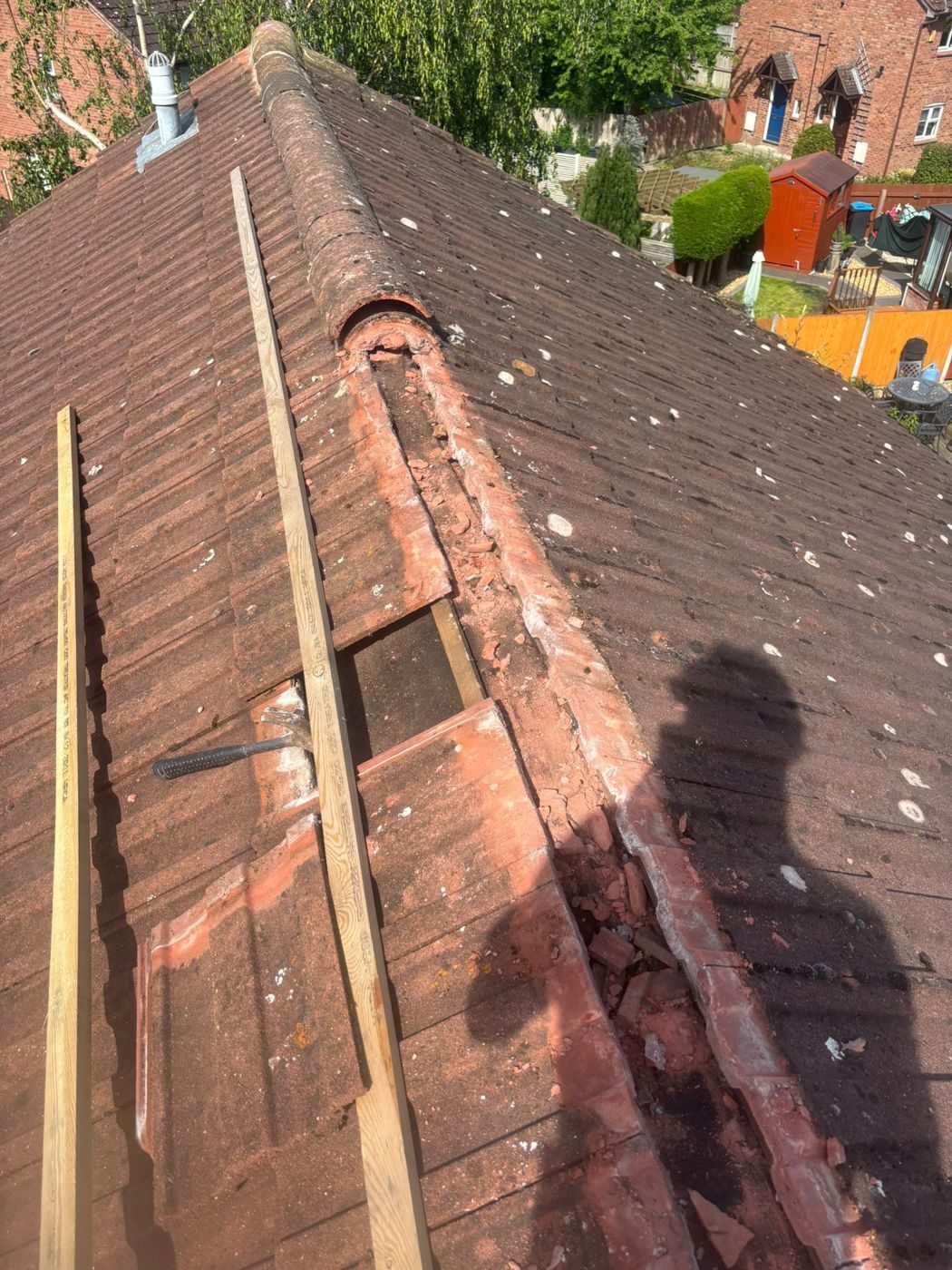
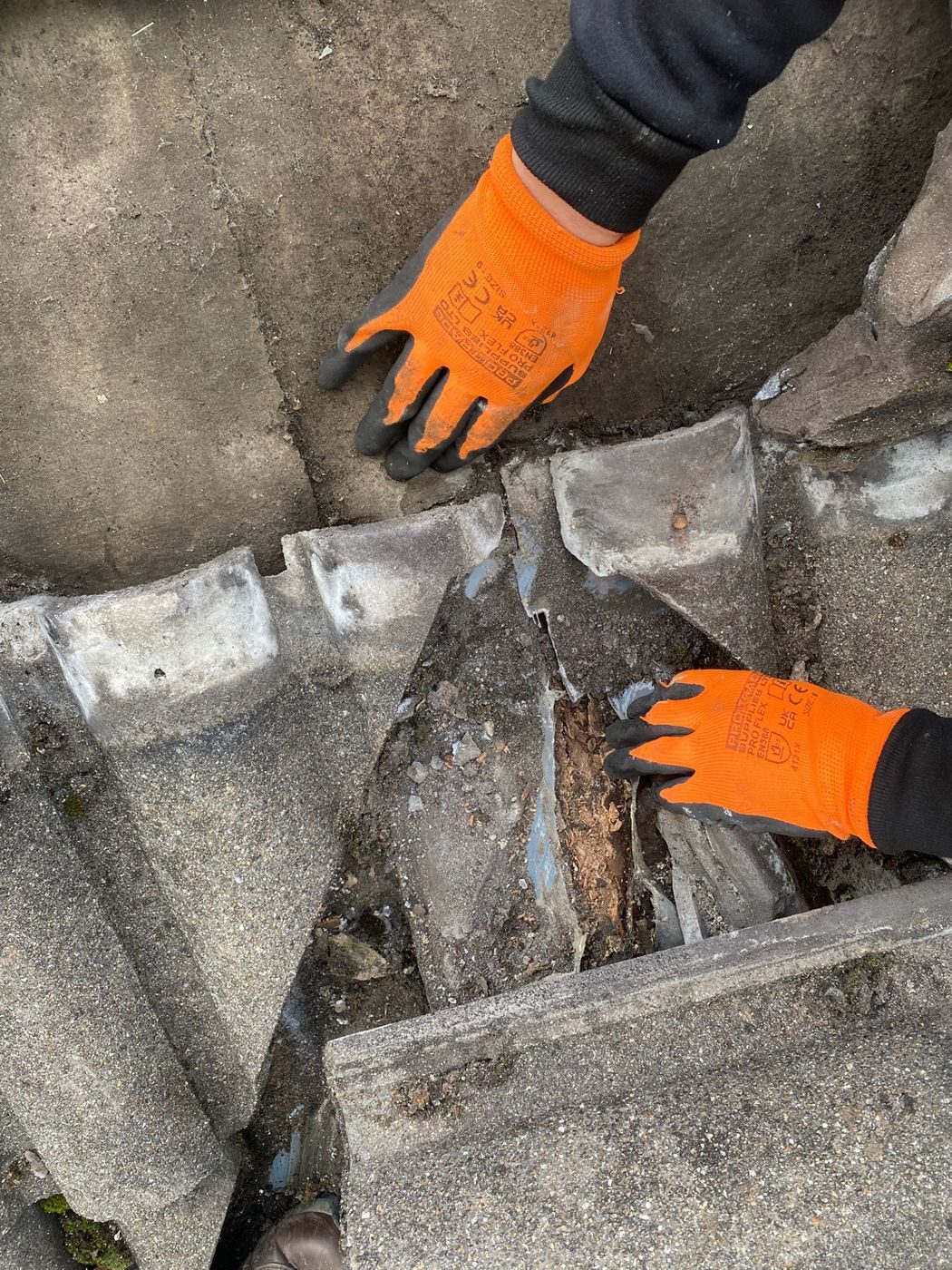
Photographs of our own work. None of them is a storm job — they show the parts that fail and how they are put right. More on the storm damage hub.
Impact damage has a character of its own. A falling branch punches down through the covering, so the damage is local and it is downward: slates or tiles cracked in a cluster, a dished or split patch, battens snapped beneath, sometimes the roofing felt torn where a stub went through. The tiles around the hole are often perfectly sound. Wind damage is the opposite. It starts at an edge, works inward and lifts, so you find a ridge out of line or a verge hollowed out while the middle of the slope sits untouched.
Telling the two apart matters, because the report has to say which is which. A roof can have both at once: a limb through the field of the slope and a ridge that went in the same gust. The photographs we take show the point of impact, the line of the fall and whatever was already loose, and the written report sets them down separately. How an insurer reads that is for the insurer; what we can do is make sure the evidence is not left to guesswork. Our guide on Storm Damage or Wear and Tear? Why Roof Claims Get Turned Down explains why that split matters.
Trees also leave a trail before they fall. A roof that has been shaded for years carries tiles held damp, mortar softened by moss and fixings that have not had a chance to dry, so the first heavy gust finds weak points that a sunnier roof would not have. That is not an argument for blaming the tree. It is a reason to look at the whole slope, not only the place where the branch ended up.
Start with the garden, not the roof. Branches rarely drop one piece: a limb that has hit the slope usually brings smaller wood and a drift of leaf with it, and the first useful clue is where that litter has landed. A fan of twigs on the lawn below a particular slope points to where the weight came down. Stay clear of anything still hanging in the canopy, because a broken limb caught in a fork can drop with no warning.
Photograph from the ground, from a safe spot well back, and from an upstairs window if you can. A phone zoomed in shows a surprising amount. Do not move anything, because the position of a branch and the tiles under it are part of the evidence, and a roof that has been tidied tells nobody what happened.
The tree comes before the scaffold. Where a limb is resting on the roof it has to be lifted off or taken down by someone qualified to do it before we can work beneath it, and that is a tree surgeon’s job, not a roofer’s. We will tell you so plainly. A tree in a conservation area, or one with a preservation order on it, cannot simply be cut, and the council, Cheshire West and Chester Council, is asked first. A branch from a neighbour’s garden is theirs, whichever side of the fence it landed on.
Once the roof is clear, the plot decides the rest. Drives on the hill climb steeply, gardens are terraced, and the lanes towards Overton are narrow, so the last stretch of any tower or scaffold may be carried by hand. Scaffolding is quoted separately, so that part is visible on its own line. Please do not climb up to look or push a branch off, and do not throw a sheet over it either; with the weight of timber on the roof it is how somebody gets hurt.
Debris comes off first. We clear what has landed, check the valleys, back gutters and gutters for the leaf and wood a gale always sends the same way, and then make the roof safe: refixing or removing loose pieces, covering an opening properly and getting water out of the building. That is temporary, and it is quoted as such. If the make-safe has to wait for a limb to be taken down, we say so in writing, so nobody believes the roof is protected when it is not. Who pays for that stage is covered in Who Pays for the Emergency Make-Safe?.
The permanent repair follows in a dry spell. Cracked slates and tiles are replaced and the battens and underlay beneath are checked, because a branch that has gone through the covering often damages what is underneath. Where moss has taken hold on neighbouring tiles it is brushed off by hand, never pressure-washed, and the chimney head under the trees is looked at while the access is up, as our chimney repairs in Frodsham page explains. Older tiles can be difficult to match, and Can You Match My Tiles? Part-Repairs, Reclaimed Tiles and “Matching Sets” covers how we handle that.
If water is coming in now, ring rather than fill in a form. Weekday emergency call-outs are answered around the clock; weekend cover runs from eight in the morning until seven in the evening. Please do not go up to look: describe what you can see from the ground.
Photograph everything before anybody tidies or moves anything, because that is the evidence. The steps for the hours after a storm are set out in what to do after storm damage to your roof, and the general picture is on our storm damage hub.
What an insurer means by a storm, why wear and tear turns claims down, what belongs in a roofer's report, who pays for the make-safe, and who is who in a claim. The aftermath itself — what to do first, what to check — is covered in detail on our roof repairs section and linked throughout rather than repeated here.
“job well done good communication throughout the job very clean and tiddy when the job is finish flat roof replacement many thanks.”
Sumit Bal“Excellent service from Buddy and the team in installing a new garage roof in a really professional manner. Was kept updated at all stages and given good advice as to our options. Would highly recommend”
Peter Aspinall“Very professional efficient team great communication
Would definitely recommend made the process quick and easy will definitely look to keep for any future need
Thankyou”
Every town has its own page, written around the roofs that are actually there. Start with the main storm damage page.
Describe the roof and roughly where you are, and we will come back to you — usually the same day. If water is coming in now, please call instead.
Prefer to talk? Call 07464 259566 · WhatsApp 0044 7464 259566 · Email Evensbuddy@yahoo.com
We work across Chester, Cheshire and the Wirral from our base at Elton, just north of Chester.
2 Manley View
Elton
Chester
CH2 4QF
Almost all of our work happens at your property rather than here, so please call before travelling.
Monday – Friday — 24hrs — Emergency Call-Outs
Saturday — 8:00 – 19:00
Sunday — 8:00 – 19:00
Weekday emergency call-outs are answered around the clock. Weekend cover is 8:00 to 19:00.