★★★★★
“job well done good communication throughout the job very clean and tiddy when the job is finish flat roof replacement many thanks.”
Sumit Bal
A storm on the Wirral rarely takes a whole roof, it takes a few tiles or slates from an older one. The hard part is the repair afterwards: making new work sit properly beside the old.
The Wirral is a peninsula, which means weather reaches it from more than one side. Roofs facing the water are more exposed than sheltered ones, and the prevailing wind from the south-west does the rest. After a gale, the damage we are called to is usually small in area: a run of ridge tiles, a corner of slates, a hip end, a few tiles in the drive. The roof is not ruined. It has a gap in it.
What people tend not to expect is that the gap is not the end of the problem. The Wirral was built over a long stretch of time and in very different materials, so the roof next door may be nothing like yours. Handmade clay tiles, welsh and imported slates, machine-pressed tiles from the railway suburbs and concrete interlocking tiles from later estates all sit within a short drive of each other. A tile that has gone cannot simply be replaced from a merchant’s shelf.
This page is about that second half of the job. We still make the roof safe first, because water coming in and slates sliding off take priority over appearance. Then we deal with the question every part-repair raises: what goes into the hole, and will it look like it belongs? The general picture is on the storm damage roof repairs page, and none of it is repeated here.
The components a gale usually finds first, and the repairs that follow them.
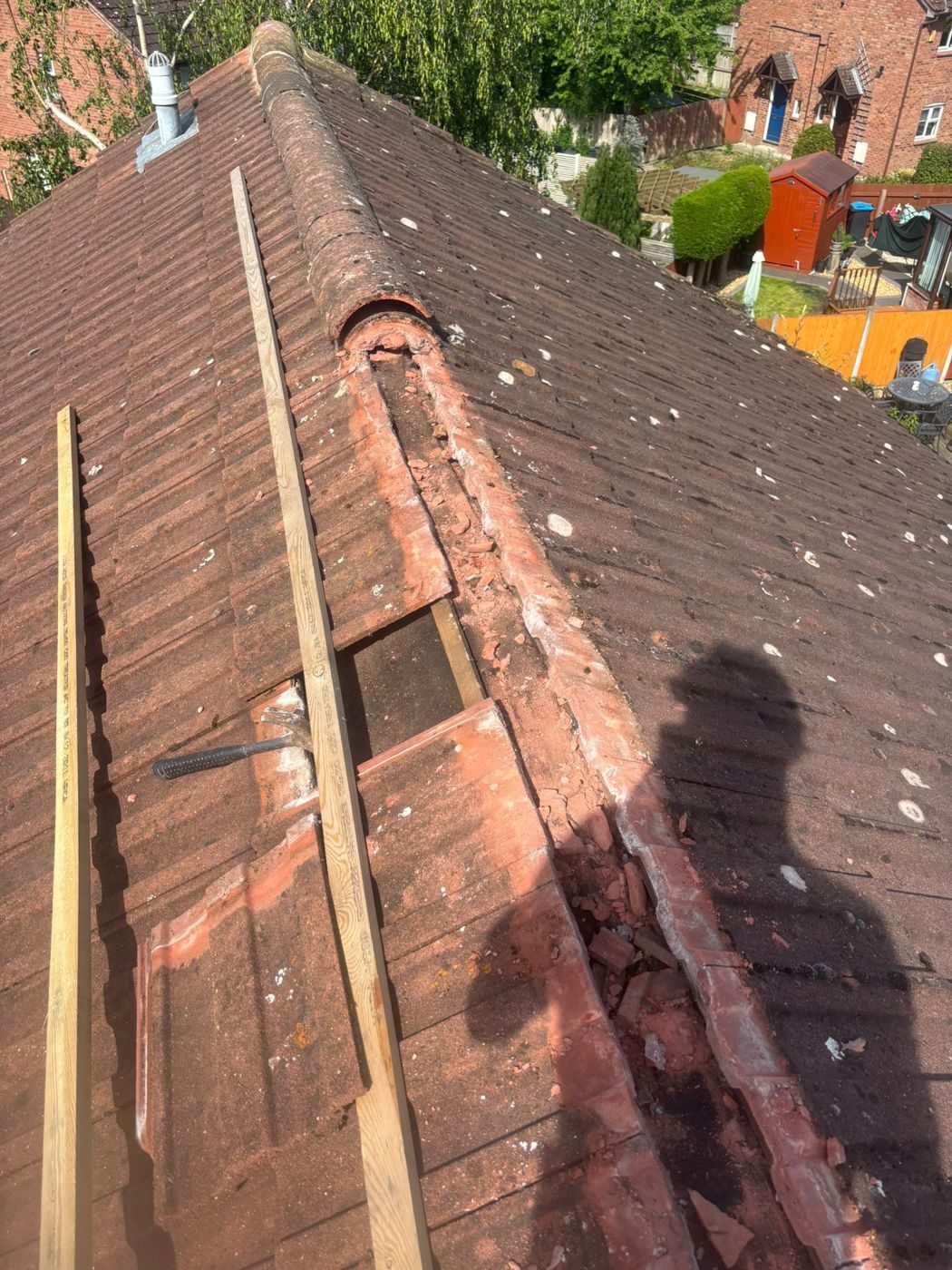
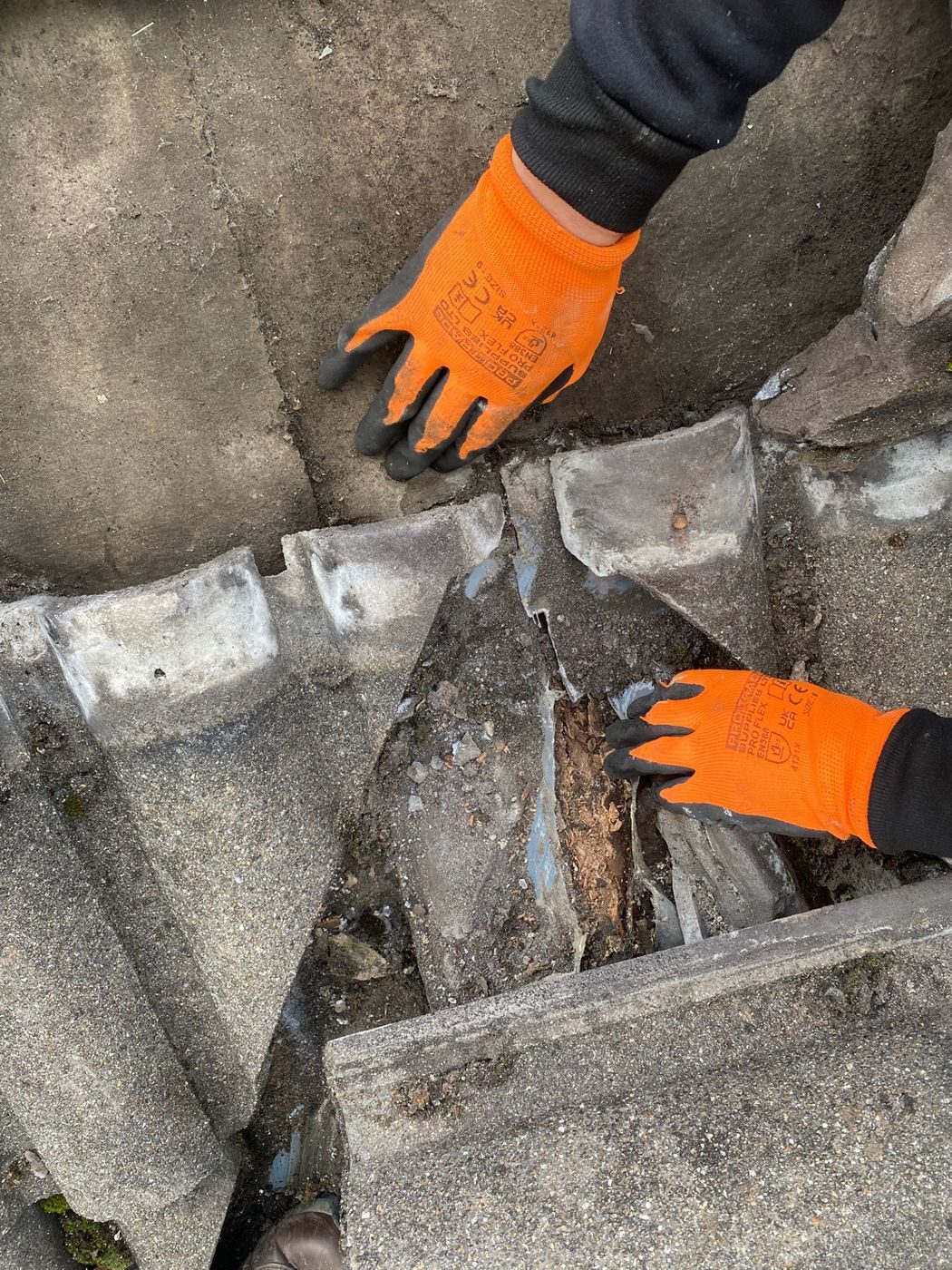
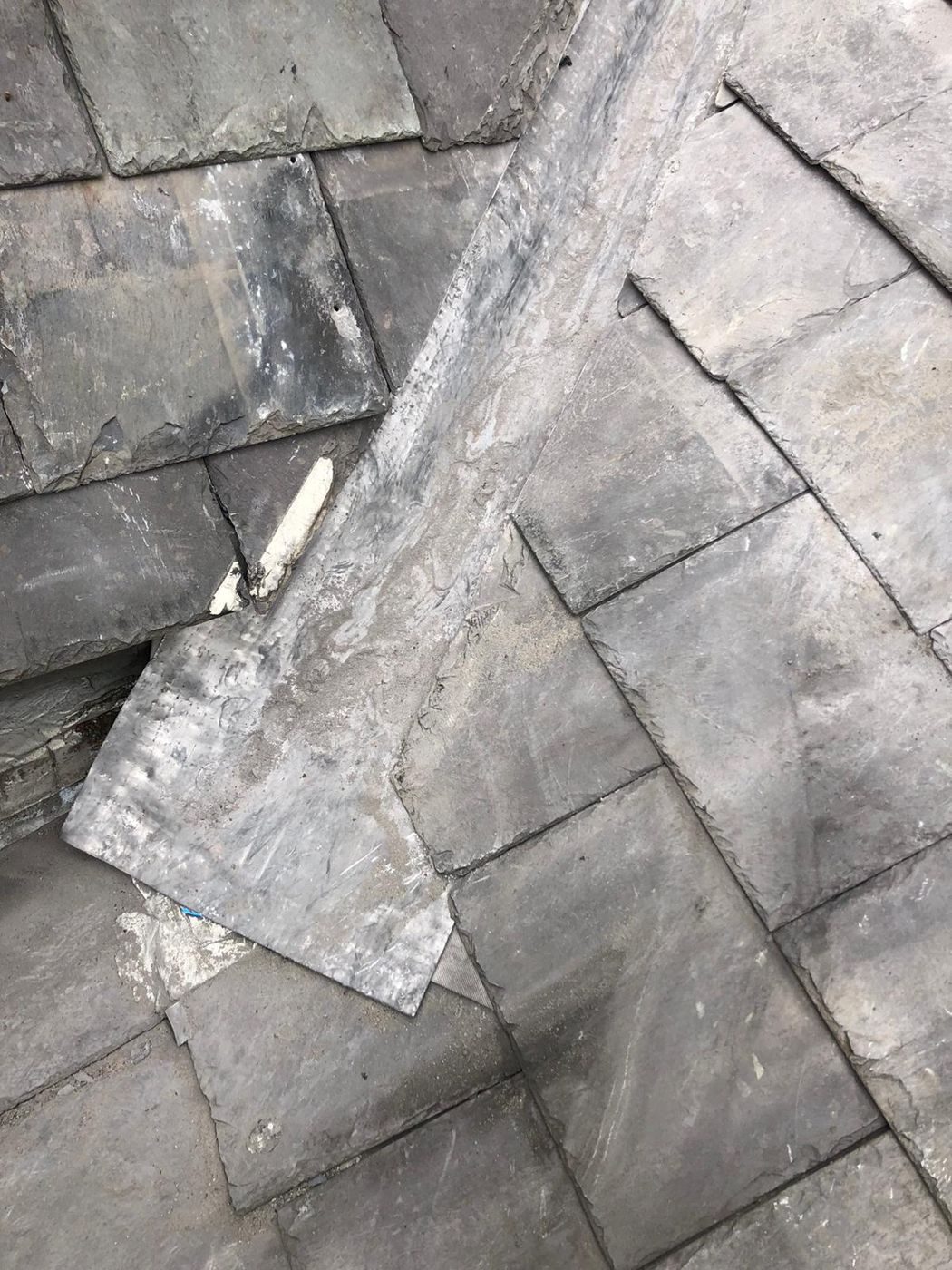
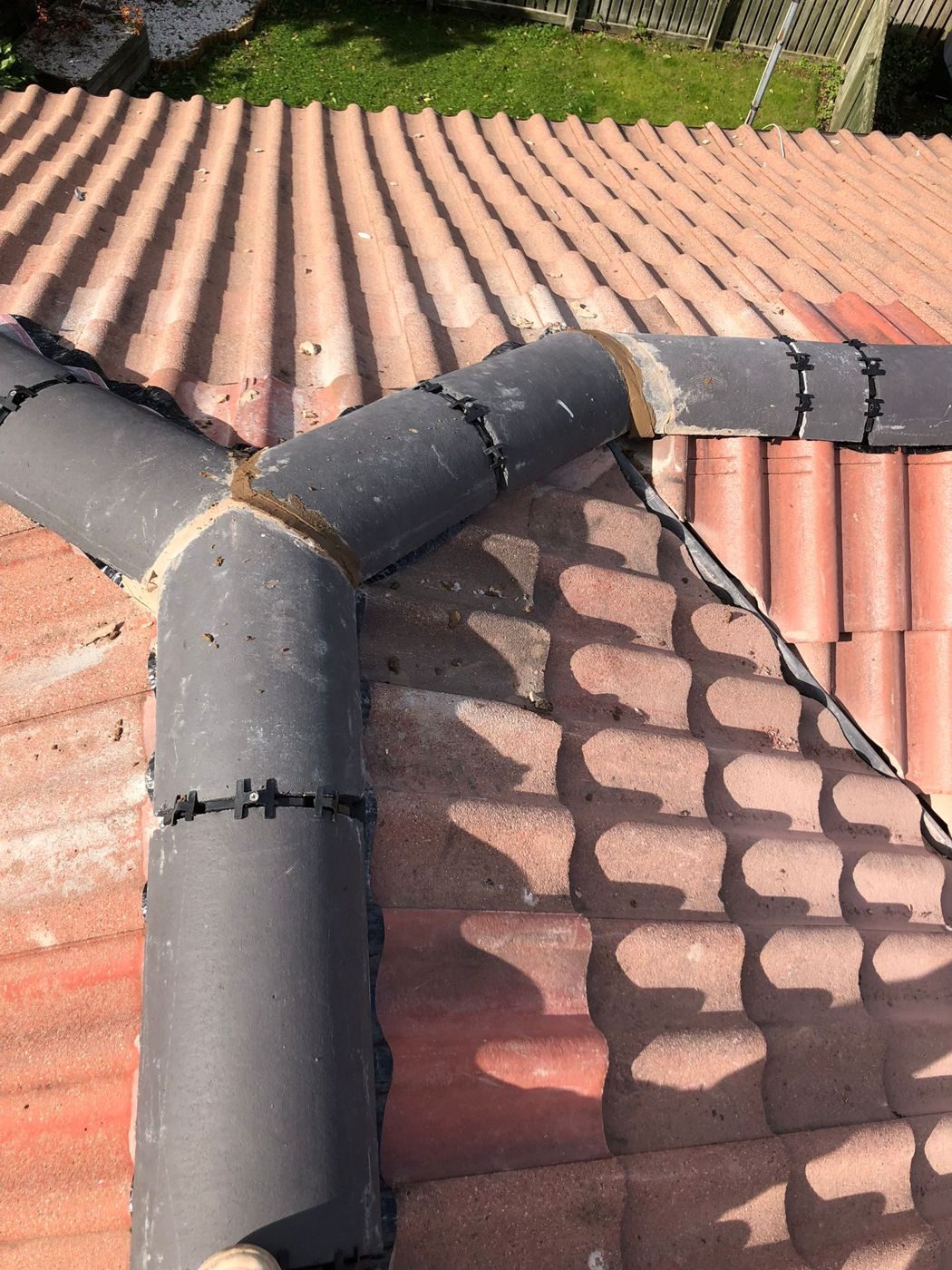
Photographs of our own work. None of them is a storm job — they show the parts that fail and how they are put right. More on the storm damage hub.
Weathered tiles and slates change colour, lose their sharp edges and pick up lichen. New ones arrive uniform and bright, and a handful of them in the middle of an older slope looks like a patch for years afterwards. On a roof facing the street, that is the first thing a neighbour sees. Whether it matters to you is your decision, but it is better made before the repair than after it.
There are three sources of material, and each has a use. Reclaimed tiles and slates of the right type and size are the closest match, and they are the first thing we look for on an older roof. Where the roof is a common modern type, new ones in the same profile are fine, and they blend in after a season or two. And on many roofs the best option is a mixture: sound tiles lifted from a part of the roof that does not show, such as the back slope or the lower side of an extension, used in the gap on the front, with the new material placed where it cannot be seen. The exact method depends on what is on your roof, which is why we look before we quote.
Matching is also a practical question, not only a visual one. Old tiles are not always the same thickness or the same size as new ones with the same name, and a mismatch shows up as uneven lines, a tile that rocks, or a lap that does not shed water. Slates vary in thickness and texture depending on where they came from. A mismatched repair is not just ugly, it can be a future leak. Our separate guide on Can You Match My Tiles? Part-Repairs, Reclaimed Tiles and “Matching Sets” explains how this works on the insurance side, and we are glad to put in the report which components could not be matched and why.
Start with what you can see from the garden or the pavement, and stay there. Because so many Wirral roofs are old, you are looking for two things at once: what the wind has just removed, and what was already worn. The two can be told apart by the exposed surface. A fresh break is clean and pale, while an old failure is stained, mossy or rounded. That distinction matters in a claim, and we cover it in Storm Damage or Wear and Tear? Why Roof Claims Get Turned Down.
Photograph everything before it is moved, including tiles and slates lying in the garden, because a broken piece tells us what type of covering you have. Keep any whole ones that have come down. If they are sound, they may be the best available match for the repair.
Getting to a damaged roof on the peninsula depends on the house. A detached property on a wide plot is straightforward, and a scaffold or tower goes up off the drive. A mid-terrace with no side passage is harder, and may need a carry-through or a pavement licence from the council, which is not quick. We decide this at the survey, before offering a date, and scaffolding is quoted separately so you can see what it is.
Matching adds to the planning. Reclaimed tiles and slates arrive on pallets and need somewhere hard to stand, and any that we take from a hidden slope have to be lifted carefully, not dropped. Please do not go up to look, and do not put a sheet over it: ring us and describe what you can see from the ground, or send a photograph on WhatsApp.
The make-safe comes first and has one purpose: to stop the roof doing more harm tonight. That might mean refixing loose slates, removing what is about to fall, or sheeting an opening from a safe working position. It is temporary and it is quoted as such. We would rather you did not authorise a full permanent repair before the cause is understood and, if you are claiming, before your insurer has had the chance to look. The question of who pays for the emergency work is covered in Who Pays for the Emergency Make-Safe?.
The permanent repair then follows in dry conditions. On an older roof we will usually lift sound tiles from a hidden area, re-lay them where they show, and fill the gap with the best reclaimed or new match we can source. Ridge and hip tiles are mechanically fixed instead of resting on mortar alone. Where a chimney is involved, our chimney repairs in Wirral page explains how the top of a stack is rebuilt to match, and our roof repairs in Wirral page sets out the wider repair process. We then give you a written report with photographs of what failed, what was done and what was used, for your insurer.
If water is coming in now, ring rather than fill in a form. Weekday emergency call-outs are answered around the clock; weekend cover runs from eight in the morning until seven in the evening. Please do not go up to look: describe what you can see from the ground.
Photograph everything before anybody tidies or moves anything, because that is the evidence. The steps for the hours after a storm are set out in what to do after storm damage to your roof, and the general picture is on our storm damage hub.
What an insurer means by a storm, why wear and tear turns claims down, what belongs in a roofer's report, who pays for the make-safe, and who is who in a claim. The aftermath itself — what to do first, what to check — is covered in detail on our roof repairs section and linked throughout rather than repeated here.
“job well done good communication throughout the job very clean and tiddy when the job is finish flat roof replacement many thanks.”
Sumit Bal“Excellent service from Buddy and the team in installing a new garage roof in a really professional manner. Was kept updated at all stages and given good advice as to our options. Would highly recommend”
Peter Aspinall“Very professional efficient team great communication
Would definitely recommend made the process quick and easy will definitely look to keep for any future need
Thankyou”
Every town has its own page, written around the roofs that are actually there. Start with the main storm damage page.
Describe the roof and roughly where you are, and we will come back to you — usually the same day. If water is coming in now, please call instead.
Prefer to talk? Call 07464 259566 · WhatsApp 0044 7464 259566 · Email Evensbuddy@yahoo.com
We work across Chester, Cheshire and the Wirral from our base at Elton, just north of Chester.
2 Manley View
Elton
Chester
CH2 4QF
Almost all of our work happens at your property rather than here, so please call before travelling.
Monday – Friday — 24hrs — Emergency Call-Outs
Saturday — 8:00 – 19:00
Sunday — 8:00 – 19:00
Weekday emergency call-outs are answered around the clock. Weekend cover is 8:00 to 19:00.