★★★★★
“job well done good communication throughout the job very clean and tiddy when the job is finish flat roof replacement many thanks.”
Sumit Bal
On the Runcorn estates a gale rarely takes one roof alone. It finds the same weak point along the whole run. Here is how we make safe, report and repair when a street is hit together.
A storm does not treat Runcorn as one town. The Old Town and Weston Point carry older roofs that fail in their own scattered ways, but the estates laid out as the new town are another matter. Halton Brow, Castlefields, Palacefields, Murdishaw and Windmill Hill were delivered as whole neighbourhoods under single contracts, so the houses along a close share a covering, a pitch, a ridge detail and a set of weak points.
That changes what a gale does. Instead of one house losing a ridge tile, the same fault turns up on several roofs along the same run overnight, because the same fixings and the same shallow slope were built into every one. Garage blocks and flat porches of the same age give way together as well. The general order in which wind breaks a roof is set out on our storm damage roof repairs page; this page is about what repetition does to it.
Roofline Solutions covers Runcorn from Chester, with emergency call-outs round the clock on weekdays and from 8:00 to 19:00 at weekends. We make the roof safe first, then repair it, and we write a report with photographs your insurer can use. Claims are between you and your insurer; we are roofers, not loss assessors, and we cannot advise on what a policy pays for.
The components a gale usually finds first, and the repairs that follow them.
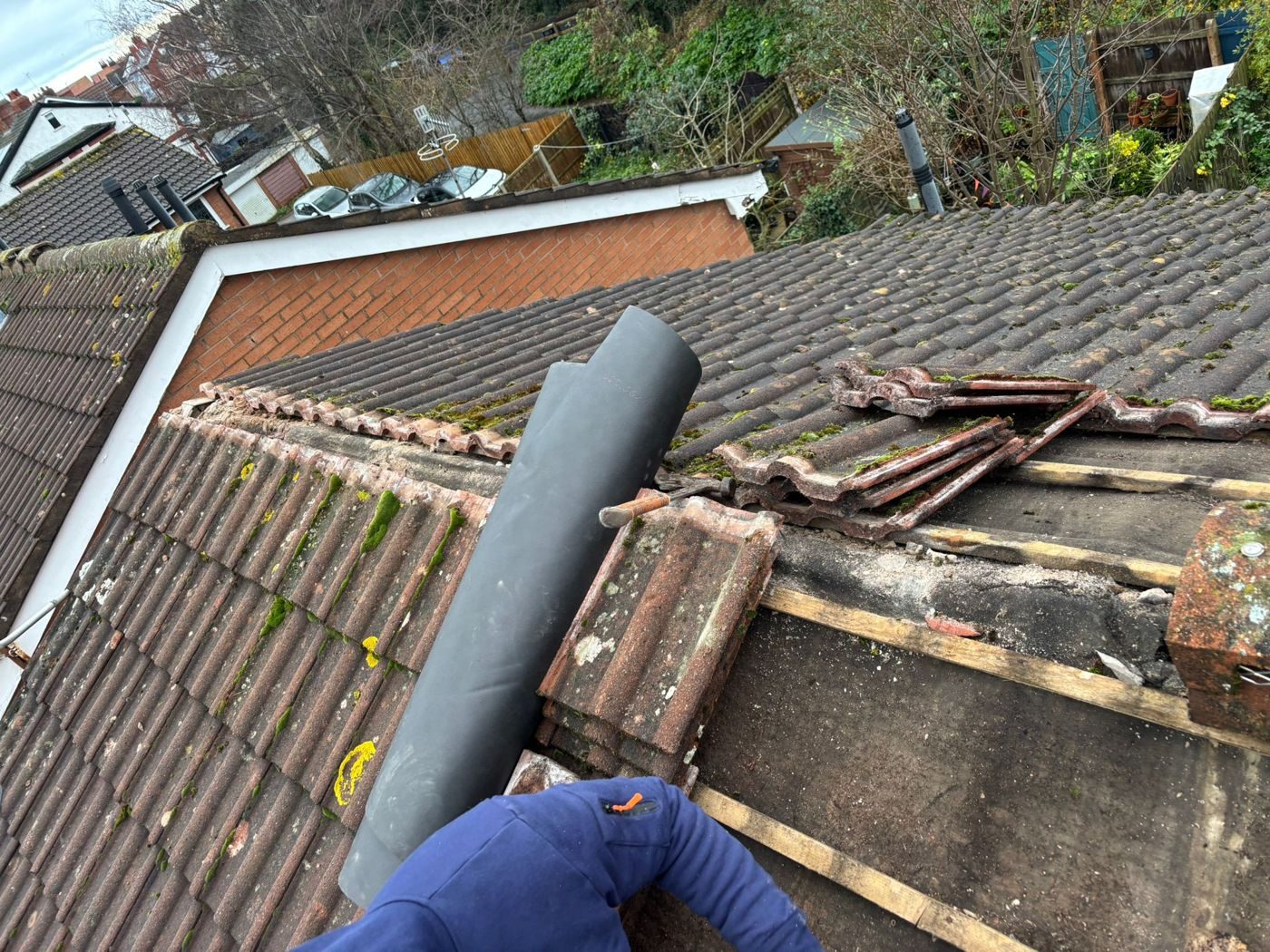
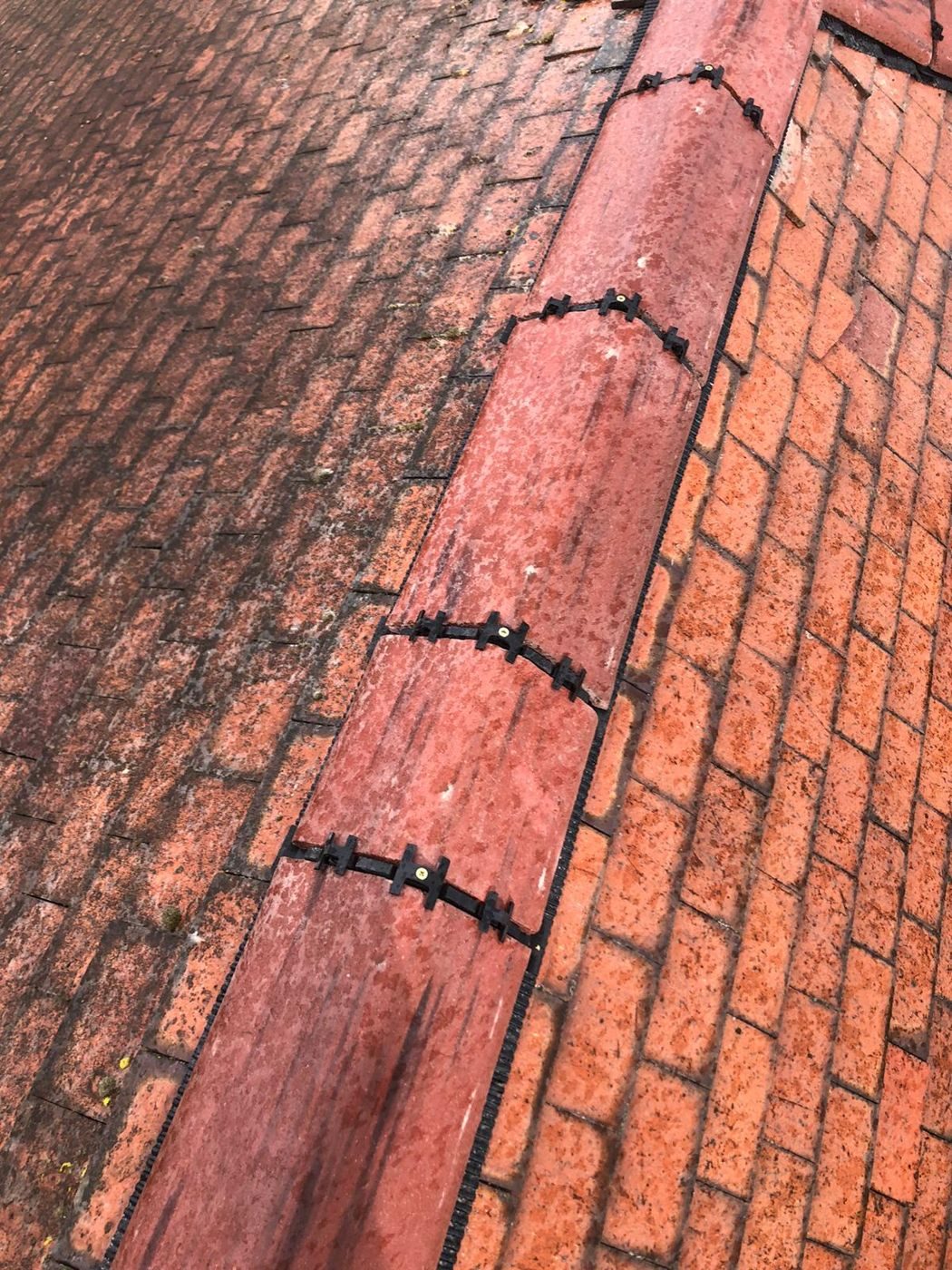
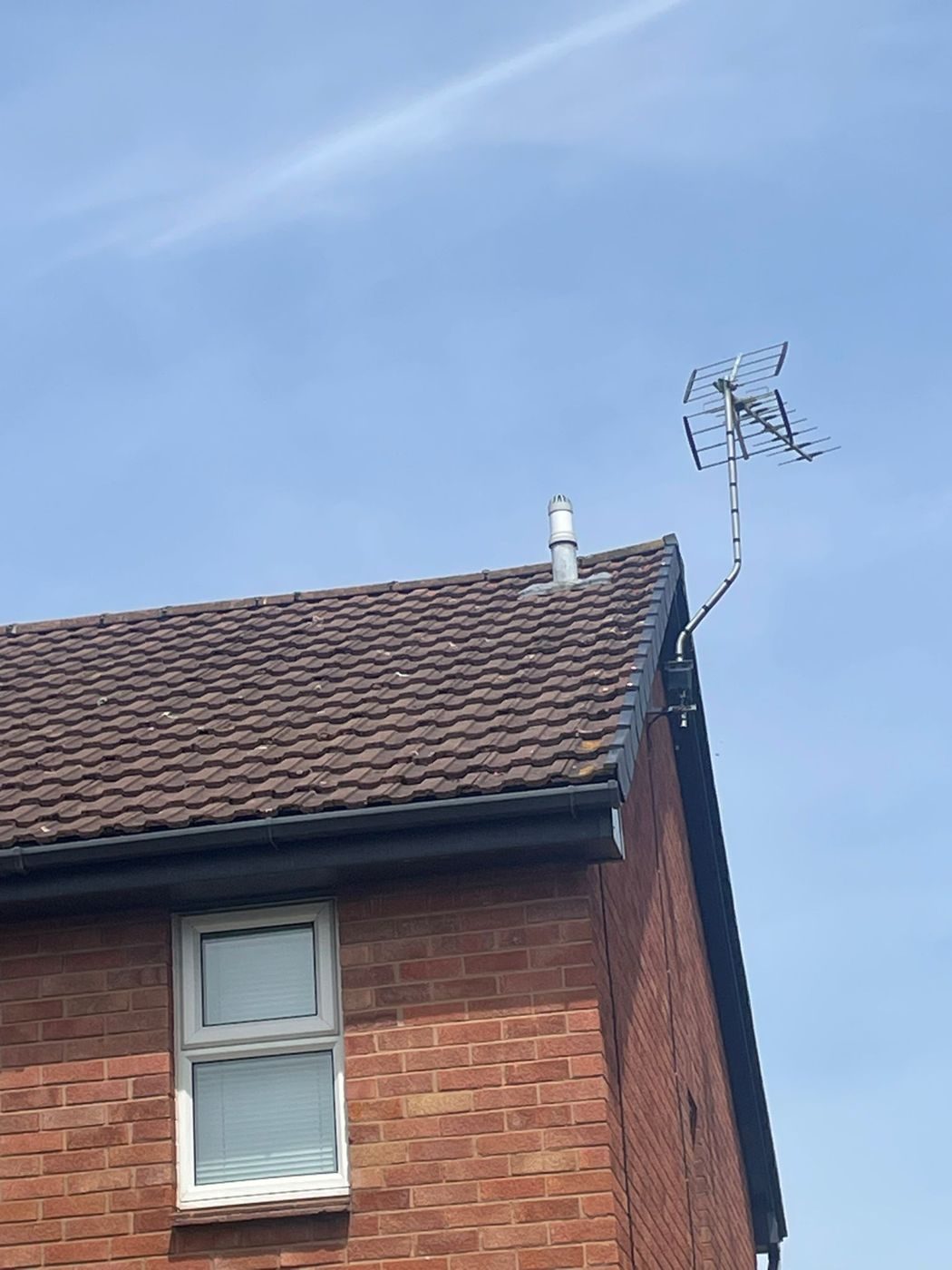
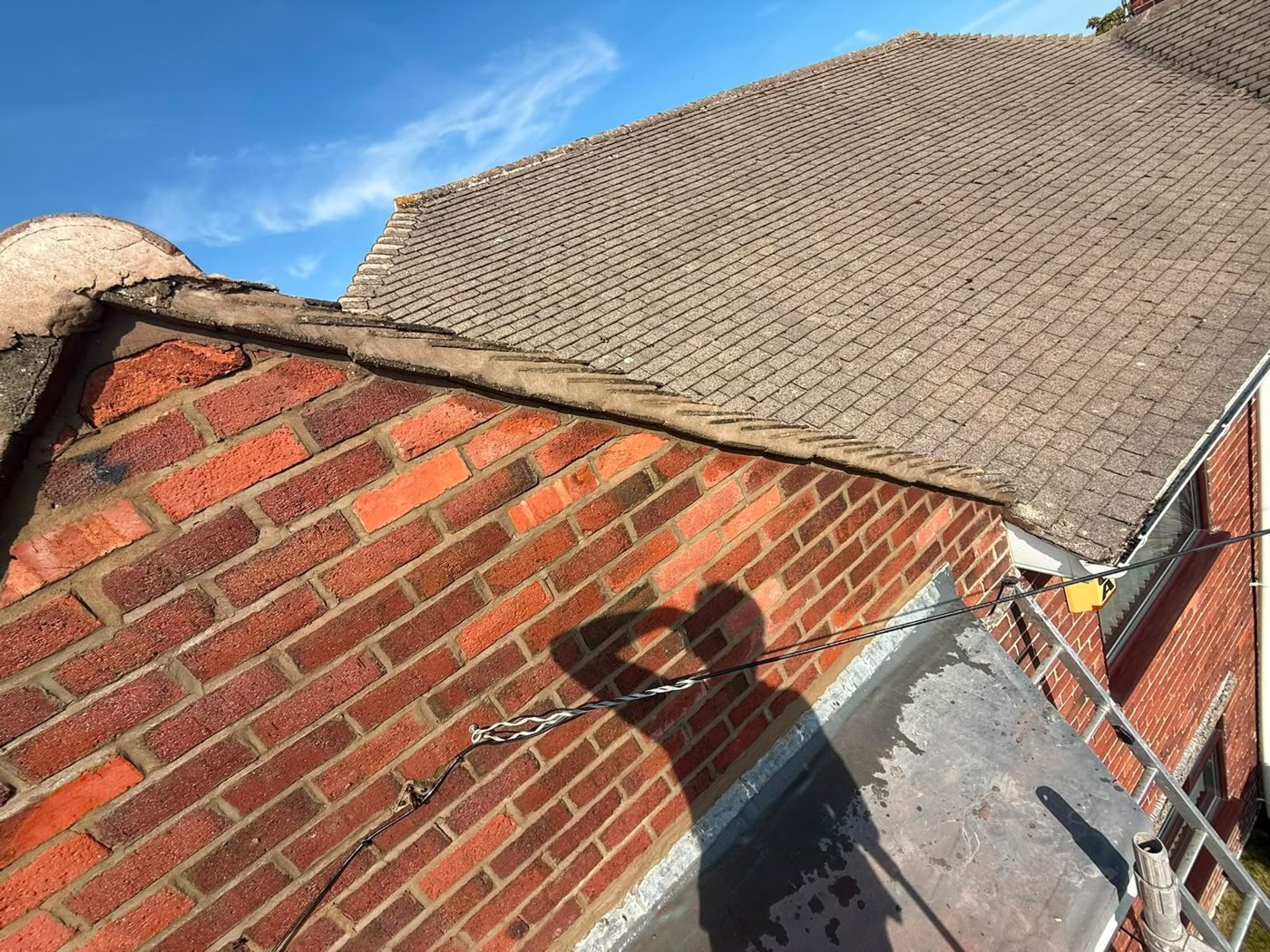
Photographs of our own work. None of them is a storm job — they show the parts that fail and how they are put right. More on the storm damage hub.
A street built in one go grows old in one go. Concrete tiles laid on a low pitch, bedded and nailed the same way along the run, reach the same state together, so the first hard gale does not pick at one tired roof. It tests every roof along the road and finds the ones that are ready. Pitch matters here: a shallow slope gives wind less to glance off and rain less fall to clear itself, so the edges and joints carry more of the load.
The same weak points repeat. Ridge tiles on mortar, the bed along a gable verge, the front edge of a garage block roof, the upstand where a flat porch meets the house wall: if one has let go next door, the detail on your own roof is the same one. A neighbour’s fallen ridge tile is a fair prompt for a look from the garden, though it proves nothing about your roof until somebody has checked it properly.
Waiting is the real cost. When a close is hit together, everyone wants a roofer on the same morning, so the make-safe goes in first, because an open roof does damage every hour it stays open, and the permanent repair follows in dry weather. Your insurer may be dealing with many similar claims from one street. Photographs taken before anything is moved, and a report naming what failed on your roof specifically, stop yours being read as a copy of next door’s. Storm Damage or Wear and Tear? Why Roof Claims Get Turned Down explains how that distinction is made.
From the garden or the pavement, a concrete tile roof shows trouble in a few places, and on an estate you can compare it against the houses either side. Shifted tiles appear as a broken line against a neighbour’s straight courses, and a ridge with a missing run shows as a gap on the skyline. Do not go up, and do not lean a ladder on a gutter that may have moved in the wind.
Binoculars or a zoomed phone photograph do the rest. Look at garage block and porch roofs too, since they share a design with those along the road and fail at their edges first. Photograph what you see from where you stand and leave the pictures untouched, because that is the start of the evidence. Our report adds what only someone on the roof can see, and The Parts of a Roof That Fail in Wind — and Why the Edges Decide a Claim explains why these parts go first.
Estate roofs here are usually easier to reach than those on older streets. The houses are two storeys, the pitches are shallow, and parking courts and open frontages leave room to unload. Garage blocks sit in courts where the van can get close. We still work at height from a tower or scaffold, quoted separately, though on a low flat porch it often is not needed and we will say so.
The catch is where the platform lands. Many of these estates were planned around footpaths and courts, and a scaffold on an adopted footway needs a licence from Halton Borough Council, so ask early; this is not legal advice, and the council can confirm what applies. Concrete tiles are heavy, brittle at the nibs and unforgiving of being walked on, so we work from the scaffold or boards and not across the covering. Where neighbours need work at once, one scaffold along a run can sometimes serve more than one house if the owners agree.
The make-safe comes first: refixing or removing what is loose, closing an opening, getting water out of the building. The permanent work follows. On concrete interlocking tiles that means replacing broken ones with a matching profile, re-bedding or mechanically clipping a ridge that was only resting on mortar, and reforming a blown verge. On a garage block or porch we refix a lifted edge or repair the covering, and where the deck has been wet long enough to go, the honest answer is a new EPDM roof, as set out on our flat roof repairs in Runcorn page.
Because the fault repeats, it is worth asking whether the roofs either side share it before treating only your own. A repaired roof standing beside an untouched run is the one the next gale will find. We will say plainly what we see on yours. Our roof repairs in Runcorn page shows how a leak is traced back to its source, and the short estate stacks, with their flaunching and lead, are covered on the chimney repairs in Runcorn page.
If water is coming in now, ring rather than fill in a form. Weekday emergency call-outs are answered around the clock; weekend cover runs from eight in the morning until seven in the evening. Please do not go up to look: describe what you can see from the ground.
Photograph everything before anybody tidies or moves anything, because that is the evidence. The steps for the hours after a storm are set out in what to do after storm damage to your roof, and the general picture is on our storm damage hub.
What an insurer means by a storm, why wear and tear turns claims down, what belongs in a roofer's report, who pays for the make-safe, and who is who in a claim. The aftermath itself — what to do first, what to check — is covered in detail on our roof repairs section and linked throughout rather than repeated here.
“job well done good communication throughout the job very clean and tiddy when the job is finish flat roof replacement many thanks.”
Sumit Bal“Excellent service from Buddy and the team in installing a new garage roof in a really professional manner. Was kept updated at all stages and given good advice as to our options. Would highly recommend”
Peter Aspinall“Very professional efficient team great communication
Would definitely recommend made the process quick and easy will definitely look to keep for any future need
Thankyou”
Every town has its own page, written around the roofs that are actually there. Start with the main storm damage page.
Describe the roof and roughly where you are, and we will come back to you — usually the same day. If water is coming in now, please call instead.
Prefer to talk? Call 07464 259566 · WhatsApp 0044 7464 259566 · Email Evensbuddy@yahoo.com
We work across Chester, Cheshire and the Wirral from our base at Elton, just north of Chester.
2 Manley View
Elton
Chester
CH2 4QF
Almost all of our work happens at your property rather than here, so please call before travelling.
Monday – Friday — 24hrs — Emergency Call-Outs
Saturday — 8:00 – 19:00
Sunday — 8:00 – 19:00
Weekday emergency call-outs are answered around the clock. Weekend cover is 8:00 to 19:00.