★★★★★
“job well done good communication throughout the job very clean and tiddy when the job is finish flat roof replacement many thanks.”
Sumit Bal
Heswall’s tall stacks stand on an open slope above the Dee, and a gale tests them first. Here is what wind does to a high chimney, how we reach it safely, and how it is put right.
Heswall is built up a hill and along the top of it, and the houses were set high on purpose, for the view over the Dee. The same height that gives the view gives the wind a clear run. On a west-facing slope above an estuary there is little to slow a south-westerly before it reaches the highest thing on the roof, and on most of these houses the highest thing is the chimney.
That is why storm damage here so often starts above the tiles rather than in them. A villa or an interwar detached house can carry a long run of brickwork above the slope before the pots even begin, and a gale treats that brickwork as a lever. The roof below may be perfectly sound while the stack, the pots, the cowls and the lead around the base are the parts that have moved.
This page is about that one problem: tall, exposed stacks in Heswall and the surrounding villages. It sits beside the general account of what wind breaks on storm damage roof repairs, and beside our chimney repairs in Heswall page, which covers the routine work on a stack. Here the question is narrower. What does a gale do to a high chimney, what can you see from the garden, and how do we get up to it?
The components a gale usually finds first, and the repairs that follow them.
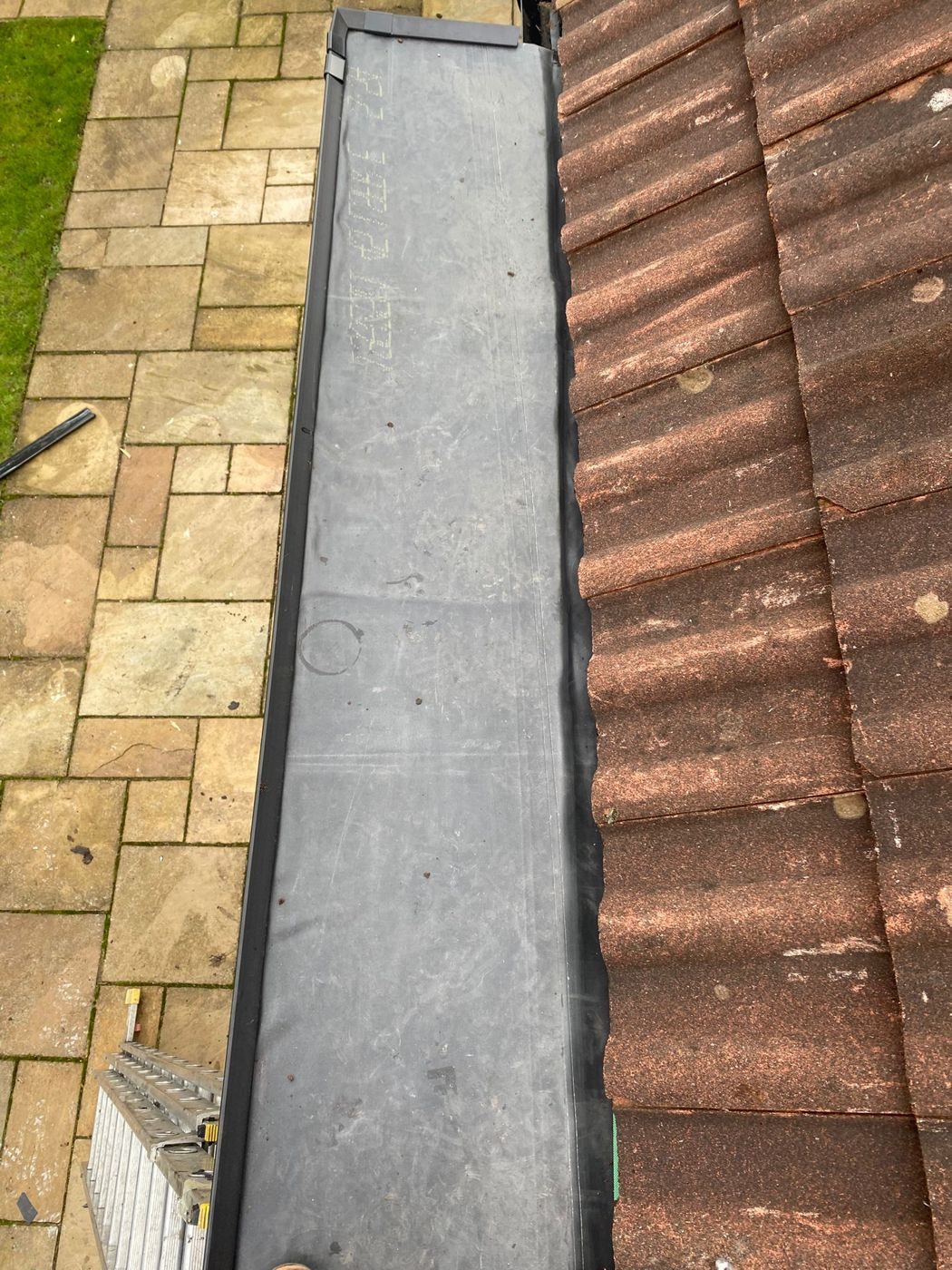
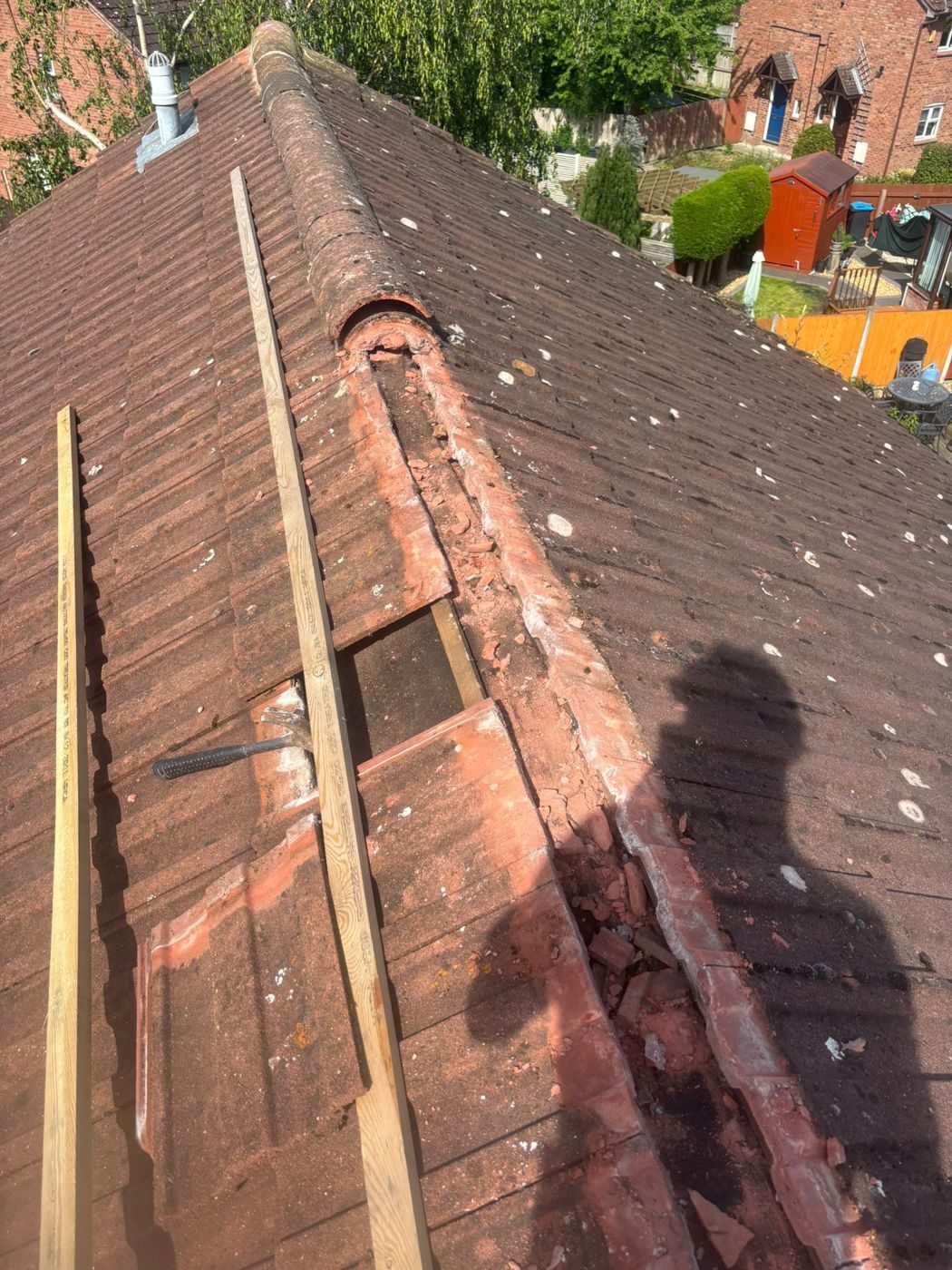
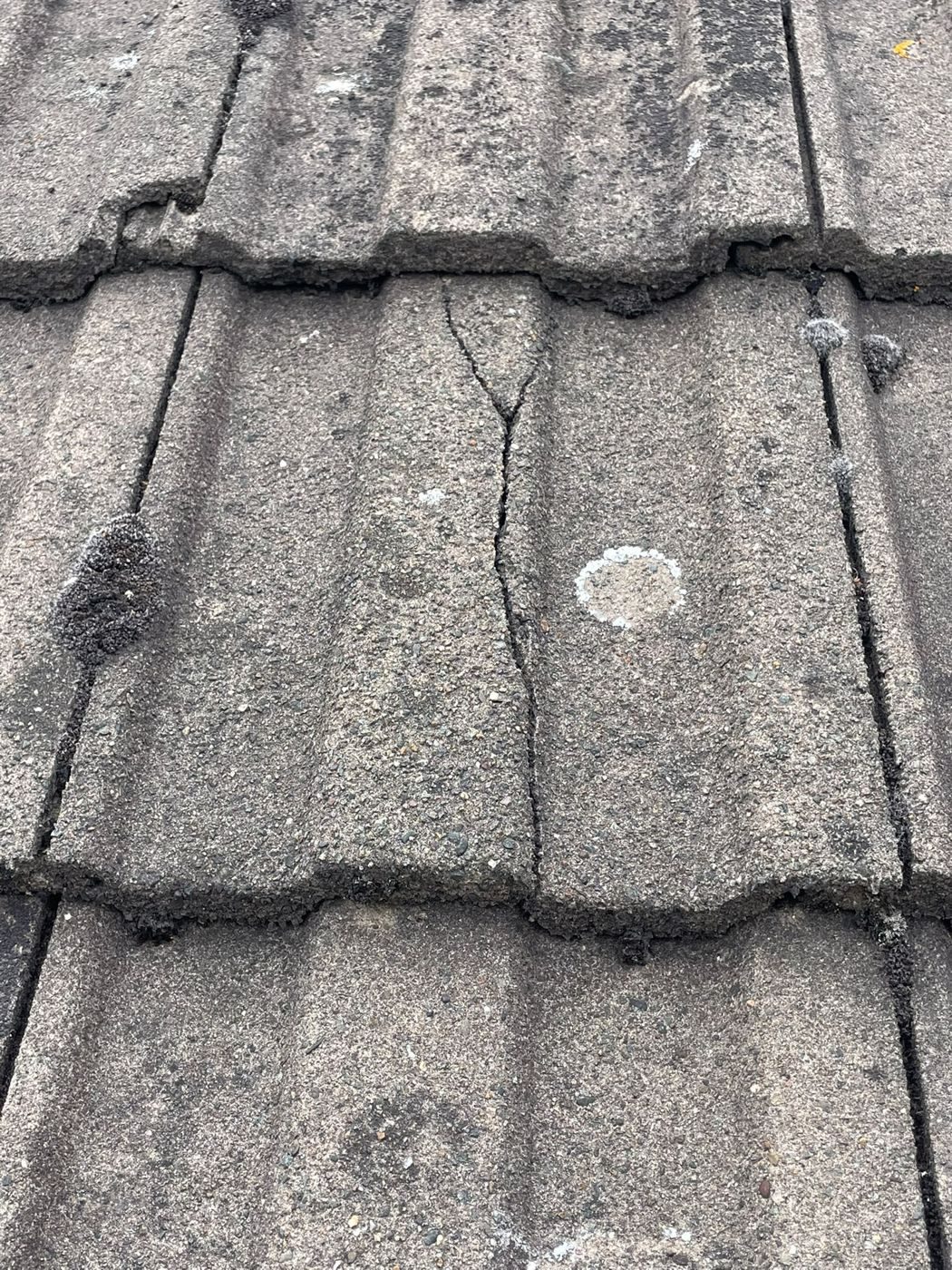
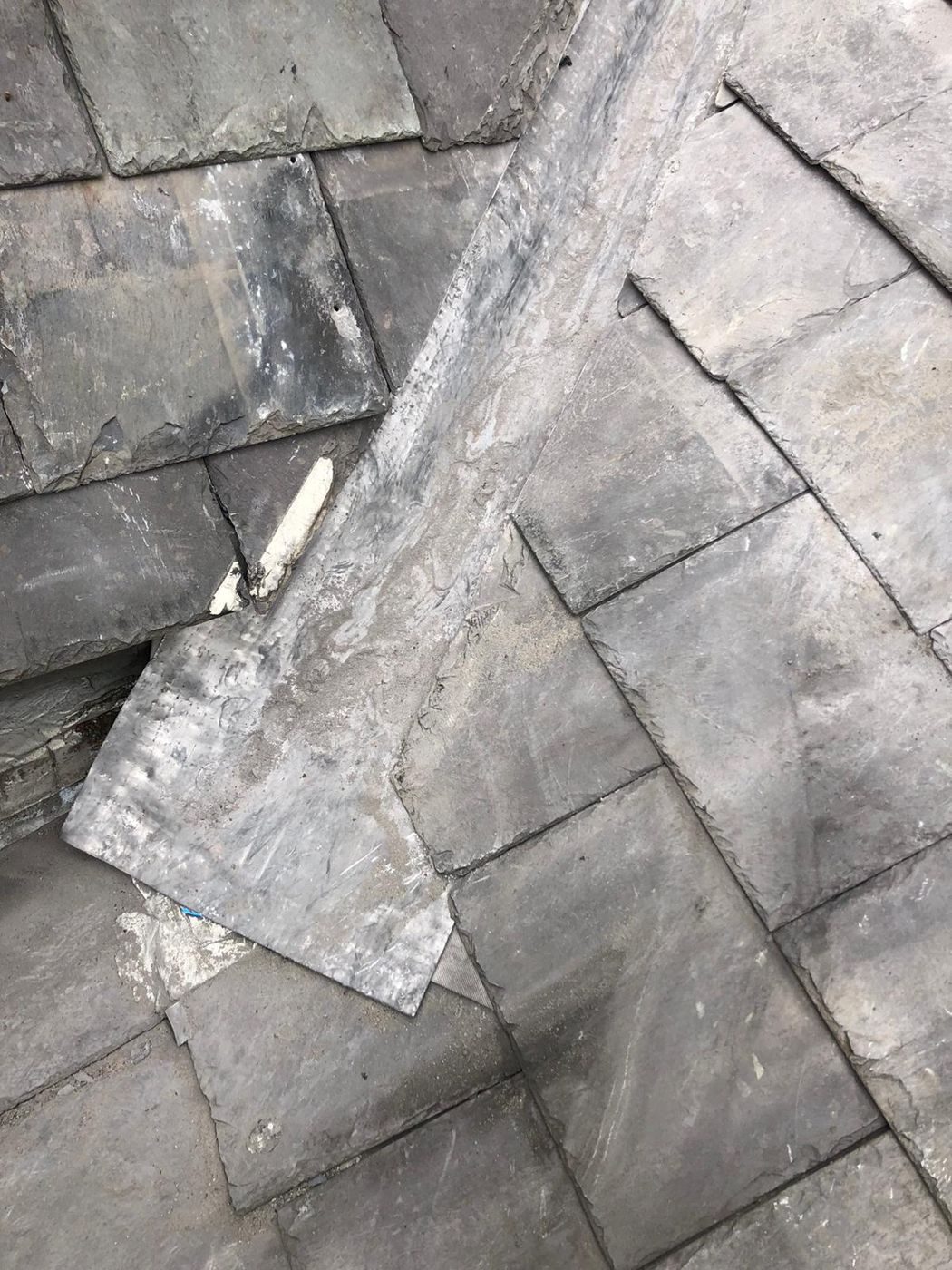
Photographs of our own work. None of them is a storm job — they show the parts that fail and how they are put right. More on the storm damage hub.
A masonry stack is held up by its own weight and by the mortar in its bed joints, and by nothing else. Wind pushes on the broad face and tries to pivot the whole stack about the point where it leaves the roof. The joints nearest the slope are worked hardest, so a tall stack is usually weakest within a few courses of the tiles, however good the upper brickwork looks. Height makes the lever longer. On an open hillside it also makes the push stronger.
The things standing on top of the stack go first. A pot is bedded in flaunching, and flaunching that has cracked and gone loose lets the pot rock in a gust until it turns, tilts or comes away. A cowl or bird guard catches the wind like a sail. Pots and cowls are not light, and they fall onto a roof slope, a conservatory, a drive or a path. A pot that has shifted is a falling hazard before it is a leak, which is why we treat it as urgent.
The lead comes next. A tall stack on a steep roof usually has a large back gutter behind it and stepped flashings up its sides, and the windward face takes the pressure. Lead there can lift at its edge or pull out of its chase while the sheltered side sits tight. The result is a stack that looks upright from the road while water is finding a way in beside it. Wind-driven rain is what shows it up, and the stain often appears in a room well away from the chimney. The wider list of what fails in a gale is in The Parts of a Roof That Fail in Wind — and Why the Edges Decide a Claim.
Stand well back from the house, on the ground, and look at the stack as a whole before you look at any detail. Compare the pots with each other. If one has gone out of line with its neighbours, it has moved in its bed. A phone camera zoomed in from the lawn shows a good deal, and a photograph taken before anything is touched or tidied is part of the evidence.
Then look at what has landed. Flaunching or mortar in the gutter, on a flat roof below a bay, or on the path under the stack tells you where the damage came from. Aerial and satellite poles are often strapped to a chimney because it is the highest fixing on the house, and a pole in a gale works on the brickwork like a spanner. The strap points are worth a look for fresh cracks.
Reaching a tall stack safely is a job in itself in Heswall. The ground slopes, so a scaffold has to be levelled and stepped on base plates and sole boards instead of simply being stood on the lawn, and the height needed on one side of a house is rarely the height needed on the other. Mature gardens add to it, with beech, holly and rhododendron between the gate and the gable. Some drives are long and steep and some lanes are narrow, so materials may be carried the last stretch by hand.
For a stack that stands well above the roof, the choice is a scaffold tower or full scaffold, or a chimney lift where the plot suits it. Which is right depends on the house, the slope and what has to be done at the top. Scaffolding is quoted separately, and we will say plainly whether it is needed. A tall scaffold on an open slope is also built for the wind it will stand in, which means more ties and less sheeting than the same structure in a sheltered street. Please do not put a ladder against a gutter to look; a gutter that a gale has loosened is not a fixing.
The first visit is about the hazard. Anything loose at the top is removed or secured, an opening is sheeted from a safe platform, and the area below is cleared or cordoned. Then we write down what we found, with photographs taken at height, because those are the pictures you cannot safely take yourself. That report goes to your insurer if you are claiming; we are roofers rather than loss assessors, so we do not deal with insurers or tell anyone what a policy covers. The difference between damage and long-standing wear is explained in Storm Damage or Wear and Tear? Why Roof Claims Get Turned Down.
The permanent work follows in dry weather. It may be a re-formed bed for the pots, new flaunching, lead renewed on the weather face, or a stack taken down a few courses and rebuilt on sound brickwork in a mortar that suits the brick. Where a stack is tall for its width, lowering it can be the sensible answer, and anything that involves bracing it to the roof structure or work below roof level is a matter for the council’s Building Control and a structural engineer, not legal advice from us but a point worth raising early. The routine work is described on our chimney repairs in Heswall page.
If water is coming in now, ring rather than fill in a form. Weekday emergency call-outs are answered around the clock; weekend cover runs from eight in the morning until seven in the evening. Please do not go up to look: describe what you can see from the ground.
Photograph everything before anybody tidies or moves anything, because that is the evidence. The steps for the hours after a storm are set out in what to do after storm damage to your roof, and the general picture is on our storm damage hub.
What an insurer means by a storm, why wear and tear turns claims down, what belongs in a roofer's report, who pays for the make-safe, and who is who in a claim. The aftermath itself — what to do first, what to check — is covered in detail on our roof repairs section and linked throughout rather than repeated here.
“job well done good communication throughout the job very clean and tiddy when the job is finish flat roof replacement many thanks.”
Sumit Bal“Excellent service from Buddy and the team in installing a new garage roof in a really professional manner. Was kept updated at all stages and given good advice as to our options. Would highly recommend”
Peter Aspinall“Very professional efficient team great communication
Would definitely recommend made the process quick and easy will definitely look to keep for any future need
Thankyou”
Every town has its own page, written around the roofs that are actually there. Start with the main storm damage page.
Describe the roof and roughly where you are, and we will come back to you — usually the same day. If water is coming in now, please call instead.
Prefer to talk? Call 07464 259566 · WhatsApp 0044 7464 259566 · Email Evensbuddy@yahoo.com
We work across Chester, Cheshire and the Wirral from our base at Elton, just north of Chester.
2 Manley View
Elton
Chester
CH2 4QF
Almost all of our work happens at your property rather than here, so please call before travelling.
Monday – Friday — 24hrs — Emergency Call-Outs
Saturday — 8:00 – 19:00
Sunday — 8:00 – 19:00
Weekday emergency call-outs are answered around the clock. Weekend cover is 8:00 to 19:00.