★★★★★
“job well done good communication throughout the job very clean and tiddy when the job is finish flat roof replacement many thanks.”
Sumit Bal
What a gale does to heavy gritstone stacks and stone slate roofs on Macclesfield’s hillside streets, how we reach them, make them safe and put them right, with a written report and photographs.
Macclesfield changes its building material as it climbs. Down by the Bollin the houses are mostly brick; higher up, through Hurdsfield and Sutton and on towards Kerridge and Tegg’s Nose, the walls, the stacks and often the roof coverings turn to Millstone Grit. Those upper streets have open ground behind them, and a roof there takes whatever the weather brings with very little standing in its way.
That changes what a storm does. On a light roof, wind tends to scatter small pieces. On a heavy one it is a different matter, because what comes loose is a stone slate, a coping slab or a section of a gritstone head, and heavy things do not drift down gently. They land on the roof below, on a conservatory, on a path or on a car. The first question after a blow is therefore not how much water is coming in, but what is still up there and how securely.
Our storm damage roof repairs page has the general account, and this one is about stone. This page deals with the local side: weight, joints and fixings on the hillside roofs of Macclesfield, and how we put them right. Stack work in more detail is on our chimney repairs in Macclesfield page.
The components a gale usually finds first, and the repairs that follow them.
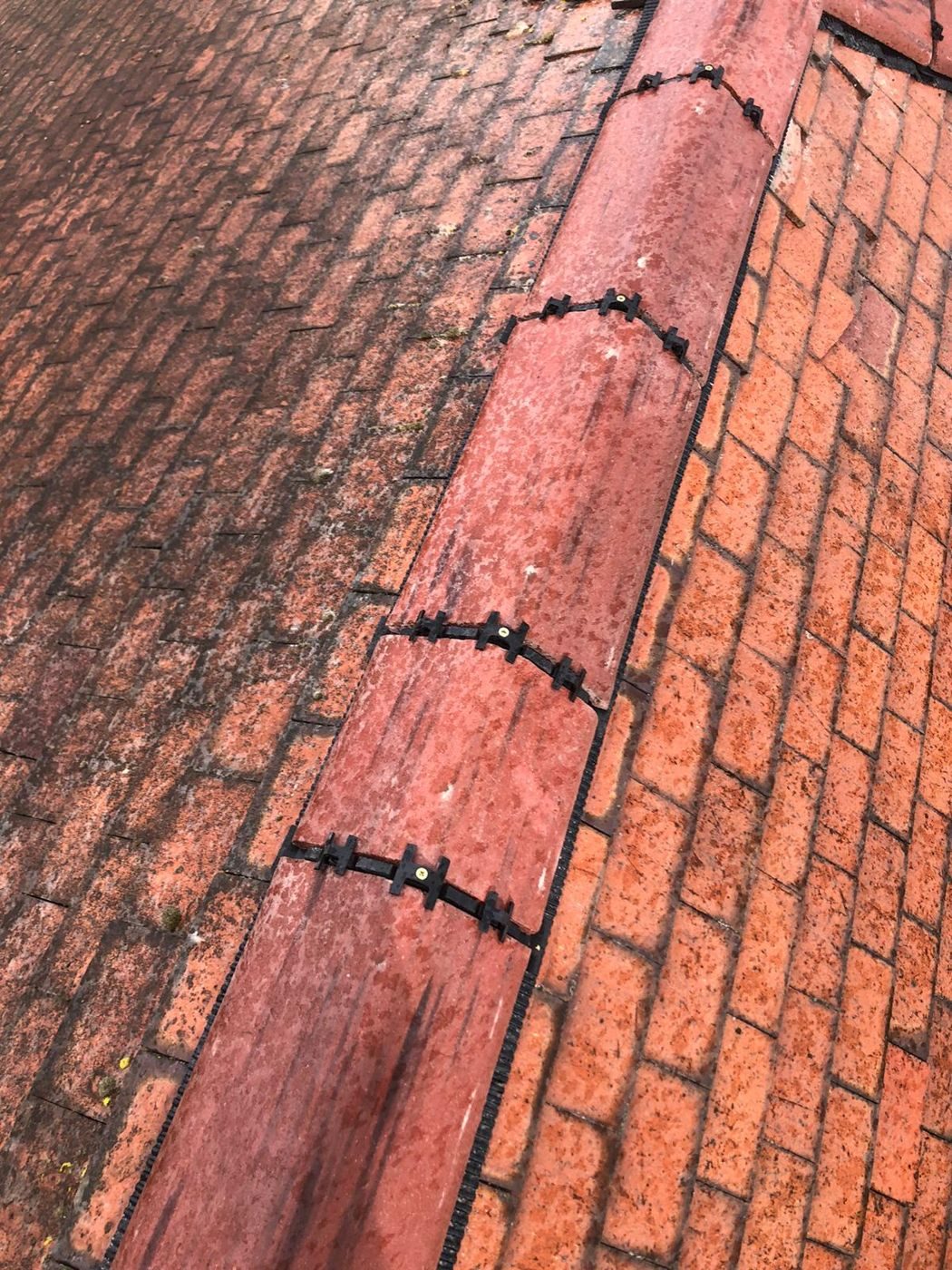
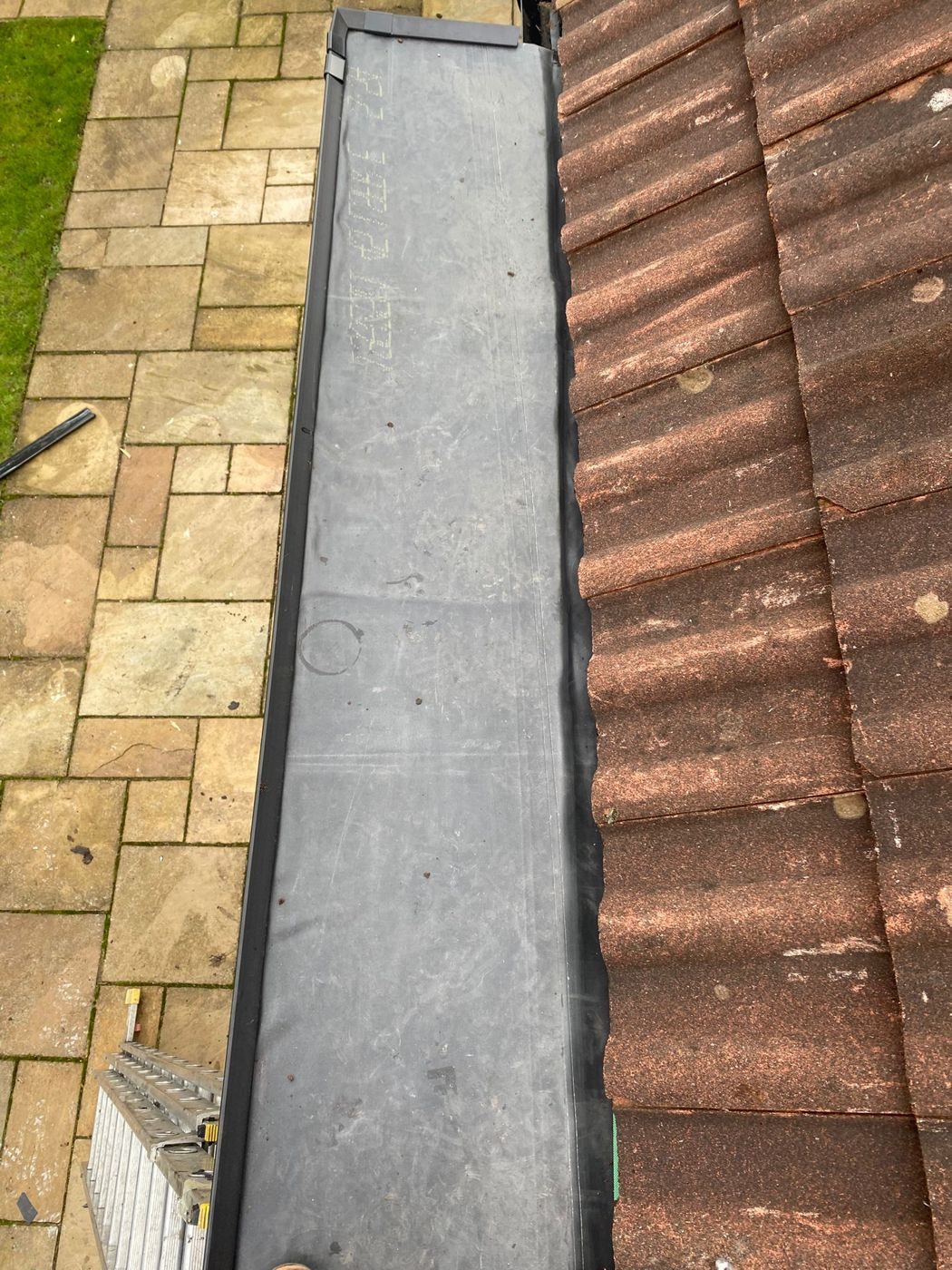
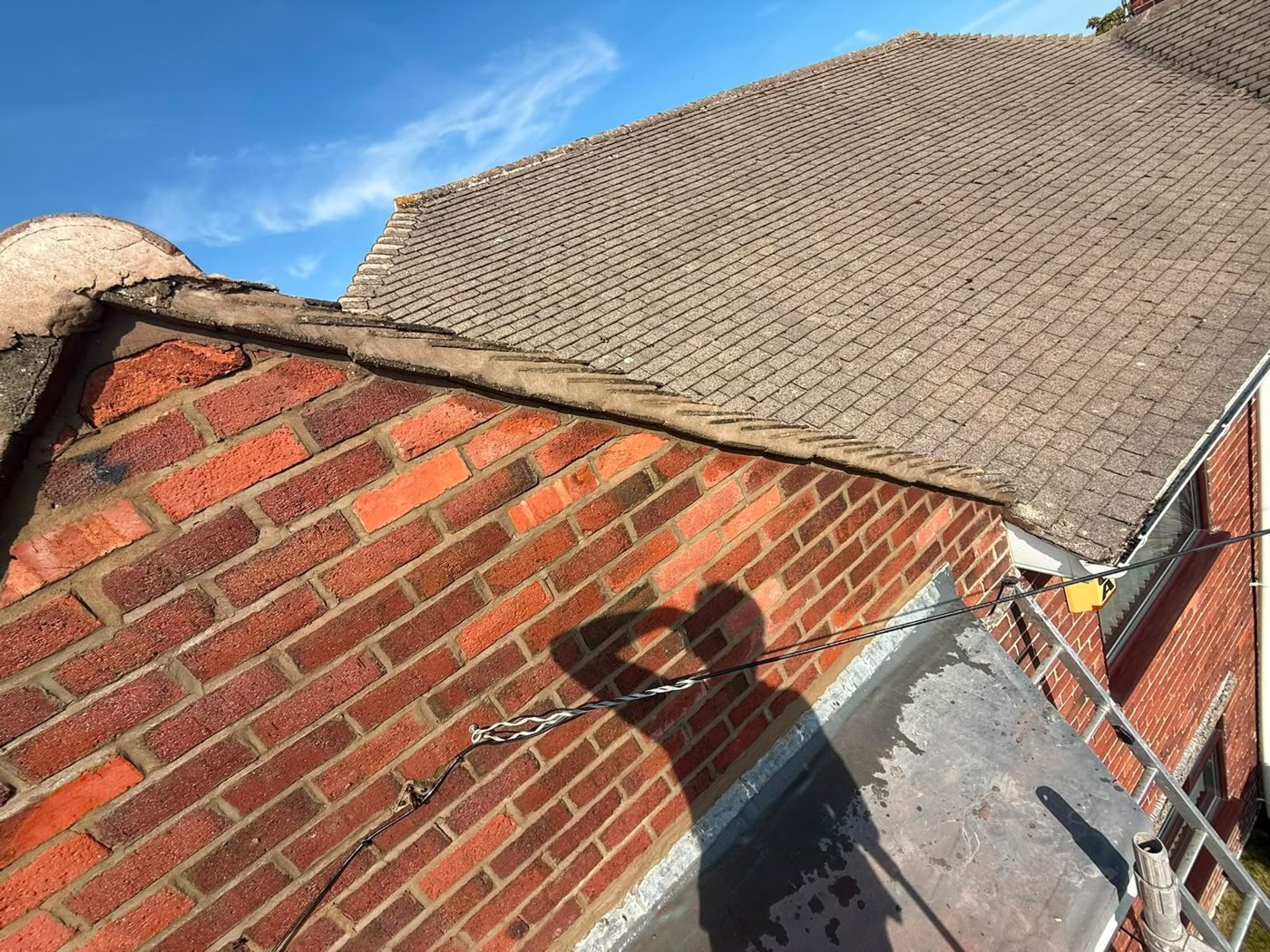
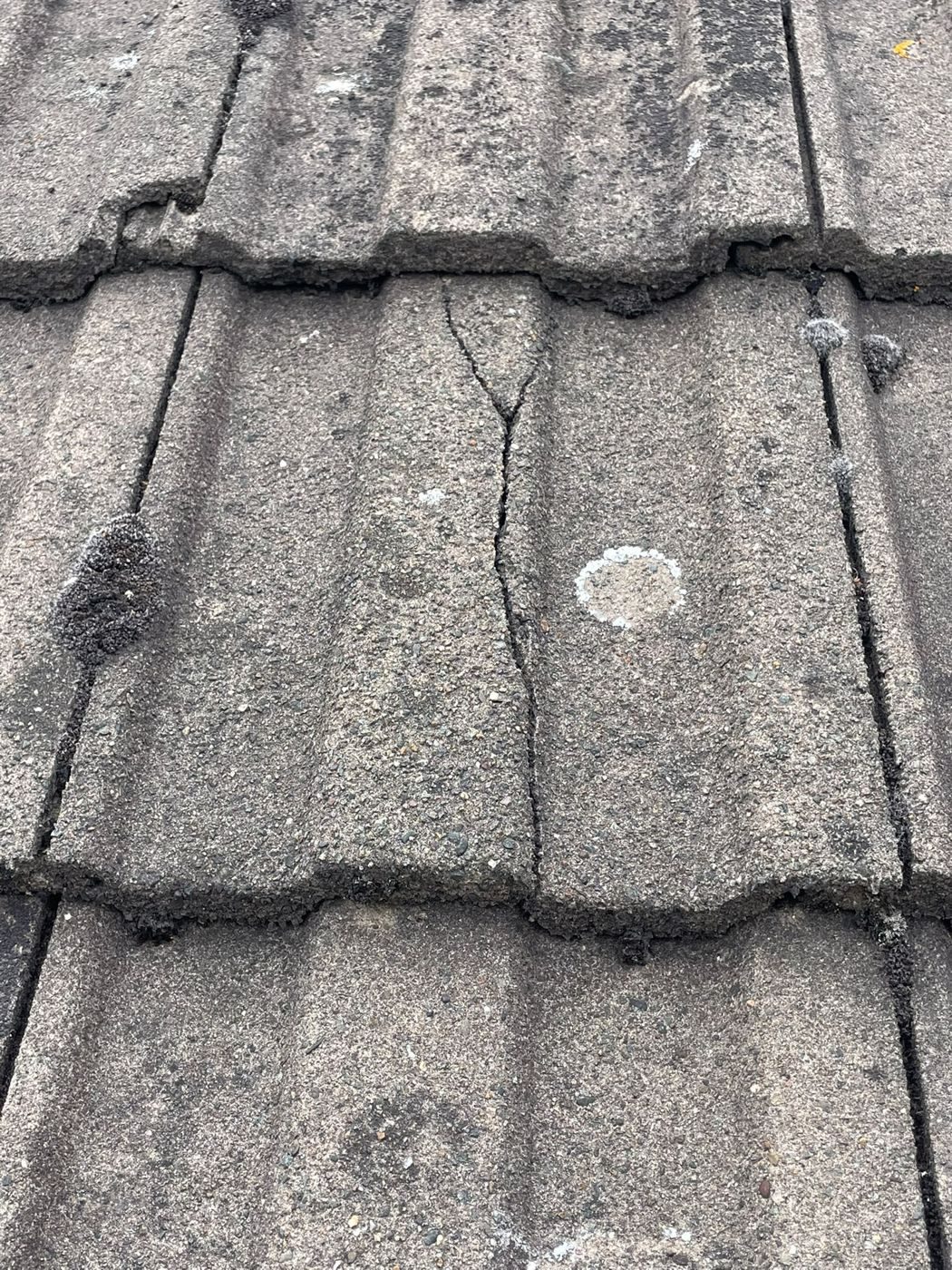
Photographs of our own work. None of them is a storm job — they show the parts that fail and how they are put right. More on the storm damage hub.
A gritstone stack is hard, but it is not one solid block. Many have two faces of good stone with a packed core of rubble and mortar between them, and the joints between the stones run from a hairline to the width of a thumb. Wind-driven rain is pushed into those joints, and over time the mortar washes back. A stack in that state looks sound from the street. In a gale, a stone that has lost its bed can shift, and the damage that follows is one of weight: a stone out of place, a pinning gone from a wide joint, a slab at the head no longer sitting level.
Stone slate is the other half of the story. Many older Macclesfield properties carry heavy flags laid in diminishing courses and hung on oak pegs rather than nailed. A flag normally gives way at the head, where the peg hole weakens the stone, and it is not a fault that shows until the flag drops. Because the courses diminish towards the ridge, a flag cannot be swapped for any other flag. It has to suit the course it sits in, which is why heavy slates and stone slates need careful fixing and careful matching, and why a casual patch can do more harm than the storm did.
Heavy coverings also tell you something about the loading. A roof of concrete tile and a roof of stone flags are not interchangeable in the way a quick quotation might suggest, and a timber structure that has carried stone for generations has been shaped around it. When a storm opens up a slope, the repair has to respect that structure. Spreading new fixings across old timbers without looking at their condition is how a small job turns into a bigger one.
Start from the garden or the pavement, not from a ladder. Walk round and look at the ground before the roof: on a stone house, the first evidence is often at your feet. A fresh pale chip on a flagged path, a sliver of stone in the gutter, or a lump of mortar on a lower roof says something has moved above you, and it is worth photographing exactly where it lies before anyone sweeps it away.
Then look up with binoculars or a phone zoomed in. Heavy coverings hide damage differently from light ones: a slipped stone slate often stays caught on its neighbours, hanging by a peg, so it reads as a crooked line rather than a gap. Do not move anything and do not stand under it. Describe it to us and we will advise on what to do next.
Reaching a heavy roof in Macclesfield is not a ladder job. A stone slate cannot be walked on carefully, because the stone breaks under a boot, so the working platform has to be a scaffold or a tower that takes the weight off the roof itself. On sloping ground that means a good deal of preparation, and scaffolding is quoted separately because nobody knows how much is needed until the ground has been looked at.
The streets bring their own limits. Several frontages in the town sit straight on the footway and need a licence from Cheshire East Council for a scaffold, and the lanes towards Rainow and Kerridge can be too narrow for a wagon to stand. Some plots have no vehicle access beyond a gate. We sort those questions out when we look at the job, and where the roof is dangerous in the meantime we make it safe first from whatever access is available.
The make-safe on a heavy roof is mostly about taking weight off before it falls. A flag that has slipped is lifted and set aside rather than levered, and a loose slab or stone on a stack is secured or taken down in a controlled way so it cannot reach the ground. Where water is coming in we cover the opening from a safe platform. Stones that come off are kept in the order they came down so that they can go back where they were, and every step is photographed for the report.
The permanent repair follows once the roof has been looked at properly. Stone slates are re-hung in their own courses, with new oak pegs where the old ones have failed, and joints in a gritstone stack are cut out by hand and refilled, with wide ones pinned, rather than smeared over. Leadwork is set to the beds the stone actually has. Our report names what failed and why, with photographs, so that you have something your insurer can read. We are roofers, not loss assessors, and we do not deal with your insurer. Our guide to The Parts of a Roof That Fail in Wind — and Why the Edges Decide a Claim explains where wind attacks first, and Can You Match My Tiles? Part-Repairs, Reclaimed Tiles and “Matching Sets” covers matching old materials.
If water is coming in now, ring rather than fill in a form. Weekday emergency call-outs are answered around the clock; weekend cover runs from eight in the morning until seven in the evening. Please do not go up to look: describe what you can see from the ground.
Photograph everything before anybody tidies or moves anything, because that is the evidence. The steps for the hours after a storm are set out in what to do after storm damage to your roof, and the general picture is on our storm damage hub.
What an insurer means by a storm, why wear and tear turns claims down, what belongs in a roofer's report, who pays for the make-safe, and who is who in a claim. The aftermath itself — what to do first, what to check — is covered in detail on our roof repairs section and linked throughout rather than repeated here.
“job well done good communication throughout the job very clean and tiddy when the job is finish flat roof replacement many thanks.”
Sumit Bal“Excellent service from Buddy and the team in installing a new garage roof in a really professional manner. Was kept updated at all stages and given good advice as to our options. Would highly recommend”
Peter Aspinall“Very professional efficient team great communication
Would definitely recommend made the process quick and easy will definitely look to keep for any future need
Thankyou”
Every town has its own page, written around the roofs that are actually there. Start with the main storm damage page.
Describe the roof and roughly where you are, and we will come back to you — usually the same day. If water is coming in now, please call instead.
Prefer to talk? Call 07464 259566 · WhatsApp 0044 7464 259566 · Email Evensbuddy@yahoo.com
We work across Chester, Cheshire and the Wirral from our base at Elton, just north of Chester.
2 Manley View
Elton
Chester
CH2 4QF
Almost all of our work happens at your property rather than here, so please call before travelling.
Monday – Friday — 24hrs — Emergency Call-Outs
Saturday — 8:00 – 19:00
Sunday — 8:00 – 19:00
Weekday emergency call-outs are answered around the clock. Weekend cover is 8:00 to 19:00.