★★★★★
“job well done good communication throughout the job very clean and tiddy when the job is finish flat roof replacement many thanks.”
Sumit Bal
In Flint a gale off the Dee tests the chimney before anything else on the roof. Here is why a moved pot or loose stack is treated as urgent, and how we make it safe and put it right.
Flint sits low on the edge of the Dee, with the castle and the marsh in front of it and very little between the houses and the open water. The prevailing wind in this country comes from the south-west, and anything facing an estuary takes more of it than a roof tucked into a valley. On most houses here the tallest, most exposed part of the building is the chimney, which means a gale tests it before it tests the slope.
Most people look for the leak after a storm, because the leak is what shows on a ceiling. With a stack the order of importance is the other way round. A pot that has turned, a collar of render that has cracked away, or a few courses of brick that have shifted are all things that can drop onto the roof below, the path or the drive without any warning. Water coming in is a problem for the afternoon. Something coming down is a problem for the next gust.
That is why we treat a disturbed stack as urgent rather than as something to look at next week. What follows covers how storm damage to chimneys shows itself in Flint, how we get to a stack safely, and what goes into the written report. Our everyday chimney work in the town is described on the chimney repairs in Flint page, and the wider storm picture starts at our storm damage roof repairs page.
The components a gale usually finds first, and the repairs that follow them.
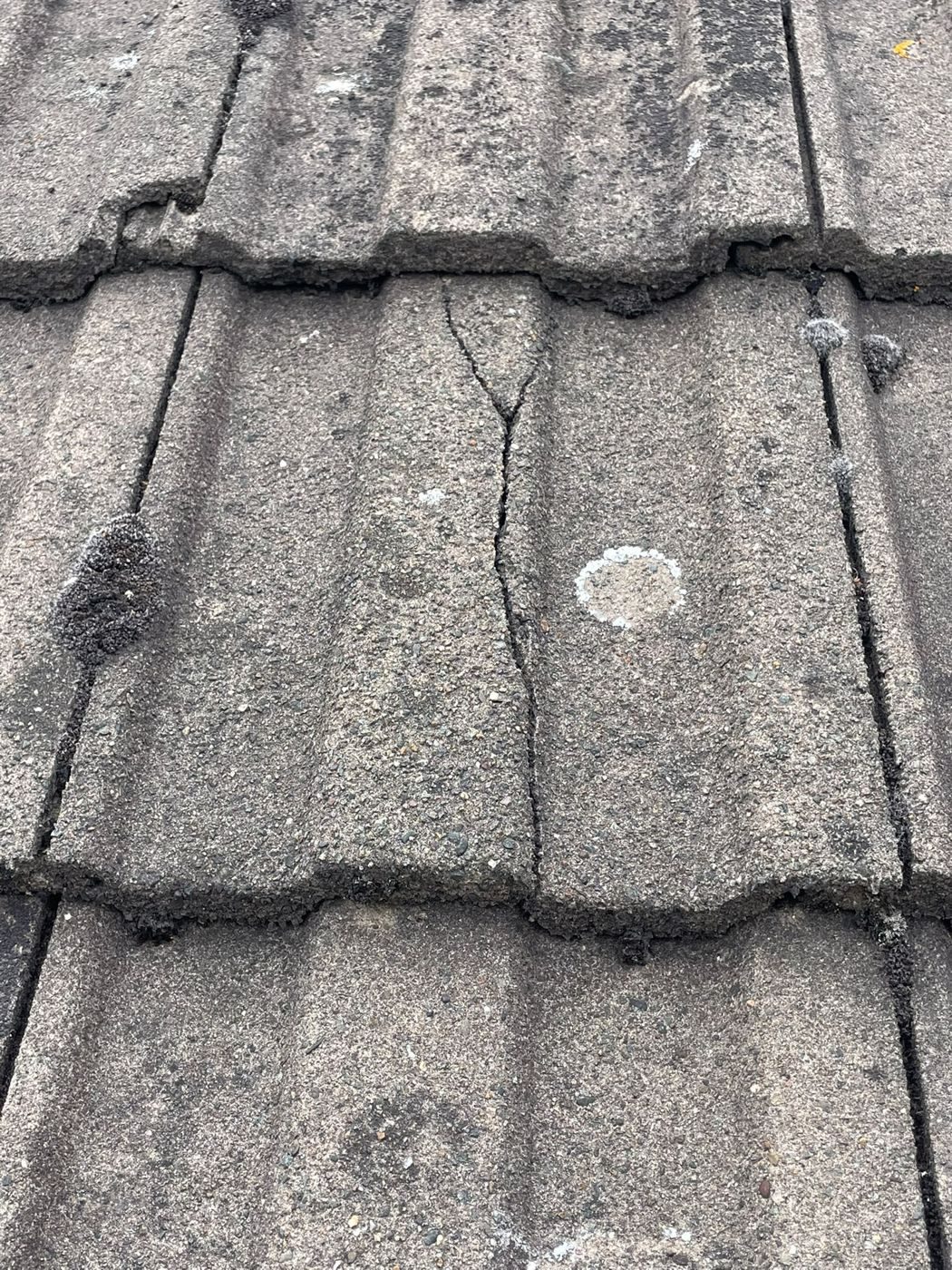
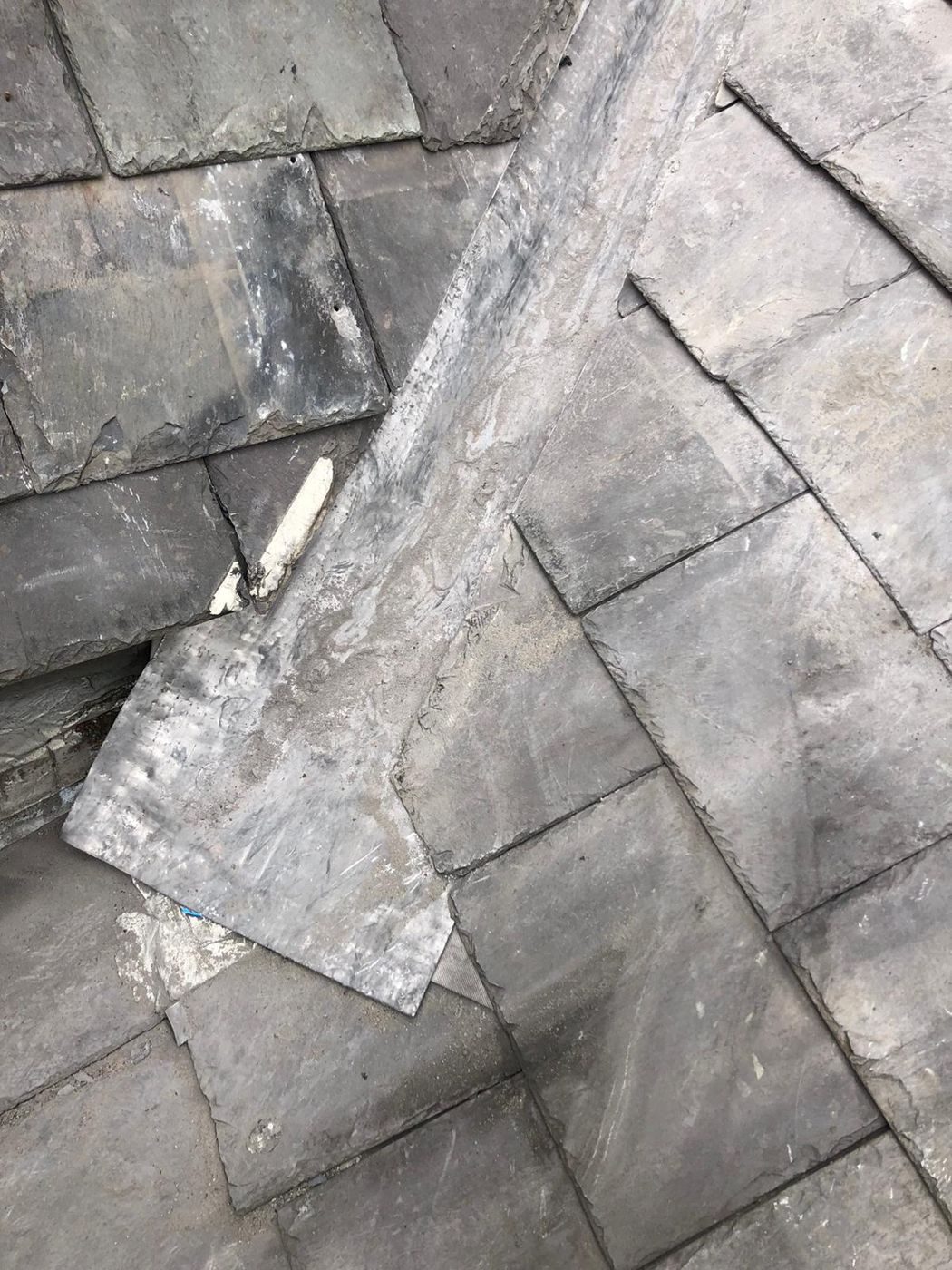
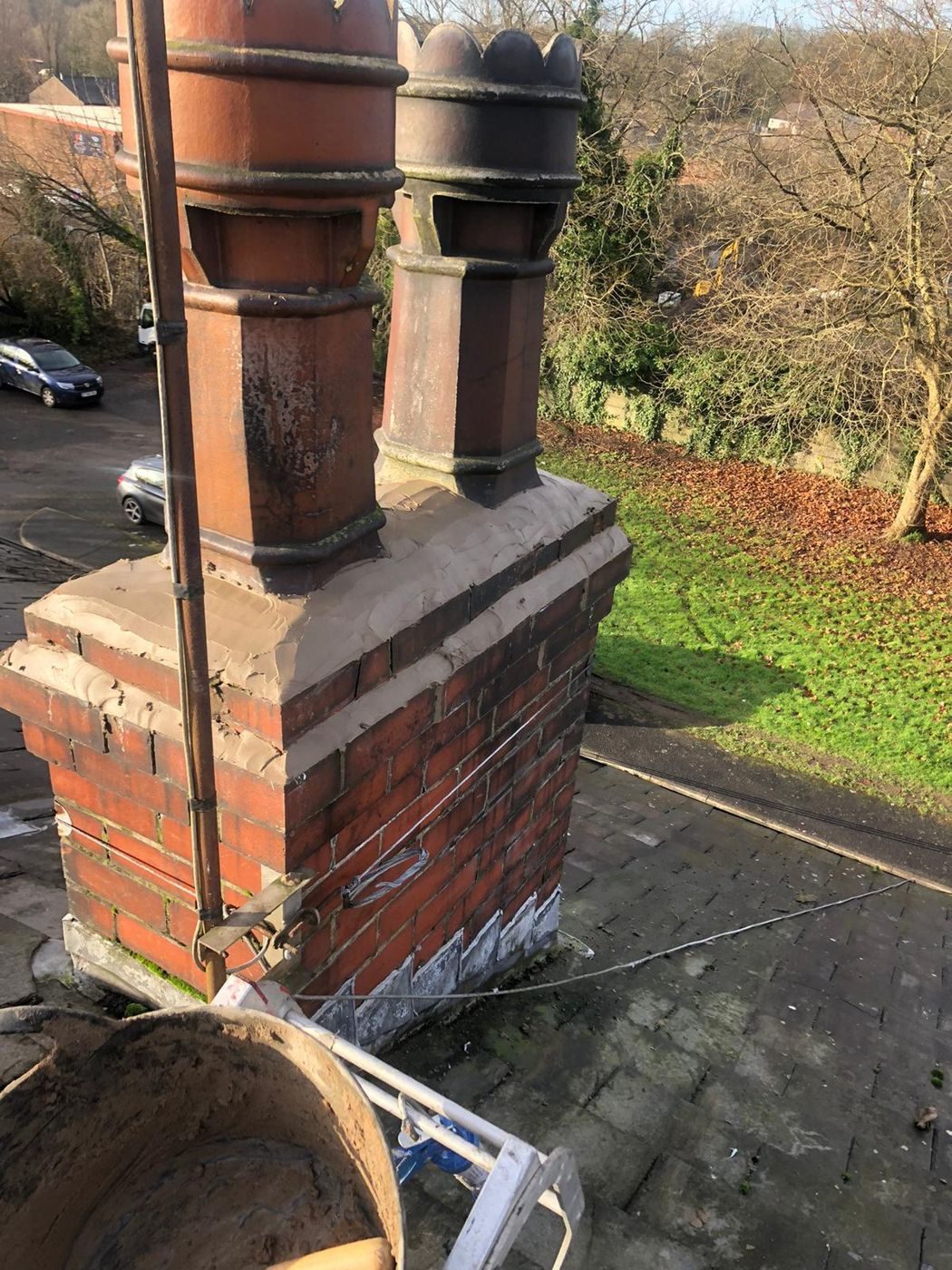
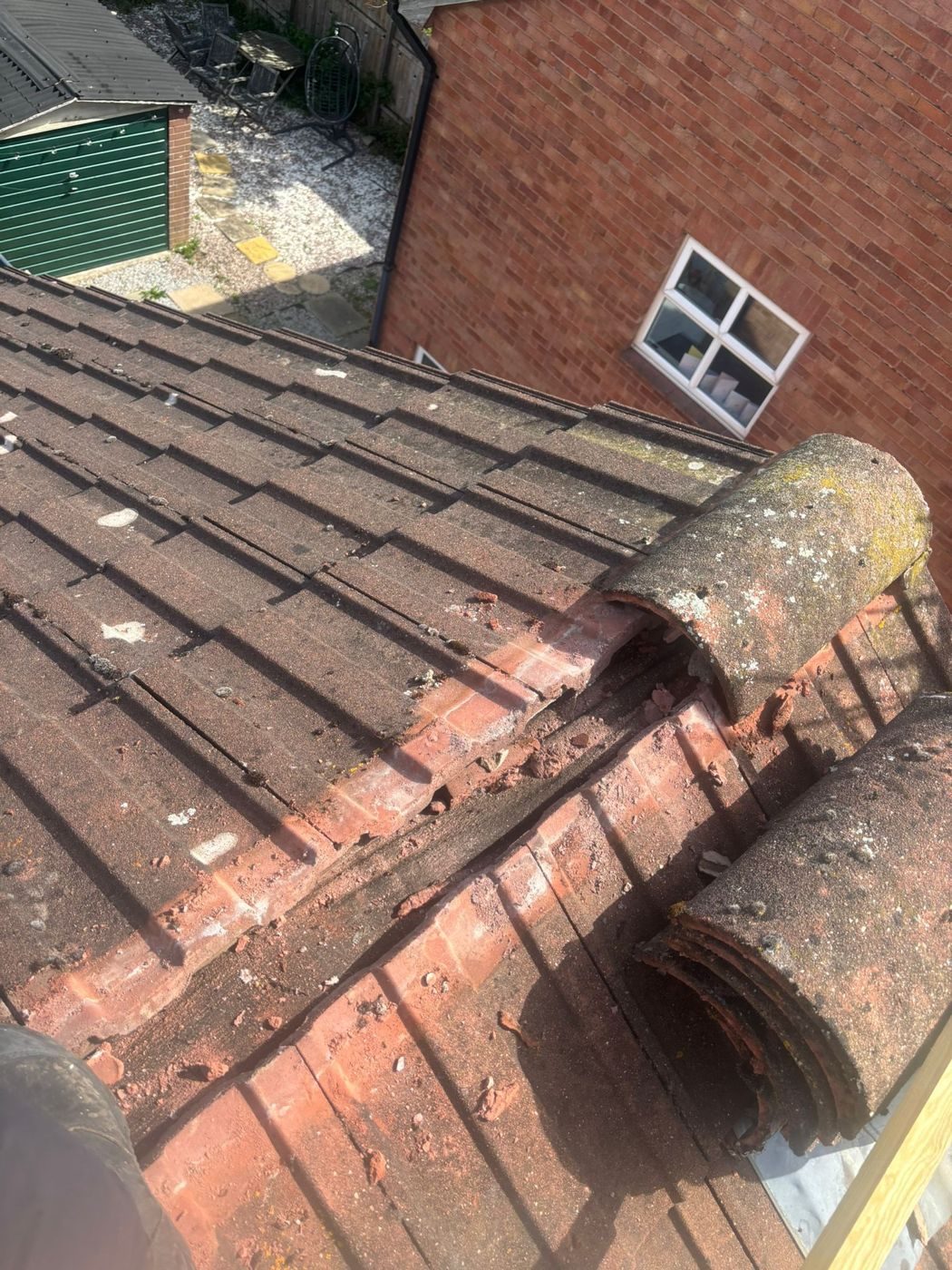
Photographs of our own work. None of them is a storm job — they show the parts that fail and how they are put right. More on the storm damage hub.
A chimney stack in a gale behaves like a mast. It stands clear of the ridge, the wind reaches it from every side, and whatever sits on top is held there by a bed of mortar and nothing else. The pot rests in flaunching, the flaunching rests on the top course of brick, and if the wind can rock the pot even slightly the mortar around it cracks and the whole assembly starts to loosen. A pot that has turned a few degrees, or sits at a lean it did not have before, has already come away from its bed.
On the rendered and roughcast stacks that are common in Flint the same wind finds a different weakness. Render that had already lost its bond to the brick is no longer a skin but a loose plate, and a hard blow can bring a whole panel of it away. Those pieces land on the roof, in the gutter or on whatever is underneath, and they land heavy. Wind-driven rain off the estuary then goes straight into the bare brick the render was covering, so the stack goes from sound-looking to leaking in one night.
This is the reason for the urgency. A leaking flashing can wait a day while the room below is contained. A pot or a section of stack that has moved cannot be left in the same way, because nobody can say when it will finish the job. Until it has been looked at, treat the area under the stack as somewhere nobody goes, including the garden, the path and any flat roof below. Telephone us, say what you can see from the ground, and we will tell you what to do while we get there.
None of this needs anyone on a ladder, and none of it should involve one. Stand well back from the house, look up at the stack in daylight, and compare it with how it looked before the storm. Binoculars or a phone zoomed in do more than people expect, and a photograph taken from the ground is useful evidence in its own right, so take a few before anything is moved or tidied.
Pay attention to what has landed as well as what is still up there. After a gale the lawn, the path and any lower roof are as informative as the stack itself, and pieces on the ground tell you which face has been hit. Keep children and pets away from the base of the chimney until it has been checked, and do not stand underneath it to take the picture.
The stack is the highest point of the house, so the work is always at height, and in Flint it is usually exposed to the same wind that did the damage. We do not reach it from a ladder on a wet gutter. A make-safe on a stack means a tower or a scaffold, and scaffolding is quoted separately and shown as its own item, so you can see exactly what it is. On a low single-storey roof beside the house we can sometimes work without one, and we will tell you when that is the case.
Access to the houses themselves is generally straightforward on the estates, with drives and side gates. In some of the older streets towards the centre the front wall sits right on the footway, and putting a scaffold up there normally needs a licence from Flintshire County Council. Flint is in Wales, so the council and the building regulations side differ from the English towns we cover, although an insurance claim works in just the same way. Where a stack straddles a boundary, the neighbour should hear about it before the tubes arrive.
The first visit is about removing the hazard. Loose pots are lifted off and set down safely, unstable render and brick are taken away in a controlled way rather than left to fall, and anything that cannot be rebuilt on the day is secured or taken down to a sound course. The debris comes down the scaffold, not off the roof, and the area underneath is sheeted. The make-safe is temporary and we say so in writing, so it is never mistaken for the repair.
The permanent work follows in dry weather, once the stack has been properly examined. That may be re-bedding the pot in fresh flaunching, repointing, rebuilding the head, or stripping failed render back to brick, with leadwork put right while the stack is bare. The photographs and the written report, which describes what failed and what the make-safe involved, are what you can pass to your insurer. How the work is paid for is for you and your insurer; we are not loss assessors, and we do not deal with insurers on anyone’s behalf. Our general roof repairs in Flint repairs page covers the rest of the roof.
If water is coming in now, ring rather than fill in a form. Weekday emergency call-outs are answered around the clock; weekend cover runs from eight in the morning until seven in the evening. Please do not go up to look: describe what you can see from the ground.
Photograph everything before anybody tidies or moves anything, because that is the evidence. The steps for the hours after a storm are set out in what to do after storm damage to your roof, and the general picture is on our storm damage hub.
What an insurer means by a storm, why wear and tear turns claims down, what belongs in a roofer's report, who pays for the make-safe, and who is who in a claim. The aftermath itself — what to do first, what to check — is covered in detail on our roof repairs section and linked throughout rather than repeated here.
“job well done good communication throughout the job very clean and tiddy when the job is finish flat roof replacement many thanks.”
Sumit Bal“Excellent service from Buddy and the team in installing a new garage roof in a really professional manner. Was kept updated at all stages and given good advice as to our options. Would highly recommend”
Peter Aspinall“Very professional efficient team great communication
Would definitely recommend made the process quick and easy will definitely look to keep for any future need
Thankyou”
Every town has its own page, written around the roofs that are actually there. Start with the main storm damage page.
Describe the roof and roughly where you are, and we will come back to you — usually the same day. If water is coming in now, please call instead.
Prefer to talk? Call 07464 259566 · WhatsApp 0044 7464 259566 · Email Evensbuddy@yahoo.com
We work across Chester, Cheshire and the Wirral from our base at Elton, just north of Chester.
2 Manley View
Elton
Chester
CH2 4QF
Almost all of our work happens at your property rather than here, so please call before travelling.
Monday – Friday — 24hrs — Emergency Call-Outs
Saturday — 8:00 – 19:00
Sunday — 8:00 – 19:00
Weekday emergency call-outs are answered around the clock. Weekend cover is 8:00 to 19:00.