★★★★★
“job well done good communication throughout the job very clean and tiddy when the job is finish flat roof replacement many thanks.”
Sumit Bal
Roof made safe first, permanent repair second, and a written report with photographs for your insurer in between — on tiled, slate and flat roofs across Chester, Cheshire, the Wirral and Deeside.
A storm does not break a roof at random. It finds the parts that were already only just holding on, and it finds them in a particular order: the ridge, the verges, the flashings, the valley, and any tile whose nail has rusted through. The middle of a sound slope usually survives a gale without losing anything at all.
That matters more than it sounds, because it is exactly the argument you end up having with an insurer. They will want to know whether the wind broke a roof that was in reasonable order, or whether it simply finished off something that had been coming loose for a long time. The honest answer is often somewhere in between, and what decides it is evidence gathered at the time rather than an opinion offered afterwards.
What we do is straightforward, and it is worth being exact about it. We come out, we make the roof safe so it stops doing damage every hour it rains, and we put in writing what has failed and why, with photographs from the roof. You send that to your insurer. We do the roofing work a claim pays for; we do not run the claim. We are roofers rather than loss assessors, so we will not deal with your insurer for you and we will not tell you what your policy covers — but a report that names the defect is what an insurer actually asks for, and it is a great deal more use than an invoice with a total on it.
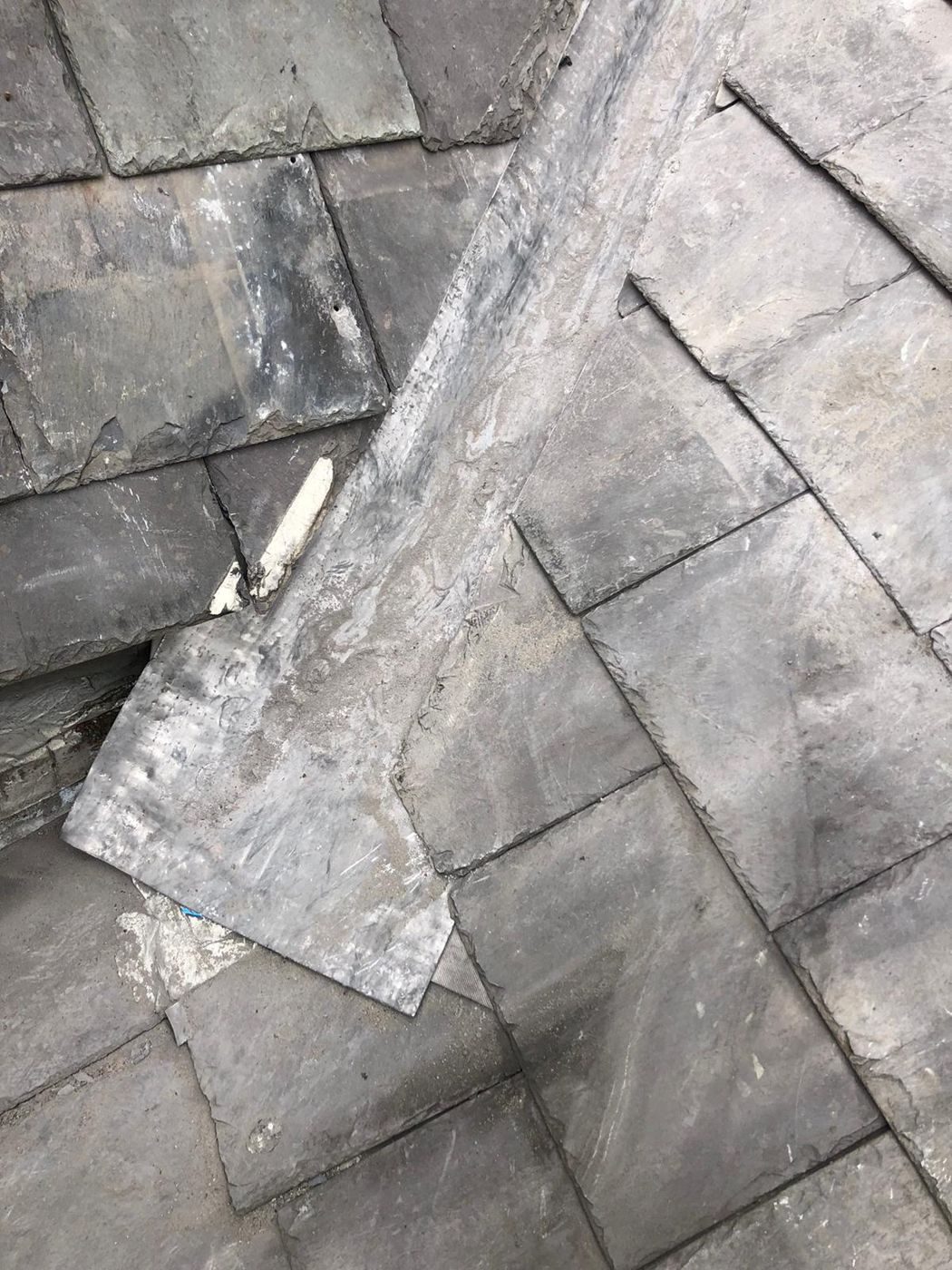
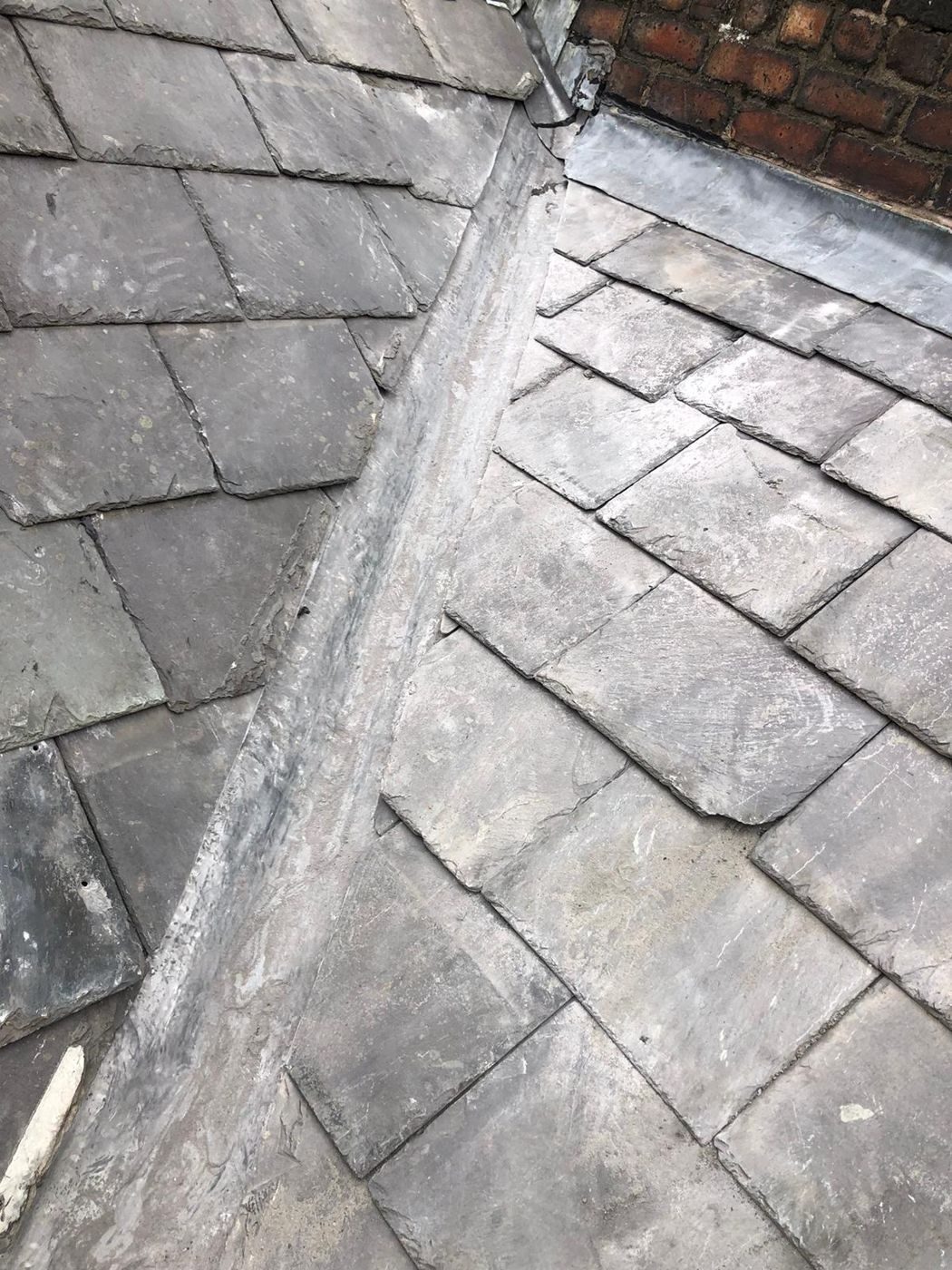
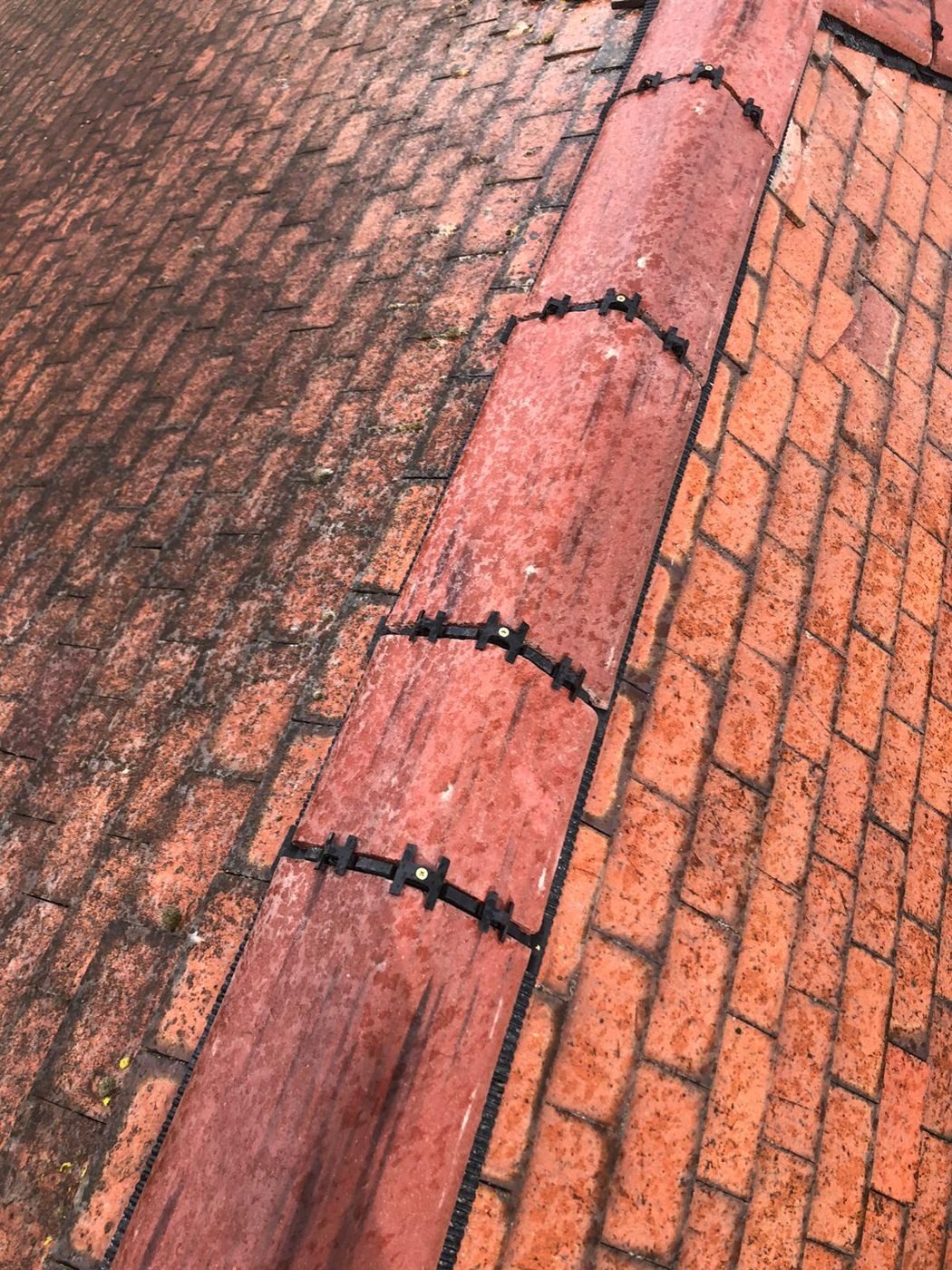
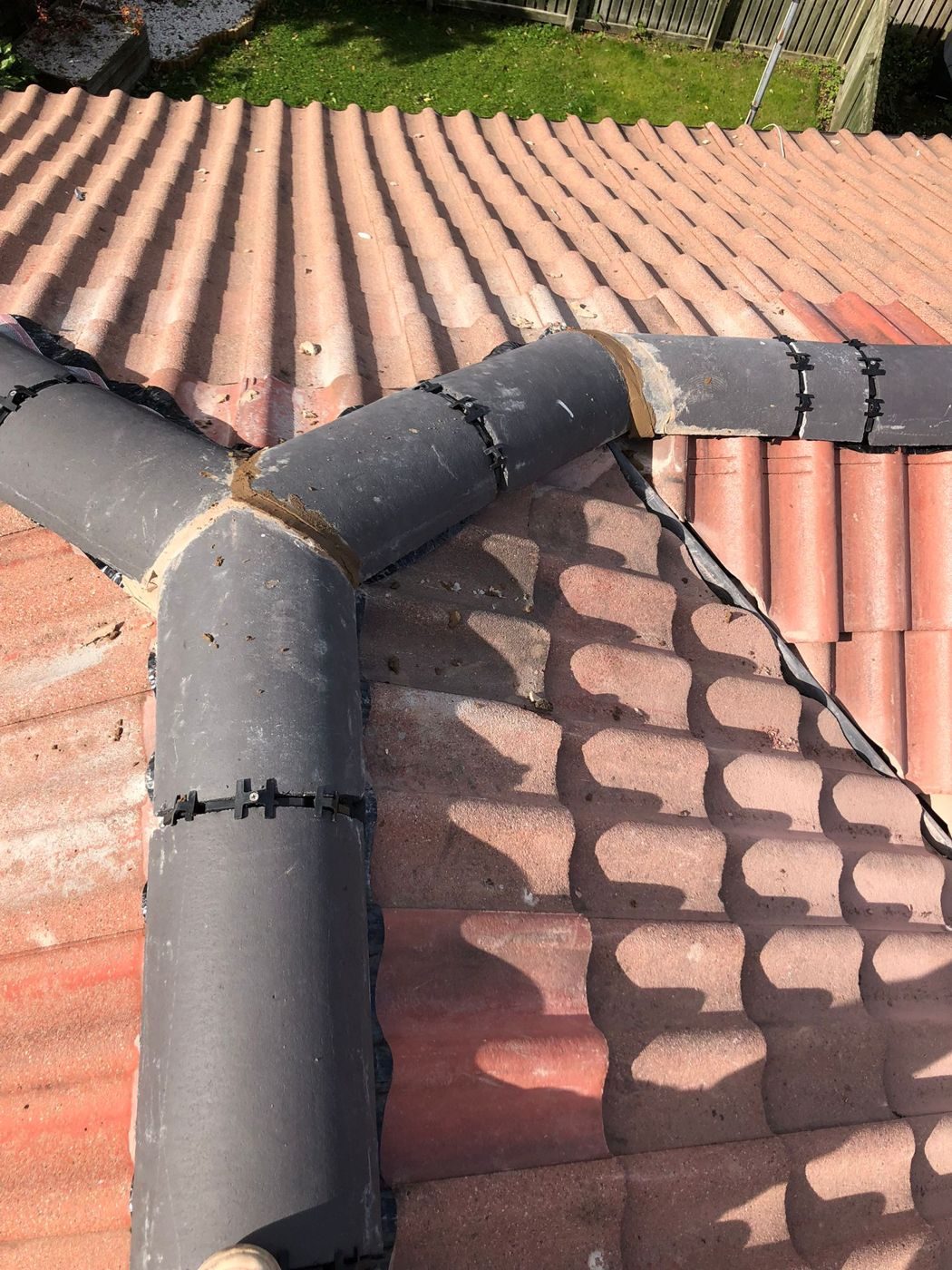
Ridge tiles resting on mortar that stopped gripping a long time ago, a verge blown hollow at the apex, a junction packed with broken slate, a valley that had rotted out underneath. These are the components wind finds — and every one of these is a roof of ours, not a stock picture.
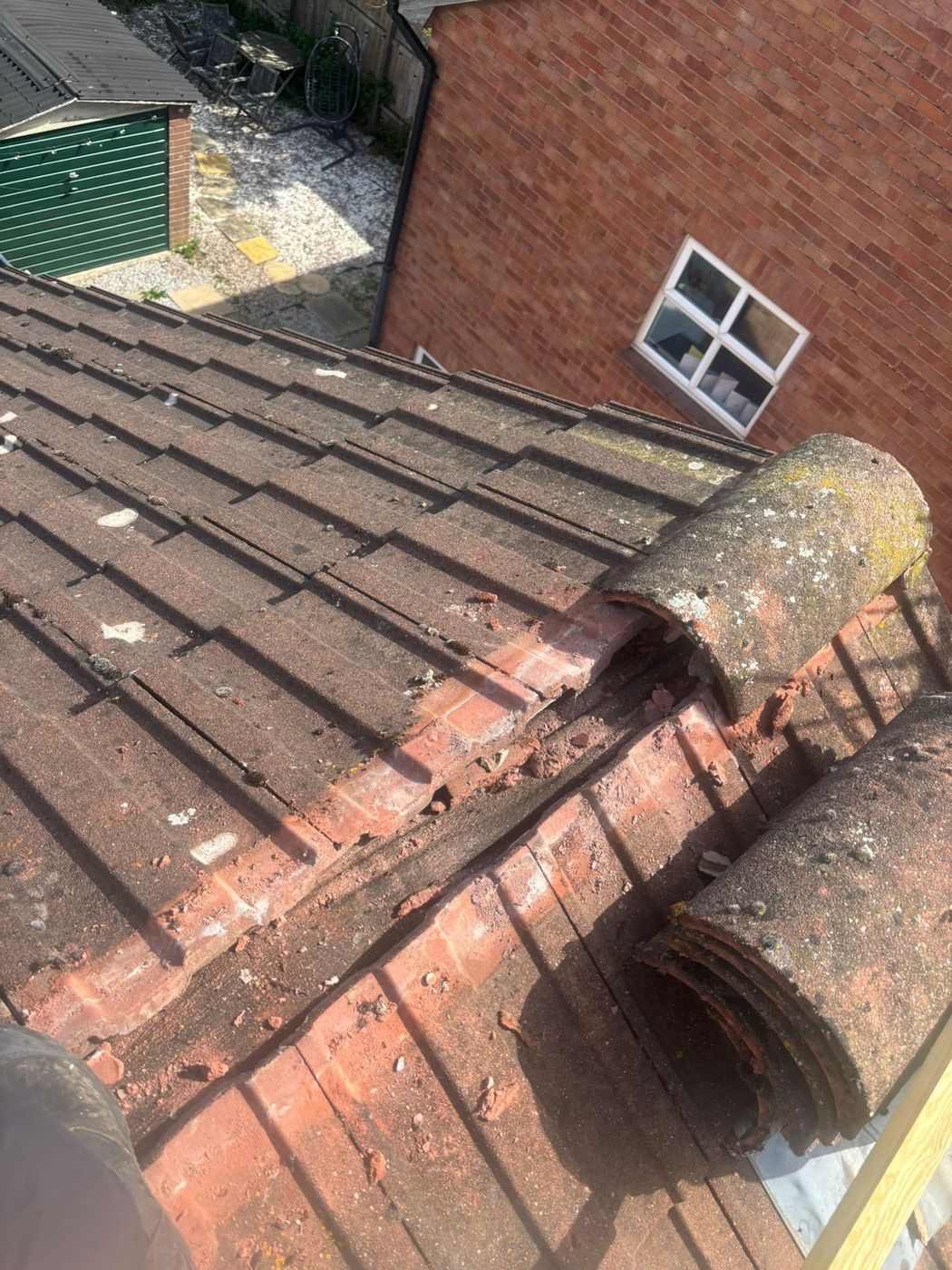
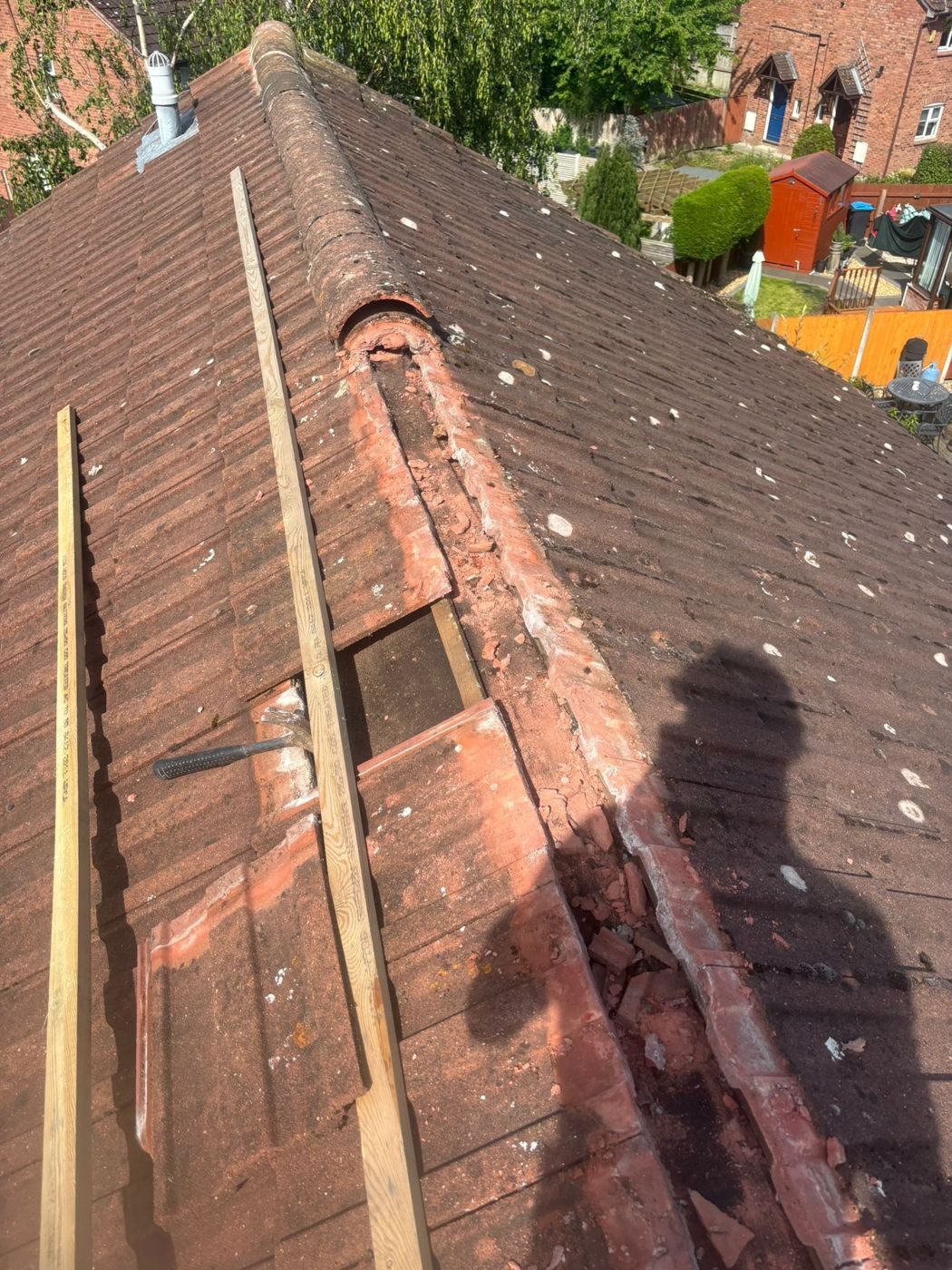
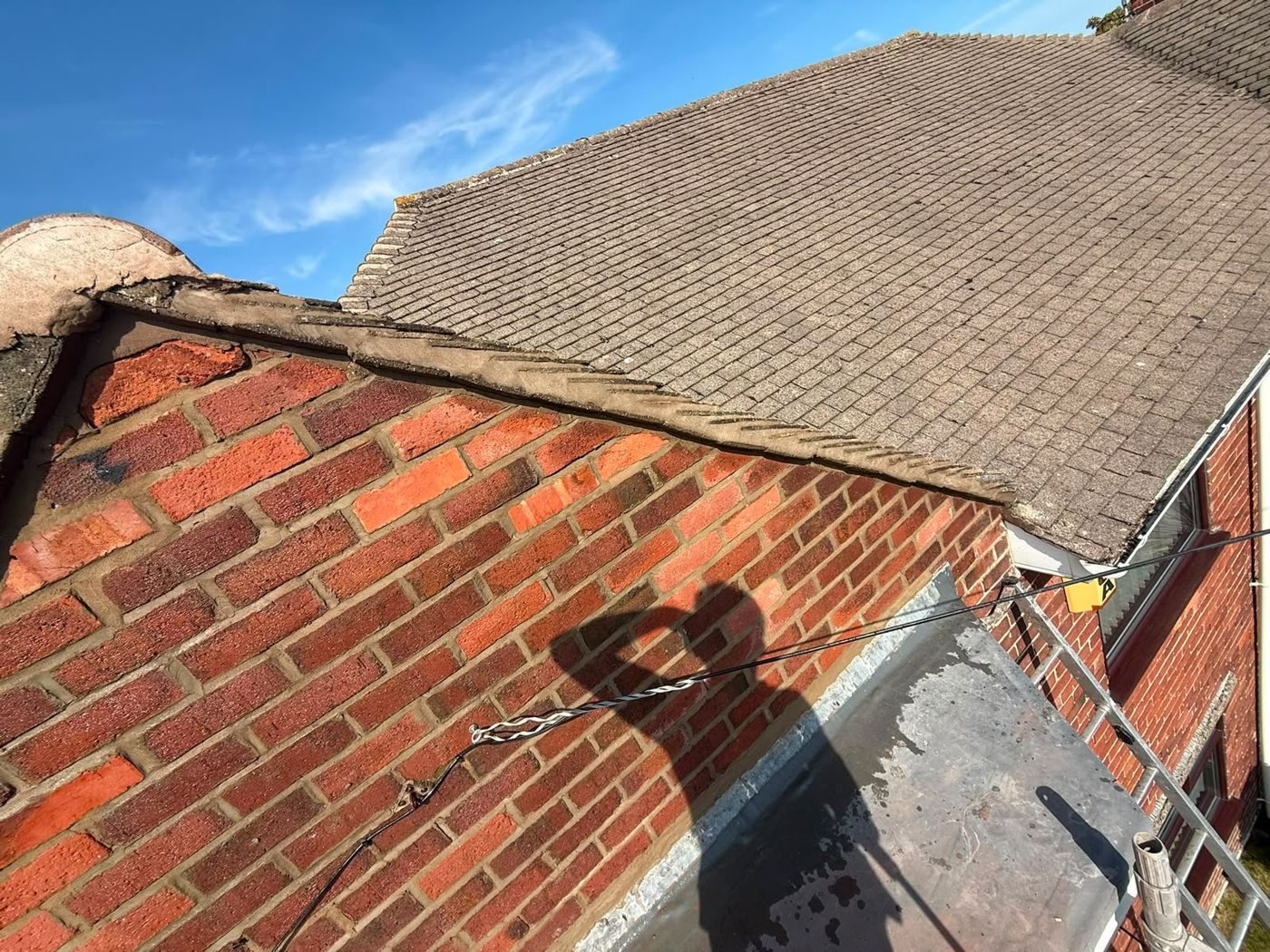
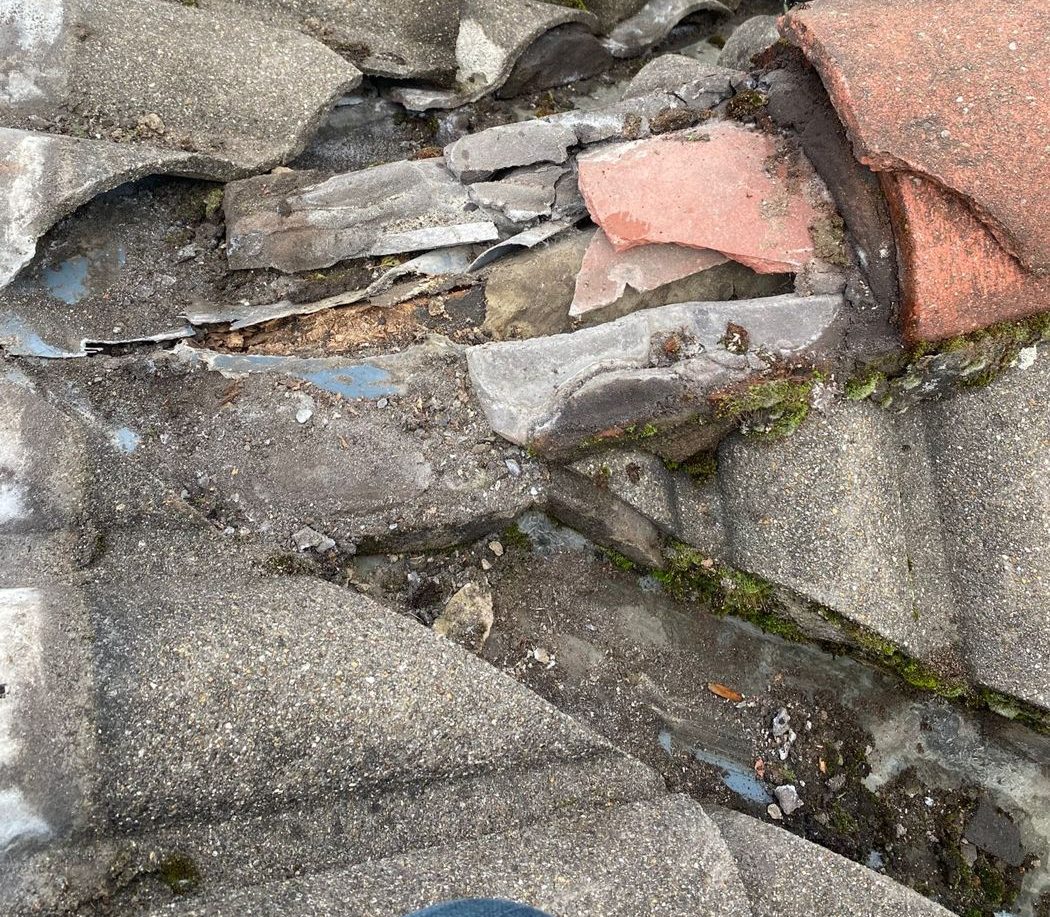
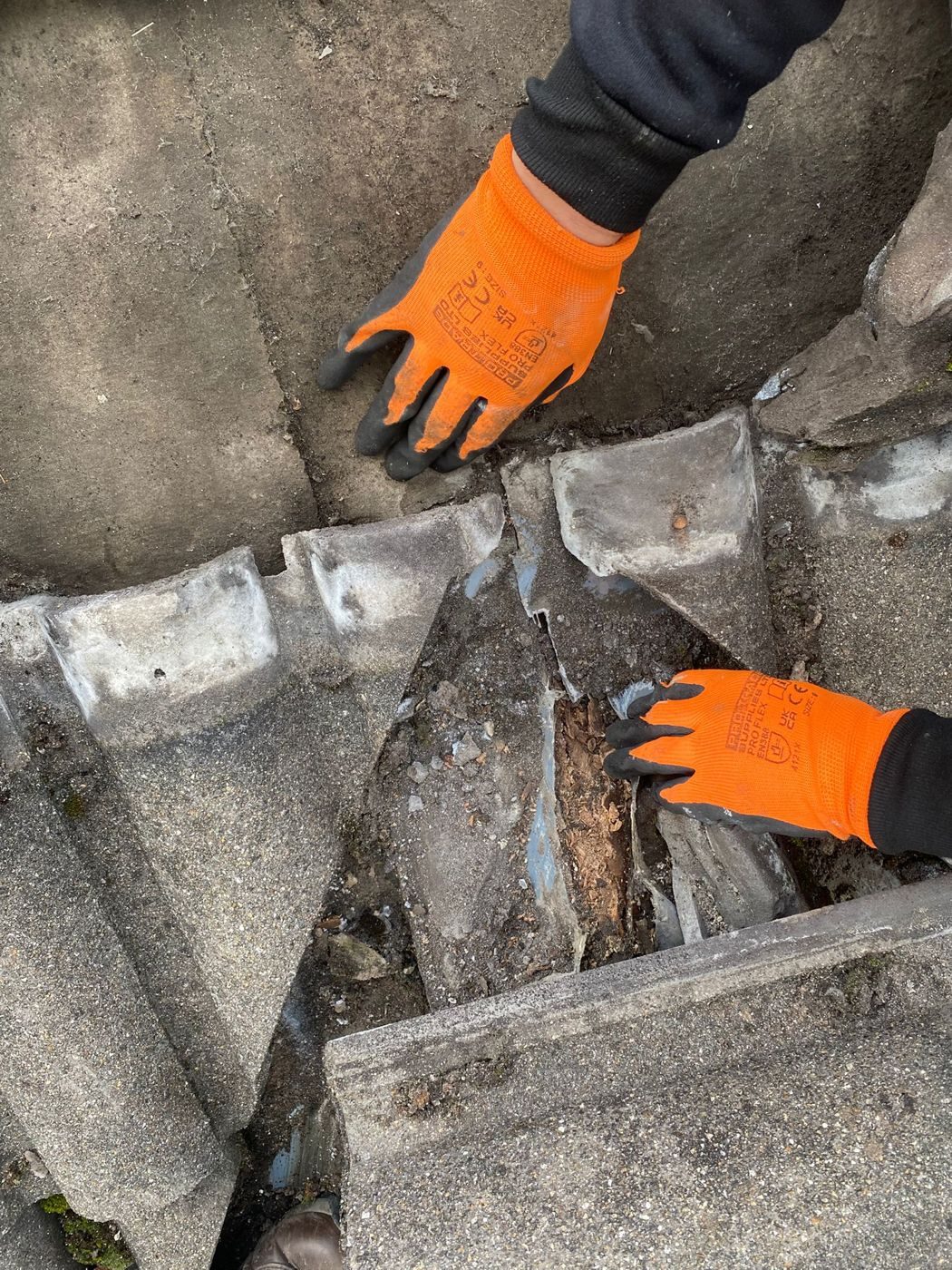
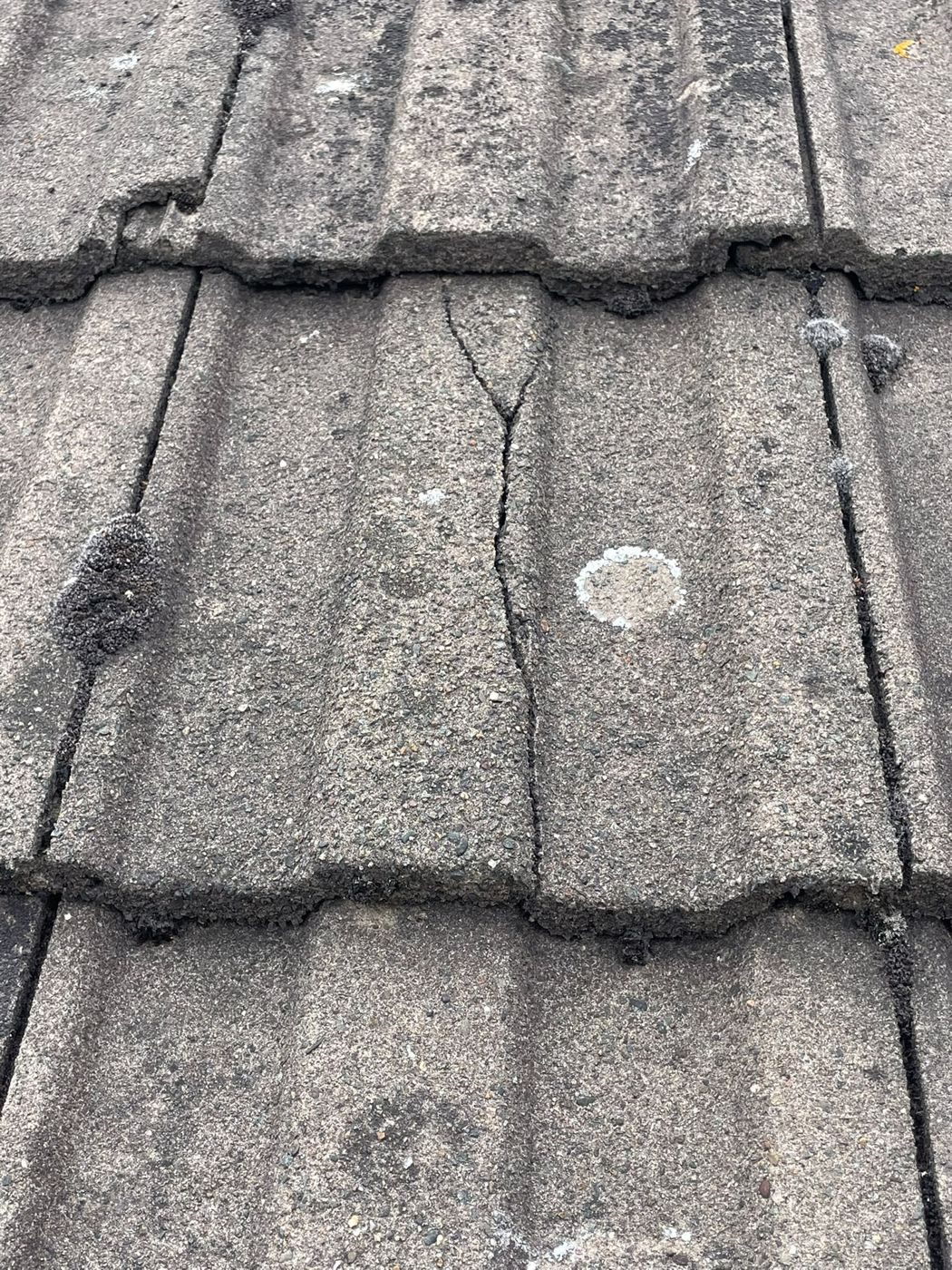
Photographs of our own work. None of them is a storm job — they are the parts that fail, photographed as we found them.
Wind does not push a roof down. It lifts. Air accelerating over the ridge and around the gable creates suction on the outside, and if it can also get underneath — through an open verge, a lifted tile, a gap at the eaves — it pushes up at the same time. That is why damage almost always starts at an edge and works inward, and why a roof can lose its whole ridge line while the field tiles either side are untouched.
The ridge goes first on a great many older roofs, because on anything built before mechanical fixing became normal the ridge tiles are held on by mortar alone. Mortar is rigid, the roof moves, and after enough winters the bond has gone even though the tiles are still sitting where they were put. They are not fixed to anything; they are resting. A strong enough gust is all it takes.
The verge is next, for the same reason — a mortar bed along the gable edge, cracked and hollow behind, with the wind getting under it. Then flashings and leadwork, where a chase has opened or the clips have gone. Then the valley, which usually fails quietly from rot underneath rather than dramatically in a gale, and then shows up the first time a storm drives rain into it hard. Individual slipped or missing tiles are common but rarely the whole story.
Everything in that list is a component rather than a roof. That is the useful part: most storm damage is a repair, not a replacement, and a roofer who arrives and starts talking about a whole new roof before he has looked at the ridge line is worth a second opinion.
These are two separate jobs and they should be quoted and understood separately. A make-safe stops the roof doing further damage: sheeting over an opening, refixing or removing what is loose before it comes down on somebody, getting water out of the building. It is temporary by definition, and it is what gets done on the day.
The permanent repair follows, in dry weather, once everything has been properly looked at and — where a claim is involved — once the insurer has said to go ahead. Most policies expect you to take reasonable steps to prevent further damage, which is what a make-safe is, so emergency work to stop water coming in is normally acceptable before anyone has inspected. A full permanent repair usually is not. Ask before authorising one.
A make-safe should never be sold to you as a repair, and if somebody sheets your roof and then invoices for a new roof, those are two different conversations that have been run together. We keep them apart in writing.
This is the part most homeowners do not know to ask for, and it is the part that decides claims. What an insurer wants is not a price. It is a competent description of what failed, where, and why, dated, with photographs that show it.
So that is what we write: the components that have failed and their condition, what the weather did and when, the difference between what the storm did and what was already worn where that can be told apart, what the make-safe involved, and what the permanent repair needs. Photographs from the roof, which you cannot safely take yourself, and photographs from inside where water has come through.
We are not loss assessors and we do not deal with insurers. We will not tell you what your policy covers, we will not talk to a loss adjuster on your behalf, and we will not promise you a claim will succeed. What we will do is give you the document your insurer asks for, written by someone who was on the roof. The guides below explain what happens on the insurer’s side of that so you know what you are dealing with.
Every roofing firm says do not go up. In a storm it stops being advice and starts being the whole point: the surface is wet, the wind is still doing whatever it did to the roof in the first place, and the thing you are climbing towards is by definition no longer fixed down. A ladder against a gutter that a gale has just worked loose is not a ladder against anything.
The same goes for throwing a tarpaulin over it. Getting a sheet onto a roof and holding it there needs equipment and more than one person, and doing it in wind is how somebody ends up in hospital. Limit the damage from inside and let the outside wait for people with a tower or a scaffold.
Access is priced honestly. Where the work is at height, or along an open edge, or on a slope, that means a tower or a scaffold, and scaffolding is quoted separately rather than folded into a rate. On a low single-storey roof it often is not needed, and we will say so. Quotations are free and in writing, and we are fully insured.
If water is coming in now, ring rather than fill in a form. Weekday emergency call-outs are answered around the clock; weekend cover runs from eight in the morning until seven in the evening.
Two things before we arrive, and neither of them involves going outside. Kill the lighting circuit for that room at the consumer unit if water is anywhere near a fitting. And photograph everything before anybody tidies, moves or sheets anything, because that is the evidence and it stops existing the moment the make-safe goes on.
The rest of it — bulging ceilings, containment, what to keep, what to write down, who to ring and in what order — is set out properly in what to do after storm damage to your roof on our roof repairs section. It is a better answer than a summary of it would be, so we have not written one here.
Fresh bedding along a stripped hip, underlay back down over exposed battens, a new lead valley cut in, and ridge tiles mechanically clipped rather than left resting on mortar — which is the answer to the first picture above. There are more in the gallery.
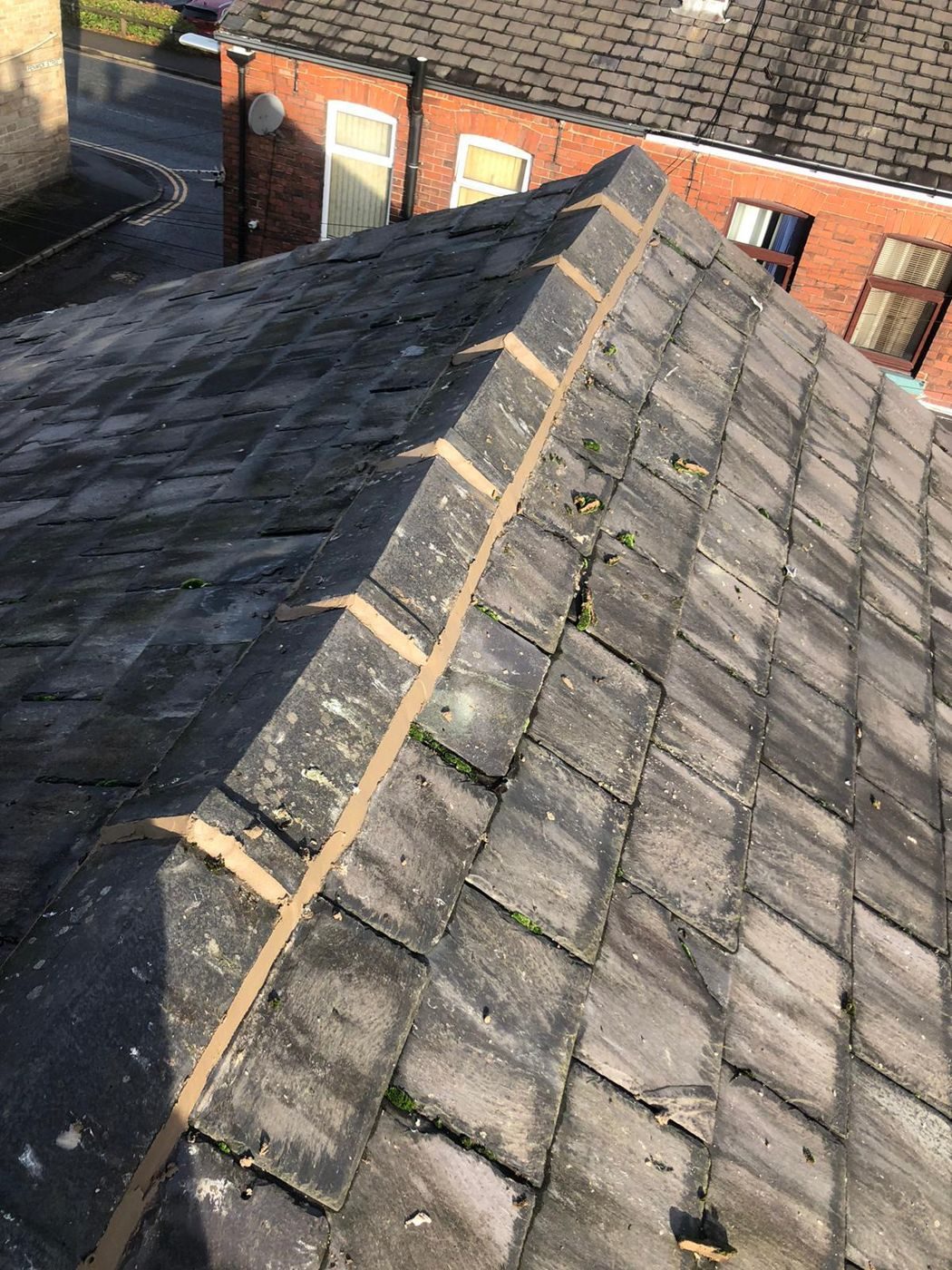
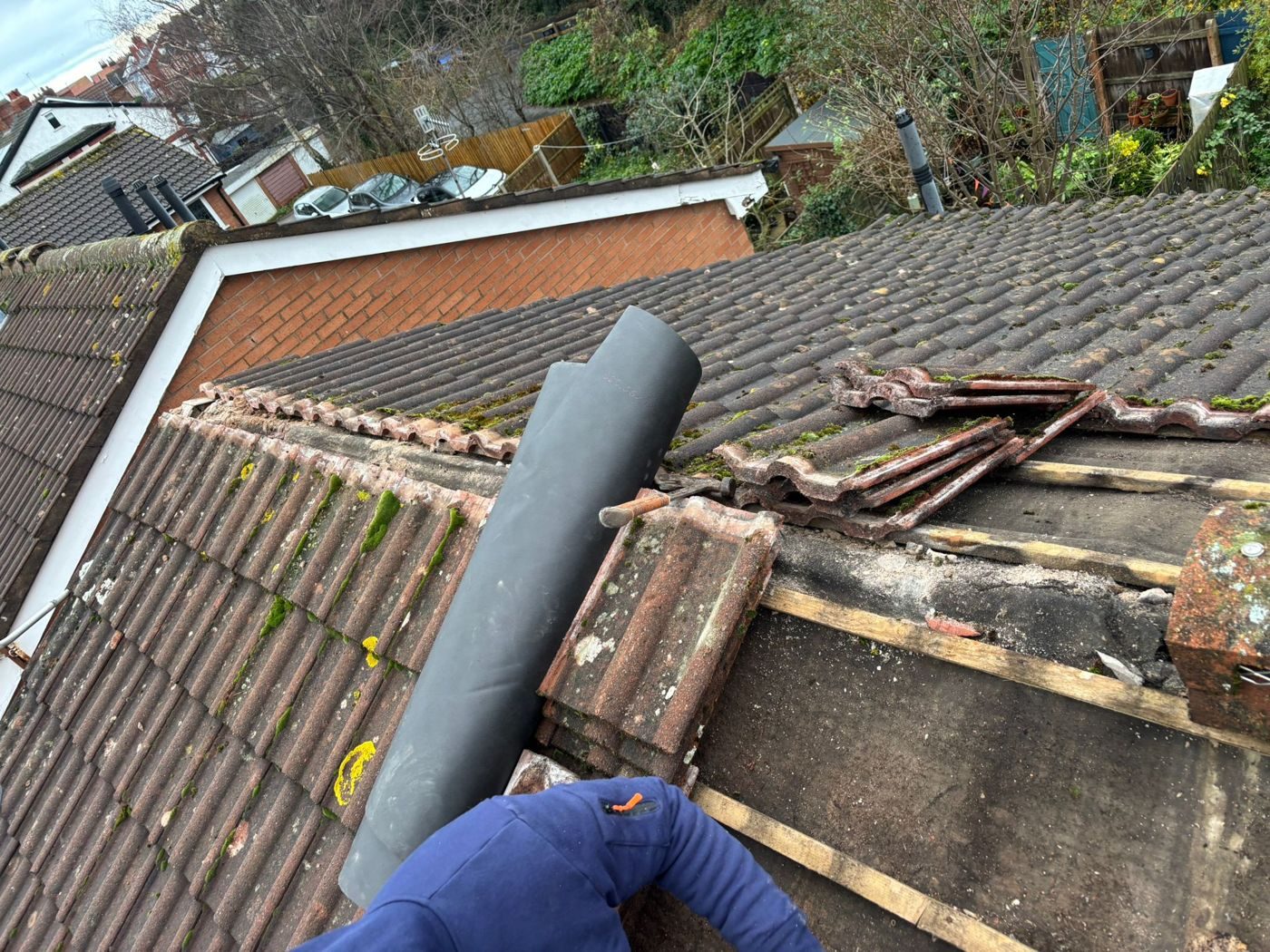
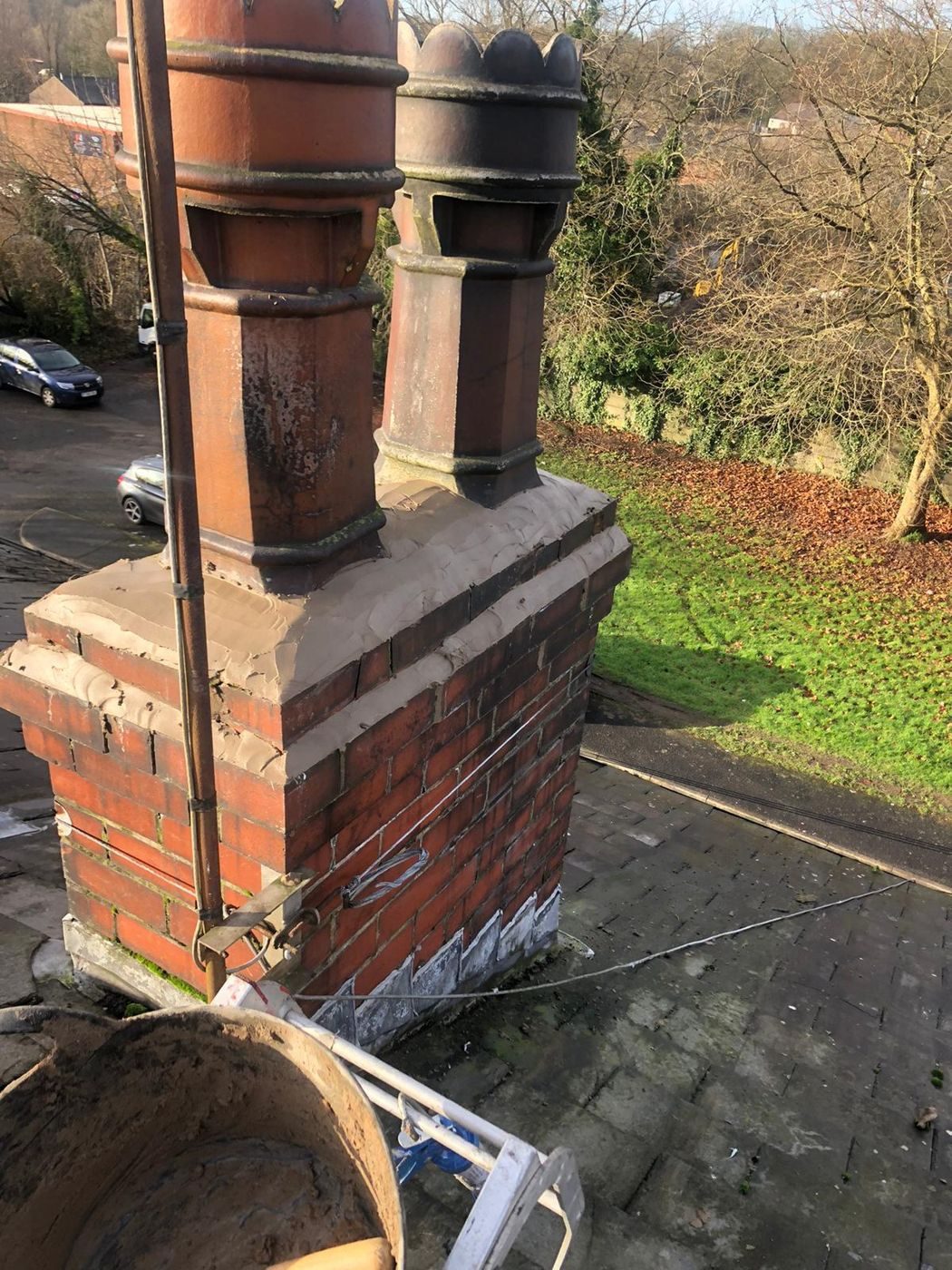
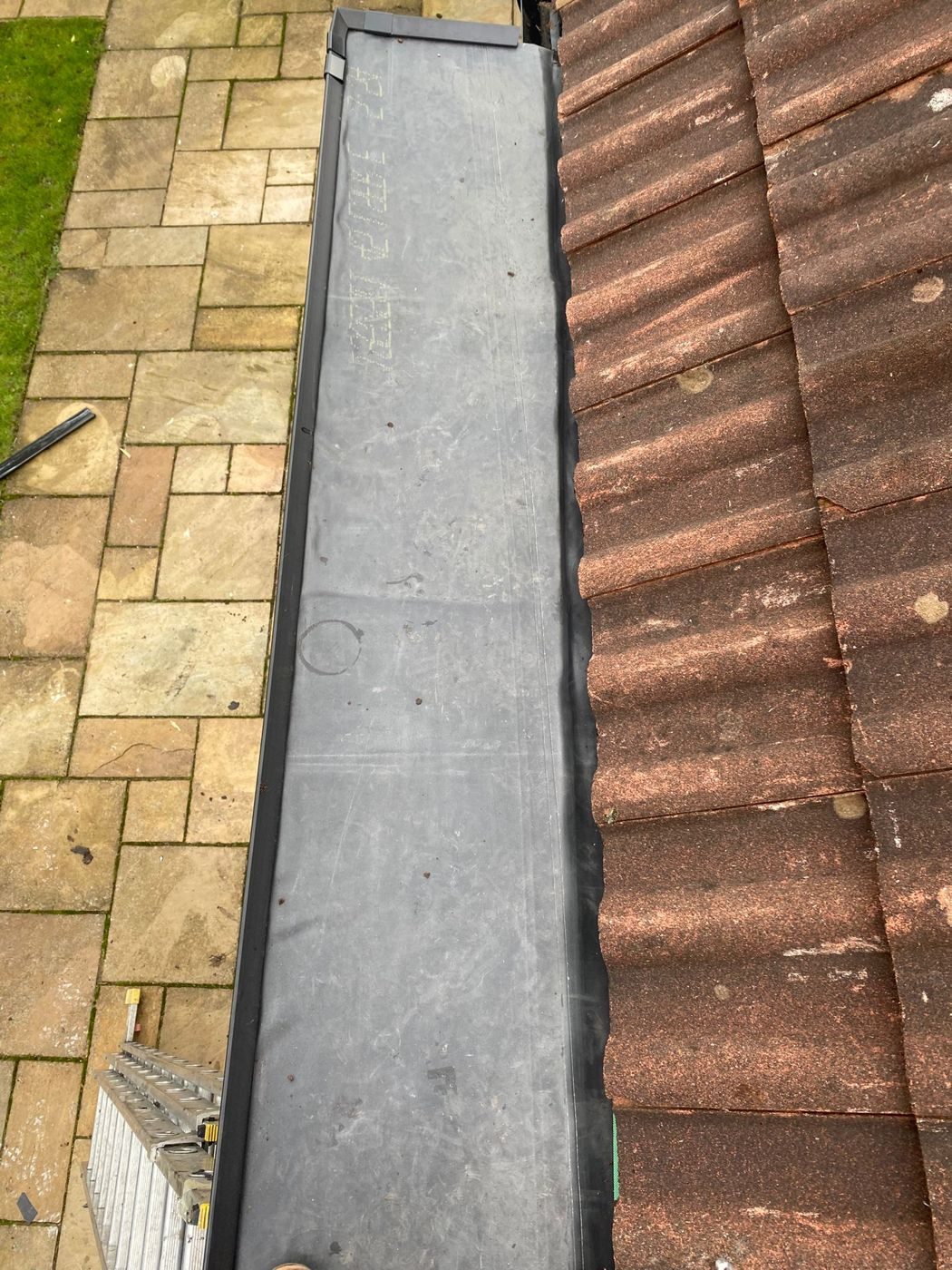
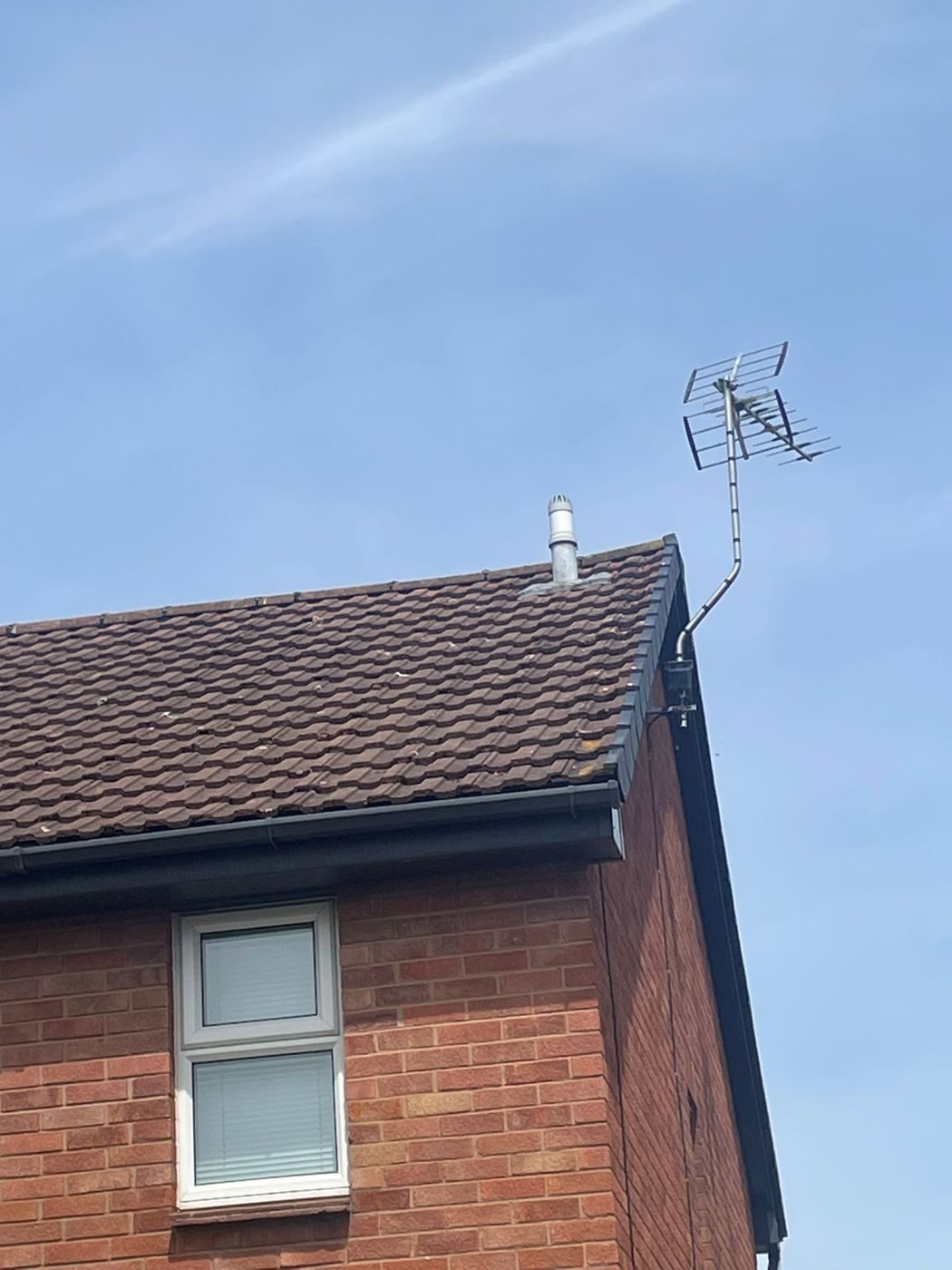
Photographs of our own work.
What an insurer means by a storm, why wear and tear turns claims down, what belongs in a roofer's report, who pays for the make-safe, and who is who in a claim. The aftermath itself — what to do first, what to check — is covered in detail on our roof repairs section and linked throughout rather than repeated here.
“job well done good communication throughout the job very clean and tiddy when the job is finish flat roof replacement many thanks.”
Sumit Bal“Excellent service from Buddy and the team in installing a new garage roof in a really professional manner. Was kept updated at all stages and given good advice as to our options. Would highly recommend”
Peter Aspinall“Very professional efficient team great communication
Would definitely recommend made the process quick and easy will definitely look to keep for any future need
Thankyou”
Emergency call-outs across all of it, including Chester, Ellesmere Port, Neston, Runcorn, Frodsham, Helsby, Tarvin, Birkenhead, Wallasey, Heswall, Hoylake, West Kirby, Bebington, Deeside, Flint, Widnes, Warrington, Northwich, Winsford and Tarporley.
Town-by-town pages live on the roof repairs section, which also carries a series of guides on what to do in the hours after a storm.
Describe the roof and roughly where you are, and we will come back to you — usually the same day. If water is coming in now, please call instead.
Prefer to talk? Call 07464 259566 · WhatsApp 0044 7464 259566 · Email Evensbuddy@yahoo.com
We work across Chester, Cheshire and the Wirral from our base at Elton, just north of Chester.
2 Manley View
Elton
Chester
CH2 4QF
Almost all of our work happens at your property rather than here, so please call before travelling.
Monday – Friday — 24hrs — Emergency Call-Outs
Saturday — 8:00 – 19:00
Sunday — 8:00 – 19:00
Weekday emergency call-outs are answered around the clock. Weekend cover is 8:00 to 19:00.