★★★★★
“job well done good communication throughout the job very clean and tiddy when the job is finish flat roof replacement many thanks.”
Sumit Bal
On the post-war semis of Ellesmere Port, the flat-roofed bathroom or kitchen wing at the back is where a gale takes hold of an edge, and where getting to the damage is harder than mending it.
The storm call that causes the most trouble in Ellesmere Port is rarely the chimney or the ridge. It is the small flat-roofed wing on the back of a post-war semi: the bathroom or kitchen extension tucked between the rear wall of the house and the boundary. Wind gets under one edge of that roof, lifts it, and by the time anybody notices, rain has a way in.
Great Sutton, Little Sutton, Wolverham, Westminster and the other estates are full of this arrangement. A flat roof covering is held down mostly at its perimeter, and the perimeter is exactly where a south-westerly gust, arriving across open ground with a long run behind it, finds its grip. The middle of the roof can look untouched while the edge has curled back like the lid of a tin.
What makes it awkward is not diagnosis but reach. With a fence or a neighbour’s wall only a few inches from the roof edge, there may be nowhere to stand a scaffold at all. The general order in which wind takes a roof apart is set out on our storm damage roof repairs page; this one deals with the cramped back extension and what that does to the job.
The components a gale usually finds first, and the repairs that follow them.
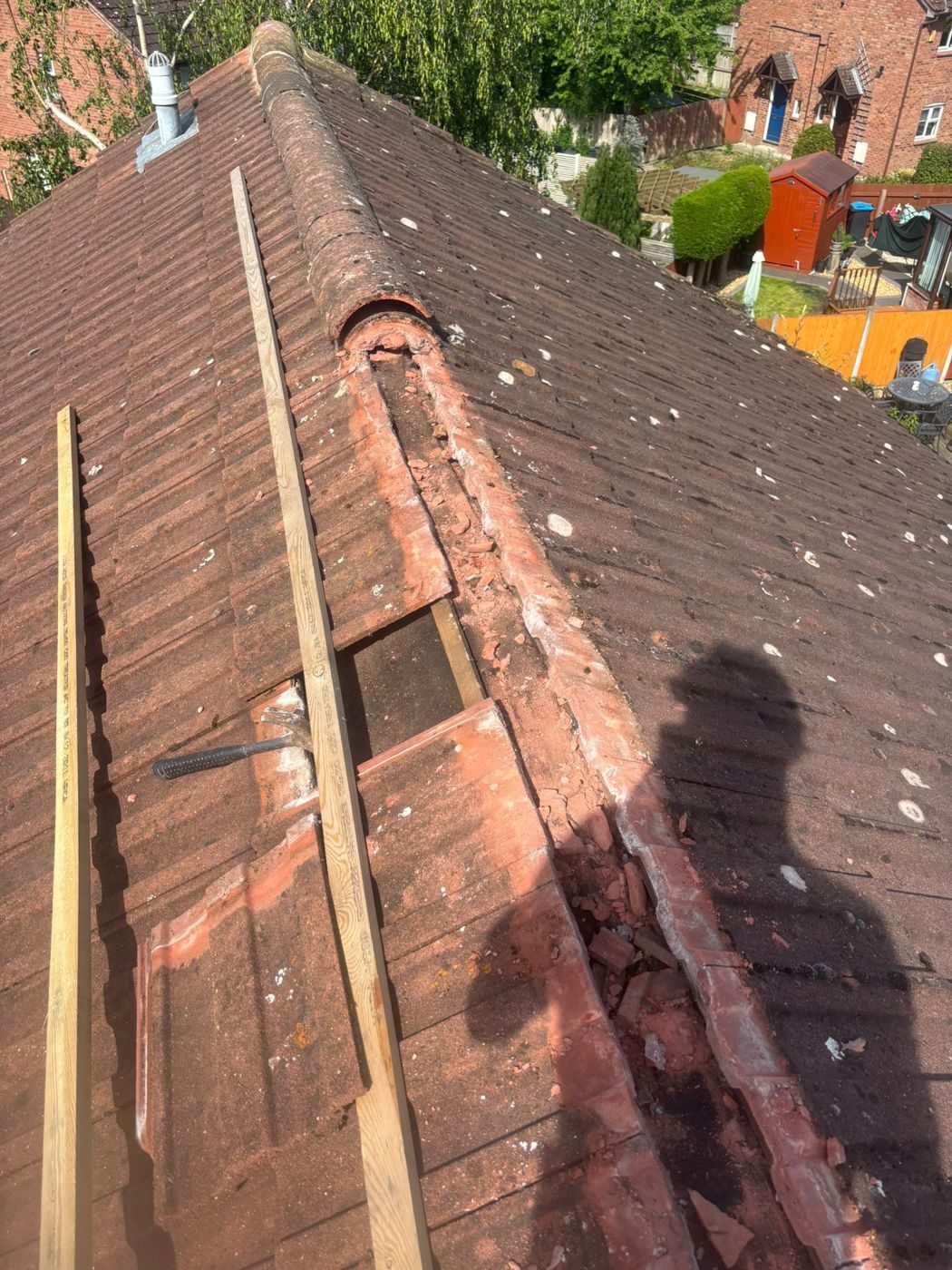
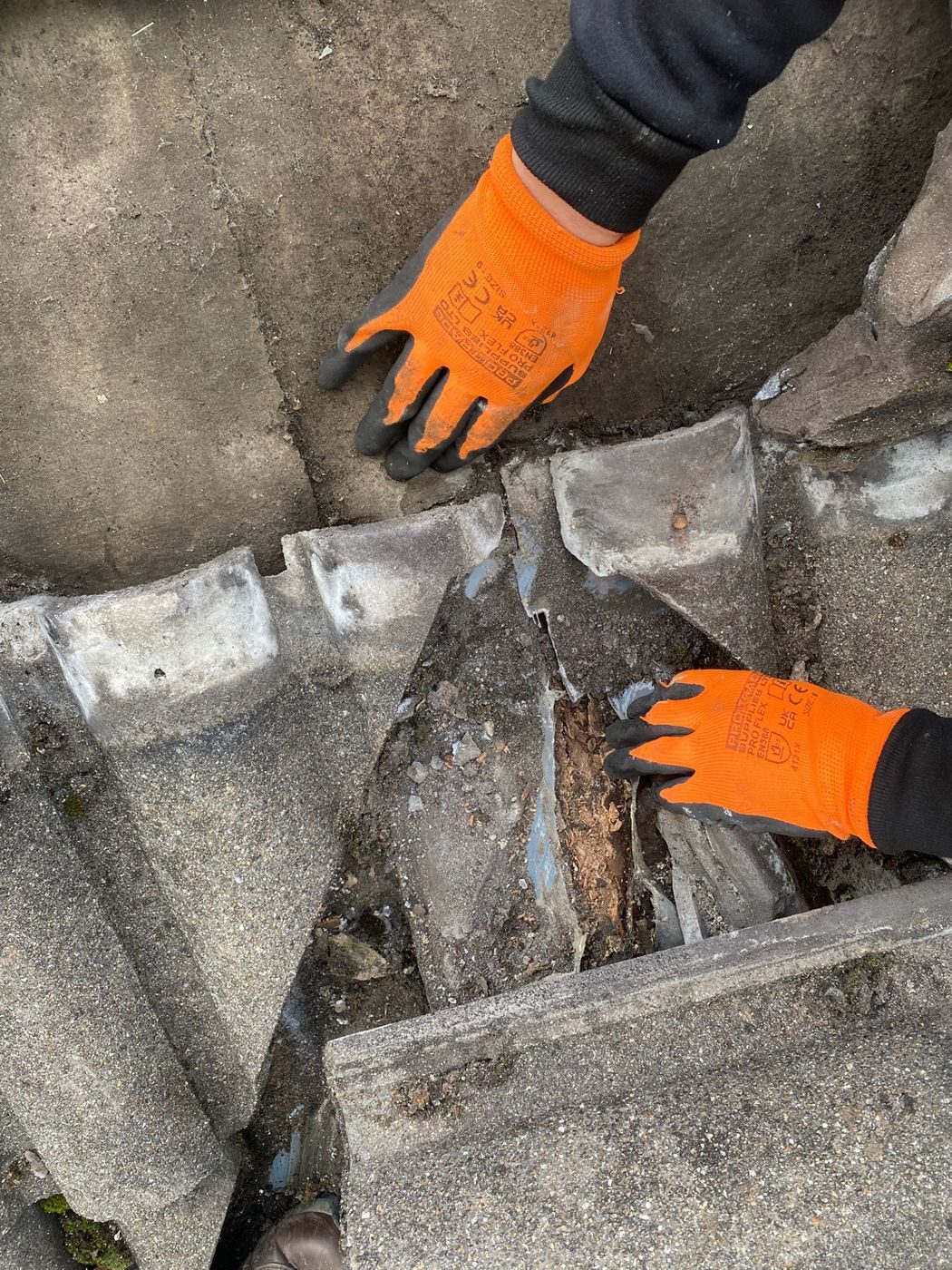
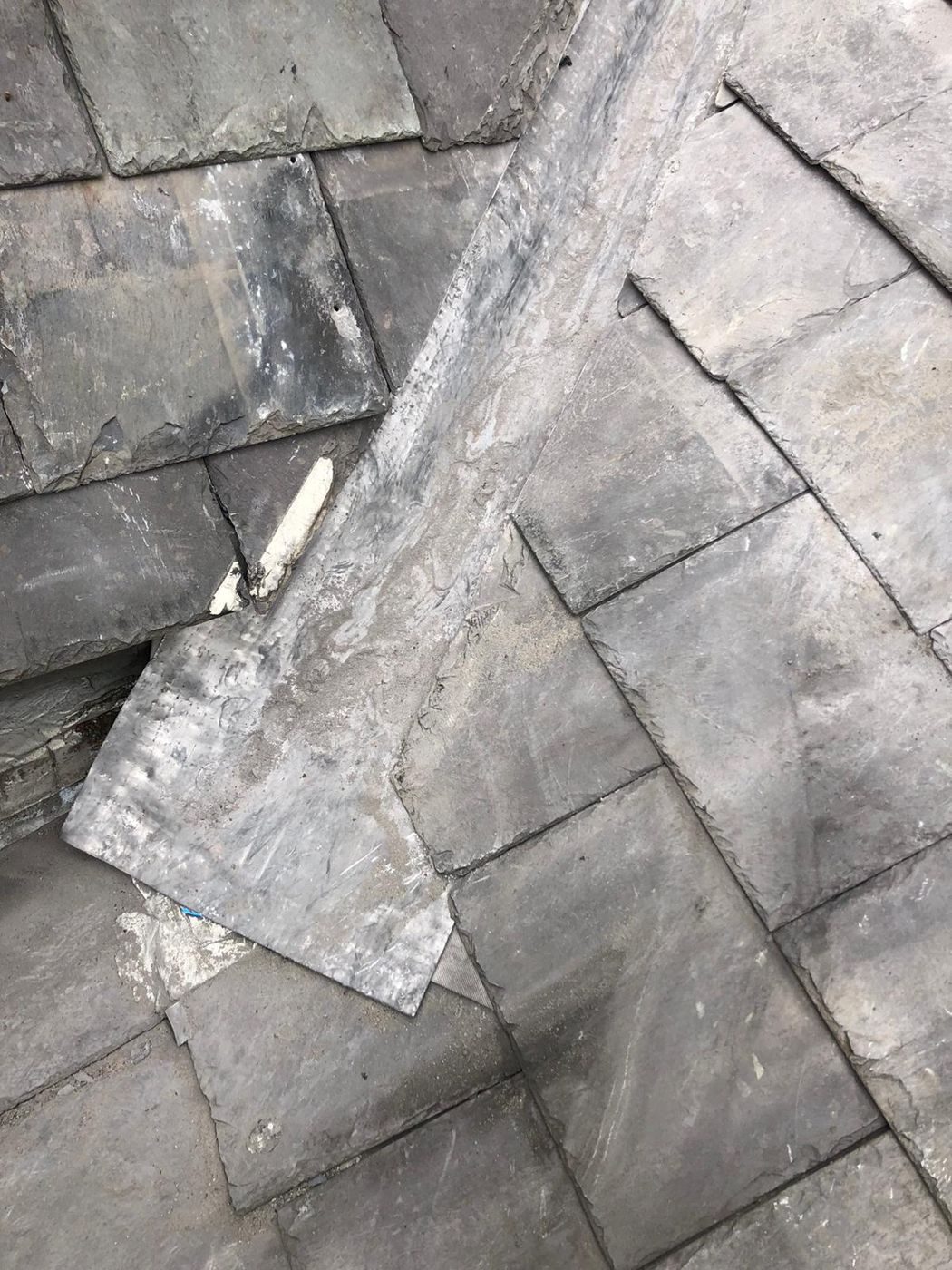
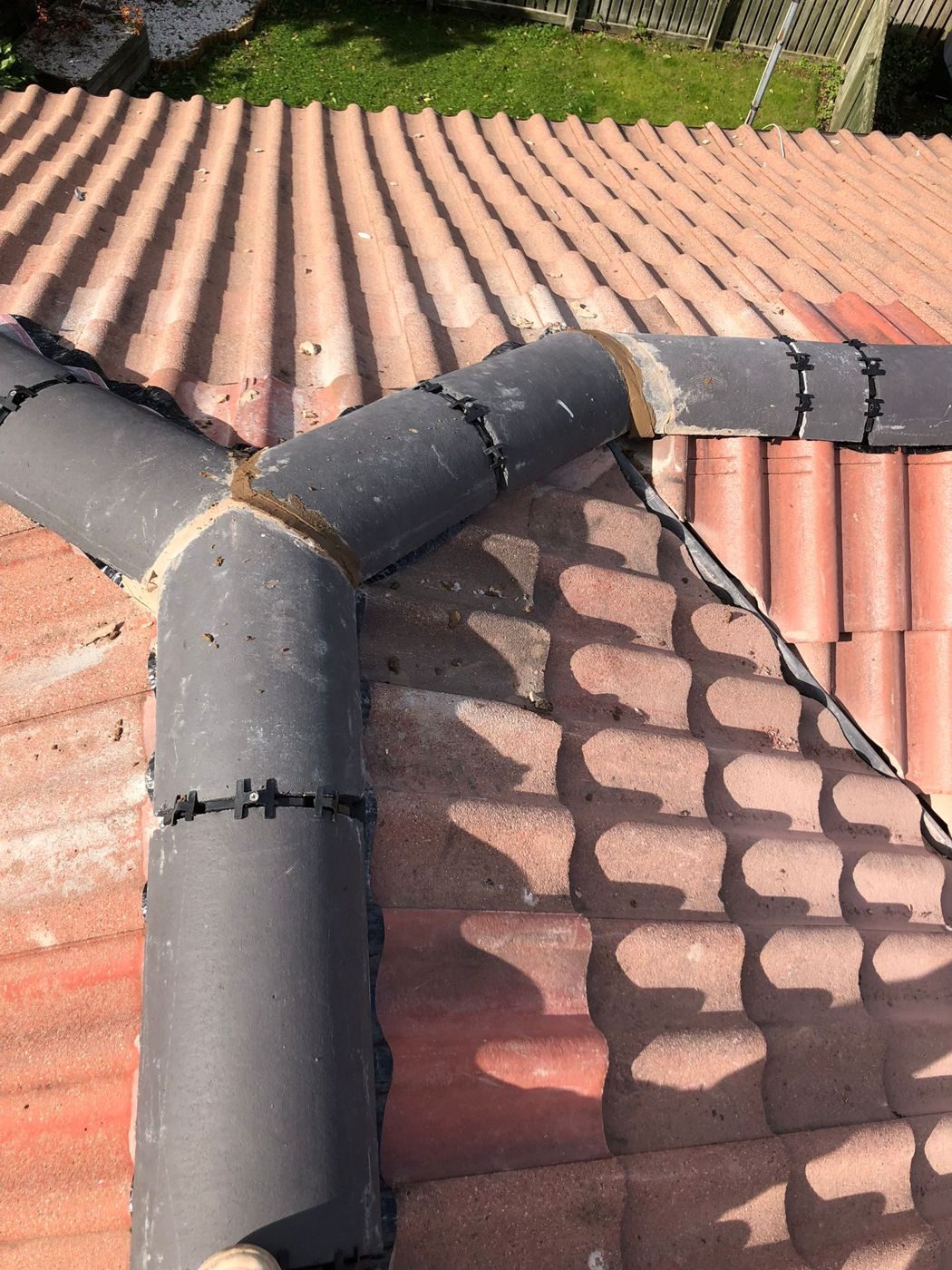
Photographs of our own work. None of them is a storm job — they show the parts that fail and how they are put right. More on the storm damage hub.
Wind does not press a flat roof flat. It lifts it. Air tearing over the top of the extension drops the pressure above the covering, and if the edge trim has loosened, air also gets underneath and pushes up from below. Once one corner lifts, the gap lets in more air, and the covering is peeled inward from that edge in a matter of minutes. That is why a gale can leave a flat roof with a long strip of rubber standing up at the boundary side while the rest lies quietly in place. The mechanics are covered more fully in The Parts of a Roof That Fail in Wind — and Why the Edges Decide a Claim.
On a plot where the extension runs right up to a fence or the flank of the identical addition next door, that boundary edge is also the one nobody ever sees. The gutter on it is seldom cleared, the trim is never checked from close range, and a fixing that has been slowly working loose has no one to notice it. So a gale does not so much create the weakness as find it. The edge that lifts is, more often than not, the edge that has been out of sight for the longest.
Access then becomes the real problem. A tower needs firm, level ground and width in the garden. A scaffold on the neighbour’s side needs the neighbour’s agreement, and storm damage tends to hit both halves of a pair of semis together, so that conversation is best had early and politely. Where neither is possible, the work may have to be staged from the main roof and the garden together. None of this is a reason to delay a make-safe, but it is a reason to say plainly, before anybody quotes, how the roof is going to be reached.
Start inside, because the ceiling often speaks before the roof does. A stain in the corner nearest the boundary usually points at the edge or the gutter on that side, whereas a line of damp along the wall where the extension meets the main house suggests the junction with the house wall has opened. A sagging, soft ceiling is a more serious sign that water has been getting in for some time.
Outside, look from the back bedroom window or the garden, and do not climb to get a better view. The bottom of the boundary fence is often a good witness, and so is anything that has landed in the garden after a blow. Take photographs before anything is moved, and note which weather brought it on: wind alone, or wind with heavy rain behind it.
Reaching a boxed-in outrigger comes down to three honest routes: a tower in the garden where there is width and firm ground, a scaffold on the neighbour’s land if they agree, or staging off the main roof and the garden together. Scaffolding is quoted separately, and on some of these roofs it is not needed at all, in which case we say so. Please do not lean a ladder against a wet extension wall or go up to look; the covering that has lifted is the covering you would be standing on.
If a neighbour does not want anything on their land, that is their right, and the job is planned around it. Agreeing access early matters most on pairs of semis where both extensions have been hit, and the position on shared roof lines and who is responsible for what is dealt with in Whose Insurance Is It? Flats, Leaseholds and Shared Roofs. Our flat roof work in the town is described on the flat roof repairs in Ellesmere Port page.
The first visit is about stopping the roof doing more harm. That means securing or cutting back what has lifted so it cannot tear further or come down, and getting water out of the building. It is temporary by definition, and we describe it that way on paper. We then write a report with photographs from the roof, which the insurer can use; we do not deal with insurers and cannot say what a policy covers. What Should Be in a Roofer’s Report for an Insurance Claim? explains what a useful report contains.
The permanent repair depends on what the lift has done. Sometimes the covering can be refixed and re-sealed along the edge with new trim. Where the deck beneath has been soaked, or the covering has stretched and torn, a larger section or a full renewal in EPDM may be the honest answer, and we say which before work starts. In either case the edge detail is rebuilt so that the next south-westerly has less to grip. Questions about the emergency work itself are answered in Who Pays for the Emergency Make-Safe?.
If water is coming in now, ring rather than fill in a form. Weekday emergency call-outs are answered around the clock; weekend cover runs from eight in the morning until seven in the evening. Please do not go up to look: describe what you can see from the ground.
Photograph everything before anybody tidies or moves anything, because that is the evidence. The steps for the hours after a storm are set out in what to do after storm damage to your roof, and the general picture is on our storm damage hub.
What an insurer means by a storm, why wear and tear turns claims down, what belongs in a roofer's report, who pays for the make-safe, and who is who in a claim. The aftermath itself — what to do first, what to check — is covered in detail on our roof repairs section and linked throughout rather than repeated here.
“job well done good communication throughout the job very clean and tiddy when the job is finish flat roof replacement many thanks.”
Sumit Bal“Excellent service from Buddy and the team in installing a new garage roof in a really professional manner. Was kept updated at all stages and given good advice as to our options. Would highly recommend”
Peter Aspinall“Very professional efficient team great communication
Would definitely recommend made the process quick and easy will definitely look to keep for any future need
Thankyou”
Every town has its own page, written around the roofs that are actually there. Start with the main storm damage page.
Describe the roof and roughly where you are, and we will come back to you — usually the same day. If water is coming in now, please call instead.
Prefer to talk? Call 07464 259566 · WhatsApp 0044 7464 259566 · Email Evensbuddy@yahoo.com
We work across Chester, Cheshire and the Wirral from our base at Elton, just north of Chester.
2 Manley View
Elton
Chester
CH2 4QF
Almost all of our work happens at your property rather than here, so please call before travelling.
Monday – Friday — 24hrs — Emergency Call-Outs
Saturday — 8:00 – 19:00
Sunday — 8:00 – 19:00
Weekday emergency call-outs are answered around the clock. Weekend cover is 8:00 to 19:00.