★★★★★
“job well done good communication throughout the job very clean and tiddy when the job is finish flat roof replacement many thanks.”
Sumit Bal
Older Neston roofs sit on sandstone and soft brick bedded in lime. After a gale we make the roof safe, report on what failed with photographs, and repair the mortar in a way that suits the wall.
Neston’s older roofs are held together by what lies under the ridge as much as by what lies on top of it. Red sandstone and soft handmade brick make up much of the town’s old masonry, and on those buildings the ridge, the hips and the gable verges were bedded in lime. When a gale takes a ridge tile or strips a verge, the damage is in the mortar, and the way that mortar is put back decides whether the next storm finds the same weak line.
The prevailing wind here is from the south-west, so the gable edges and ridge lines that face it take the first lift. Parkgate looks out over the marsh edge towards the Dee, and the air there is more exposed and carries salt, which is why roofs on the front tend to show their age sooner than those a few streets back. Inland, in Little Neston, Ness, Burton and Willaston, the same things go wrong, only more slowly.
What follows is the Neston end of the story. Our storm damage roof repairs page gives the general account; this is the version for stone and soft brick. We make the roof safe first and repair afterwards, and we write a report with photographs that your insurer can use. Whether the policy responds is between you and your insurer; we are roofers, not loss assessors, and we stay out of that.
The components a gale usually finds first, and the repairs that follow them.
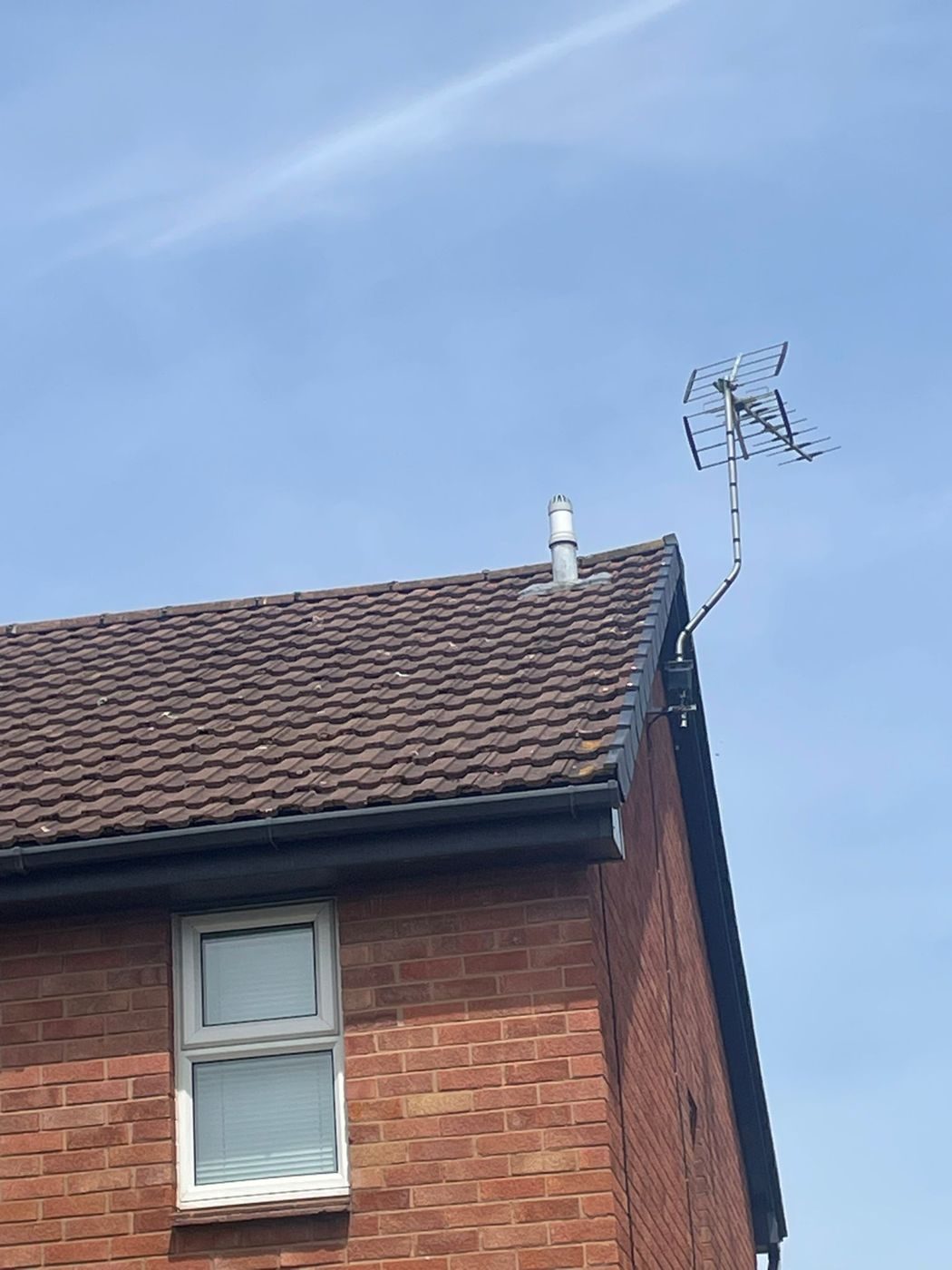
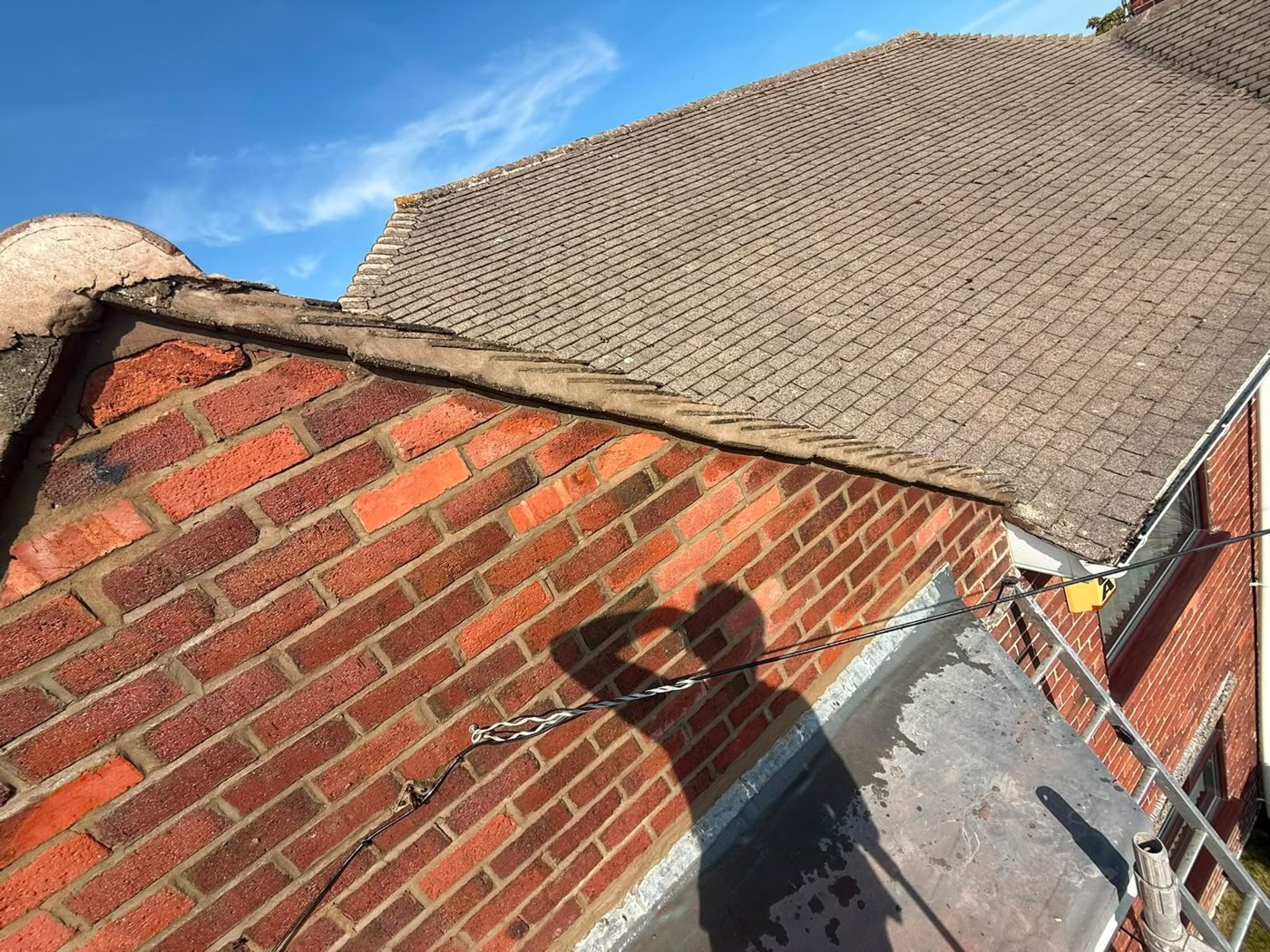
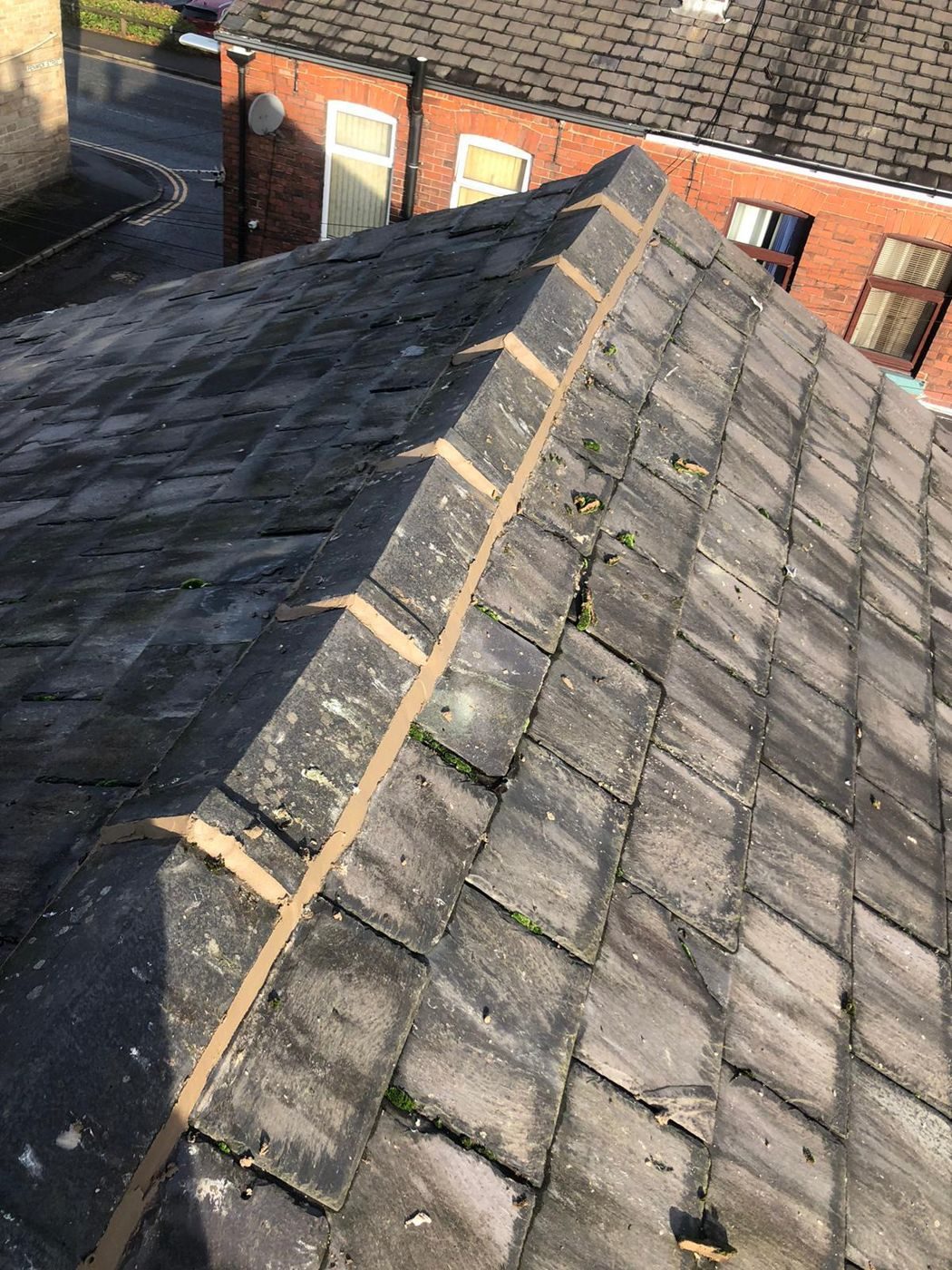
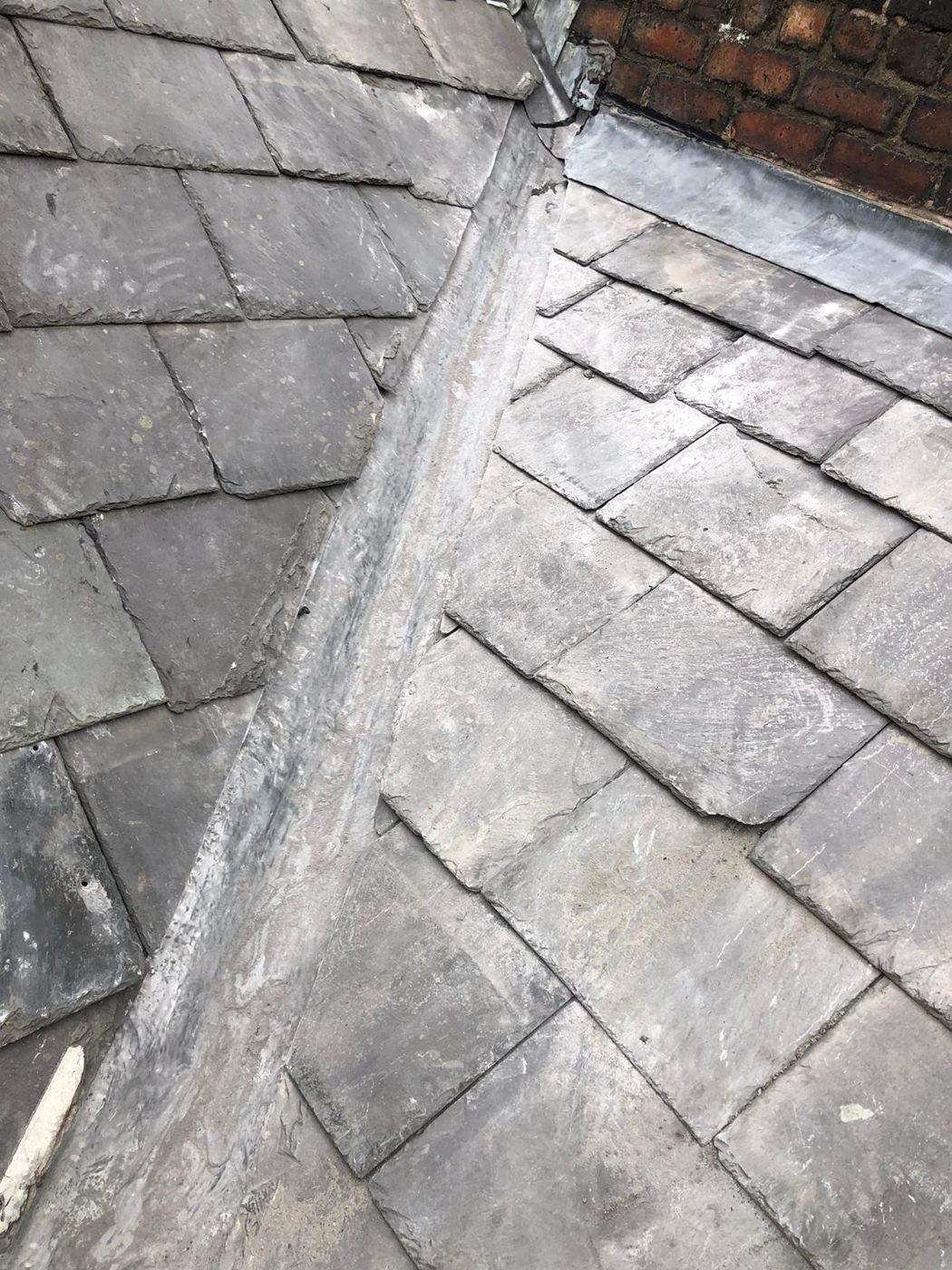
Photographs of our own work. None of them is a storm job — they show the parts that fail and how they are put right. More on the storm damage hub.
Ridge and verge mortar on an old roof has usually been working loose for a long time before any storm arrives. Lime mortar is meant to be softer than the stone or brick around it, and over many winters it crumbles, hollows and lets go of the tile above. The ridge then sits there resting rather than fixed. A gale does not need to be exceptional to finish the job, and the wind gets under a hollow verge in the same way it gets under a loose lid.
The tempting repair is a strong sand-and-cement mix, because it is hard, grey and quick. On soft masonry it is the wrong answer. Cement sets harder than the sandstone or underfired brick it touches, it shrinks away from the edges, and it blocks the route by which damp leaves the wall. Water is forced out through the face of the stone instead, and in a frost the face comes away, not the mortar. A storm repair done in cement can therefore be the start of a second, slower fault. The wider picture of which parts fail in wind is in The Parts of a Roof That Fail in Wind — and Why the Edges Decide a Claim.
Putting the damage right in a way that matches means a lime-based mortar, gauged to suit what is there, worked back to the same depth and finish as the joints either side, and given time to cure in settled weather. It also means looking at the clay tiles or natural slates along the ridge and verge, because a part-repair on an old roof has to sit alongside what is already there. Our note on Can You Match My Tiles? Part-Repairs, Reclaimed Tiles and “Matching Sets” explains how that is approached.
Start from the ground and stay there. Look along the ridge line for tiles that sit out of line or have gone, and along the gable edge for a strip of mortar that has dropped away. On an old roof there will often be a pale scatter of crumbs on the path, the lawn or a lower roof. Fresh, bright mortar crumbs and clean-edged fragments suggest something let go recently; mossy, dark pieces that have lain there a while suggest an older loss.
That distinction matters when you come to describe the damage, and our report records what we find on the roof itself. Whether it counts as storm damage or wear and tear is for your insurer to decide, and the evidence is what helps them, which is what Storm Damage or Wear and Tear? Why Roof Claims Get Turned Down goes into. Take photographs from the ground before anything is moved, and do not go up to take better ones.
Access in Neston is decided by the plot. Along the High Street and the older Parkgate frontages the houses stand hard on the pavement with no side passage, so a scaffold goes up off the footway under a licence from Cheshire West and Chester Council, and materials are carried in by hand. A gable or ridge that faces a narrow frontage may be reached more simply from a tower in a rear garden, and we look at which suits before suggesting anything. Scaffolding is quoted separately, and where a low roof does not need it we say so.
Out at Ness, Burton and Willaston there is generally room to stand a scaffold in a garden, though soft ground and mature planting need sole boards and care. Old roofs add their own limits: hand-made clay tiles and thin natural slates are brittle, and the battens beneath are often original, so we keep weight off the covering and work from the scaffold wherever we can. A ladder against a gutter that a gale has loosened is not a safe way to look, and a sheet thrown over the roof is not a make-safe.
The first visit is about stopping further harm. Loose ridge tiles and verge pieces are refixed or taken down before they fall, an open section is sheeted properly from a safe working position, and water is kept out of the building. That is temporary by definition, and the written report records what was found and what was done. Who pays for that first visit is a question for you and your insurer, and Who Pays for the Emergency Make-Safe? sets out how it usually works.
The permanent work follows in dry weather. We rake out failed bedding to a sound depth, rebed ridge and hip tiles, and rebuild verge pointing in a lime-based mix that is weaker than the masonry it protects, so the joint stays the part that gives. Where a previous cement repair has cracked and is pulling the face off the stone, we say so in the report rather than quietly patching over it. The aim is a roof that looks like the building it belongs to and does not need the same attention after the next south-westerly. Our roof repairs in Neston page covers the everyday repairs we do in the town.
If water is coming in now, ring rather than fill in a form. Weekday emergency call-outs are answered around the clock; weekend cover runs from eight in the morning until seven in the evening. Please do not go up to look: describe what you can see from the ground.
Photograph everything before anybody tidies or moves anything, because that is the evidence. The steps for the hours after a storm are set out in what to do after storm damage to your roof, and the general picture is on our storm damage hub.
What an insurer means by a storm, why wear and tear turns claims down, what belongs in a roofer's report, who pays for the make-safe, and who is who in a claim. The aftermath itself — what to do first, what to check — is covered in detail on our roof repairs section and linked throughout rather than repeated here.
“job well done good communication throughout the job very clean and tiddy when the job is finish flat roof replacement many thanks.”
Sumit Bal“Excellent service from Buddy and the team in installing a new garage roof in a really professional manner. Was kept updated at all stages and given good advice as to our options. Would highly recommend”
Peter Aspinall“Very professional efficient team great communication
Would definitely recommend made the process quick and easy will definitely look to keep for any future need
Thankyou”
Every town has its own page, written around the roofs that are actually there. Start with the main storm damage page.
Describe the roof and roughly where you are, and we will come back to you — usually the same day. If water is coming in now, please call instead.
Prefer to talk? Call 07464 259566 · WhatsApp 0044 7464 259566 · Email Evensbuddy@yahoo.com
We work across Chester, Cheshire and the Wirral from our base at Elton, just north of Chester.
2 Manley View
Elton
Chester
CH2 4QF
Almost all of our work happens at your property rather than here, so please call before travelling.
Monday – Friday — 24hrs — Emergency Call-Outs
Saturday — 8:00 – 19:00
Sunday — 8:00 – 19:00
Weekday emergency call-outs are answered around the clock. Weekend cover is 8:00 to 19:00.