★★★★★
“job well done good communication throughout the job very clean and tiddy when the job is finish flat roof replacement many thanks.”
Sumit Bal
Wallasey’s tall stacks carry four, six or eight pots in a single bed of mortar. When a gale moves one, we make the stack safe, repair the head properly and put the damage in writing for your insurer.
Wallasey roofs were built to be looked at from the street, and the loudest part of the display is the chimney. Across Liscard, Egremont, Seacombe, Poulton and the streets behind New Brighton, broad stacks stand high on steep slate roofs carrying four, six or eight pots in a single row. A gale tests that skyline harder than it tests anything else on the house.
This page is about what a storm does to those stacks and to the slates around them. The general order of failure, ridge first, then verges, flashings and valleys, is set out on our storm damage roof repairs page. Here the question is narrower: why the chimney head is so often the first thing to move in Wallasey, and why it is treated as urgent before it is treated as a leak.
What we do is the same here as anywhere. We come out, make the stack and roof safe, and then write a report with photographs that your insurer can use. We are roofers, not loss assessors, so we do not deal with insurers and we cannot tell you what your policy covers. If you want the rebuilding side of the work, our chimney repairs in Wallasey page covers heads, flaunching, pots and leadwork in detail.
The components a gale usually finds first, and the repairs that follow them.
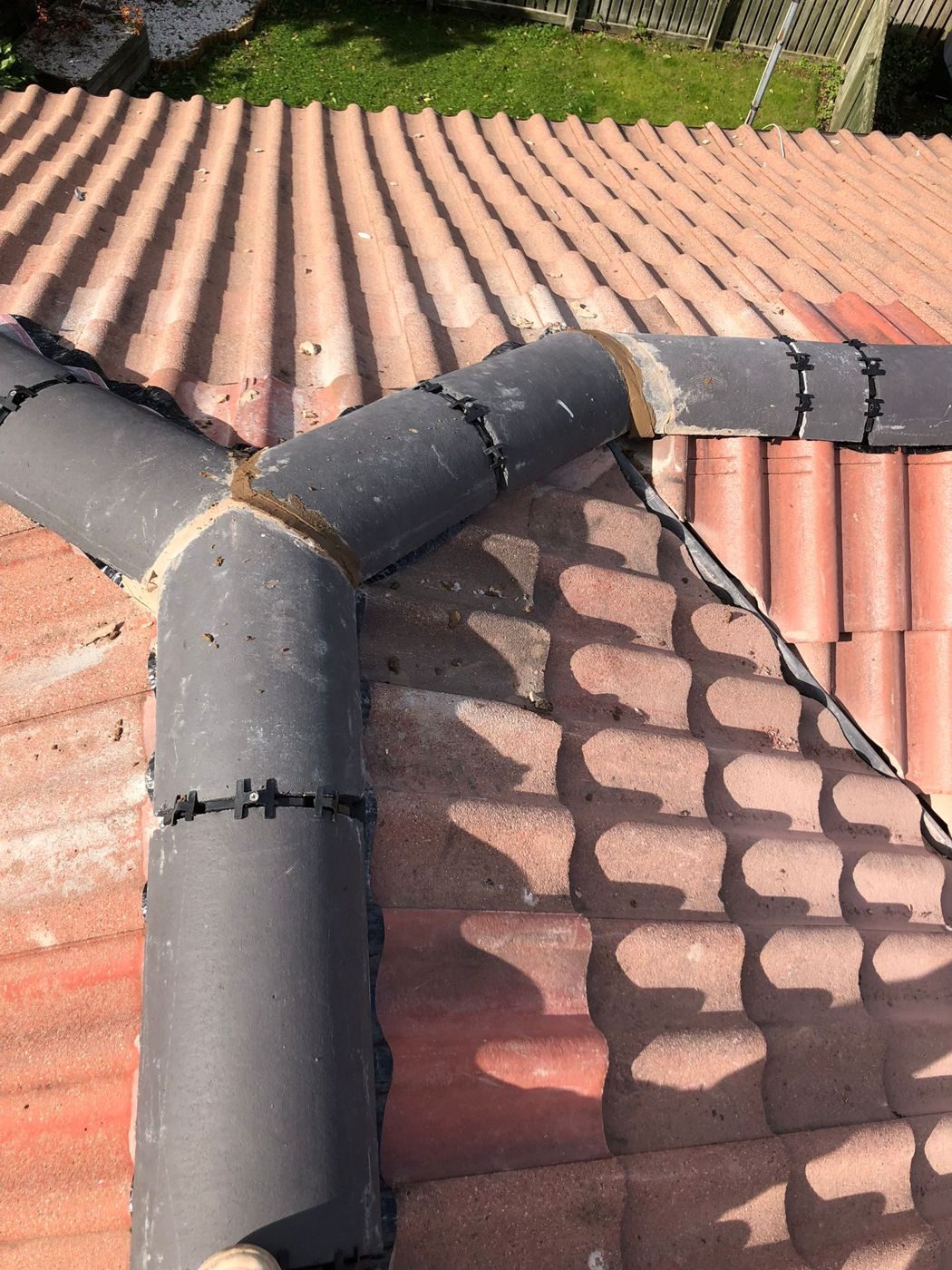
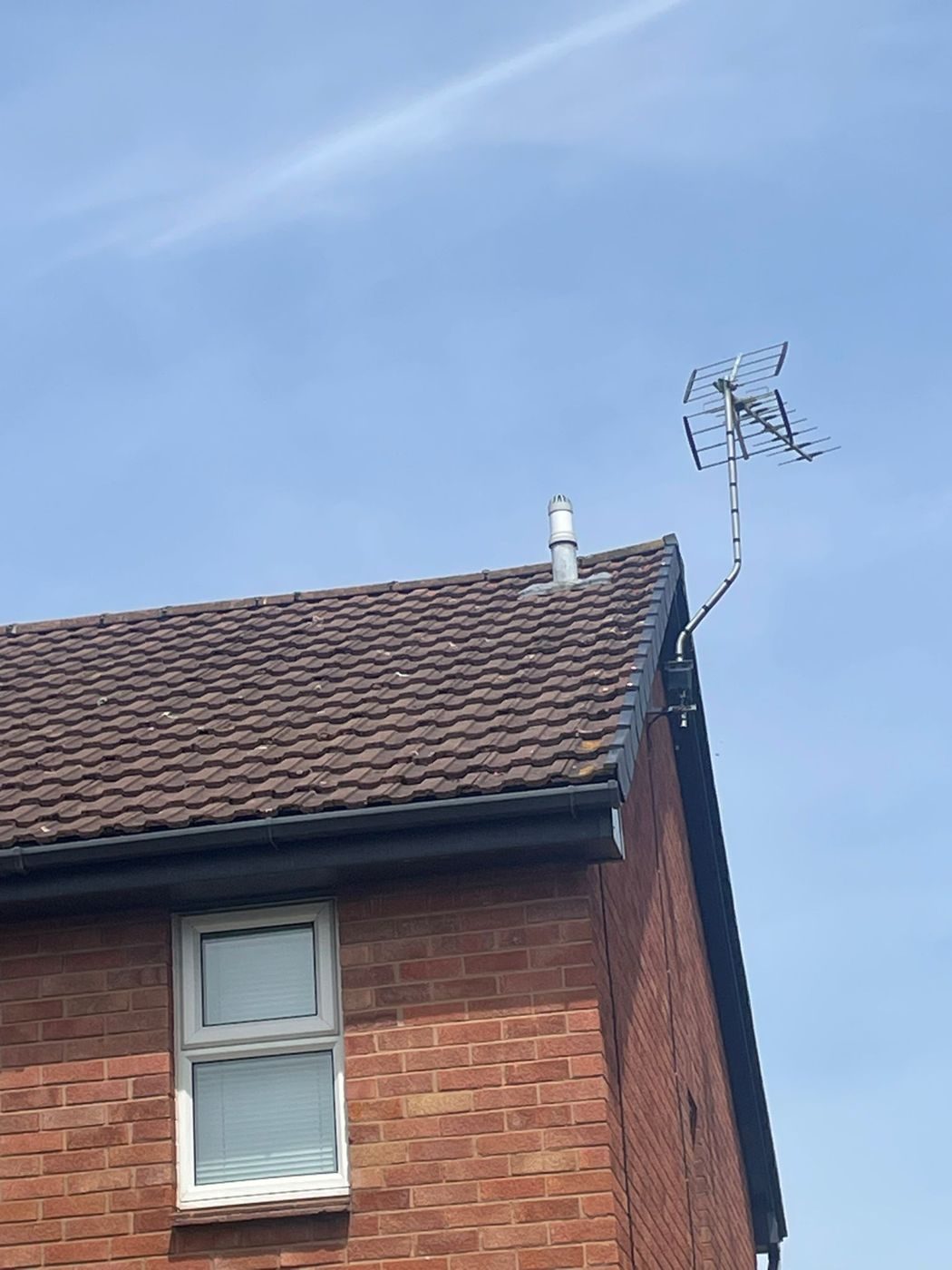
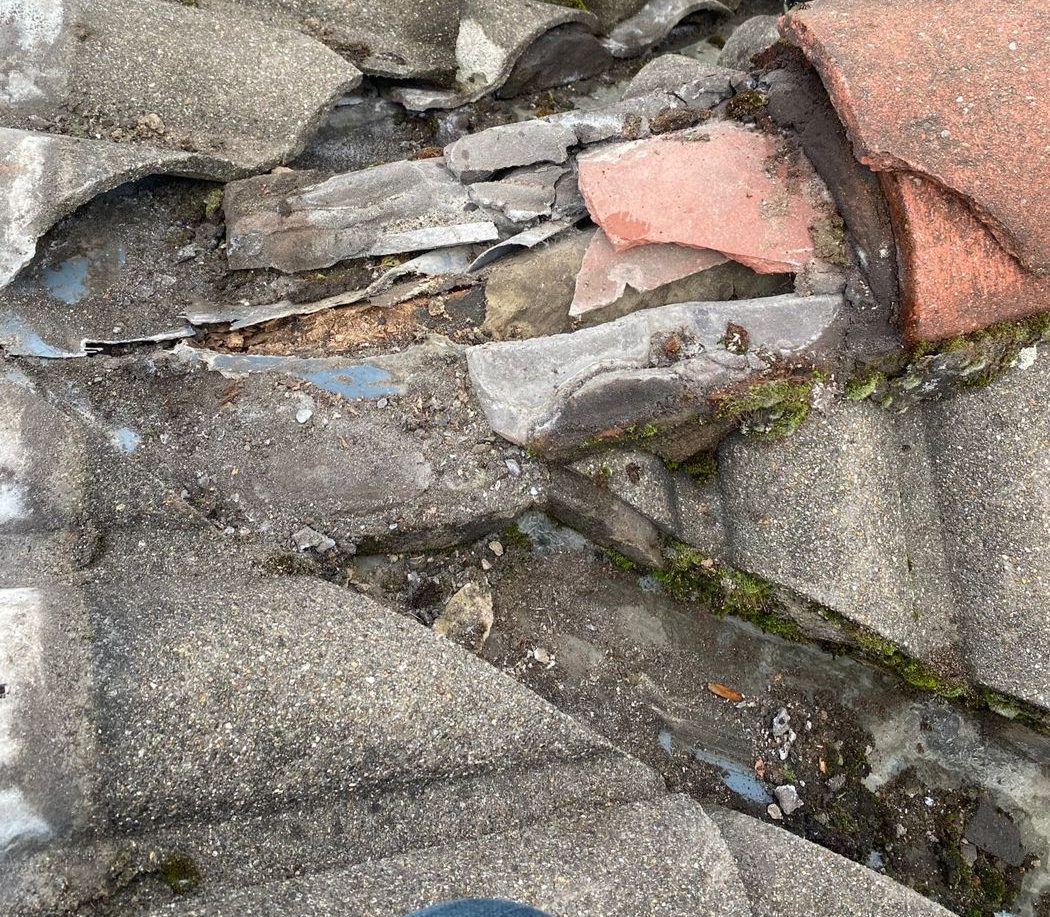
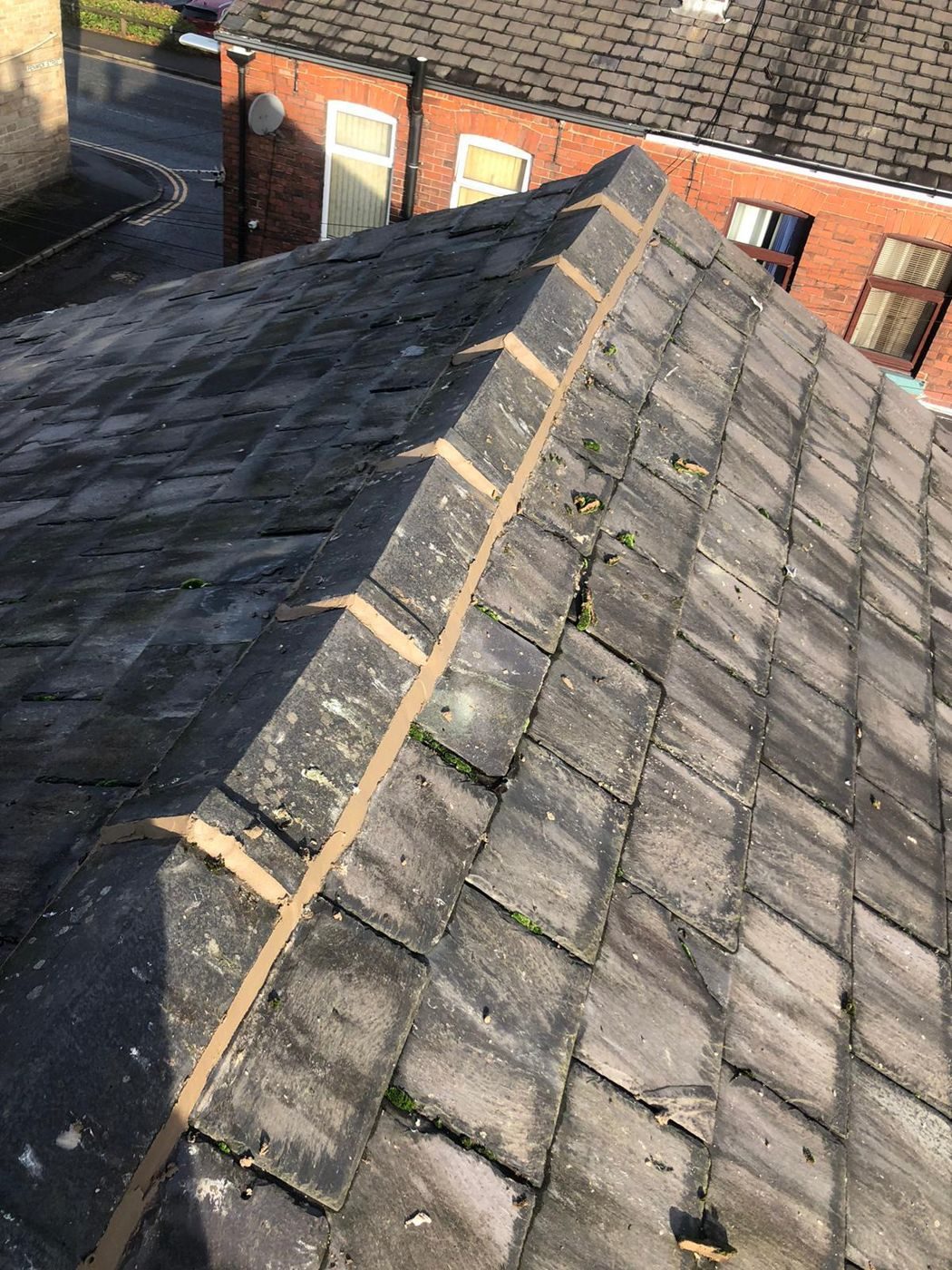
Photographs of our own work. None of them is a storm job — they show the parts that fail and how they are put right. More on the storm damage hub.
A multi-pot head is not six separate objects. Every pot sits in one continuous sloping bed of mortar across the top of the stack, and each is braced by the mortar packed against its neighbours. That bed is the structure. In a gale the first thing to give is usually a single pot at the windward end, or the flaunching under it, which has often been cracking at the base long before the weather arrived.
Once one pot has moved, nobody should assume the others are sound. Wind strong enough to rock one tall clay can in its bed has rocked the pots either side of it, loosening the mortar around them without any sign from the street. The pot that fell is the one you can see. The one beside it, now sitting a little out of true, is the one still to come down.
That is why we look along the whole row and not only at the gap. These stacks are tall and sit high on steep slate roofs, and on the frontage at New Brighton they take the weather coming off the river with little in front of them. A heavy clay pot sliding down slate takes courses with it and ends up in a gutter, a yard or on the pavement, so a loose pot is a falling hazard first and a leak second.
A row gives you a reference that a single pot cannot. The pots should stand at the same height, in the same line and dead upright, so after a gale it is worth comparing them with one another. Stand well back, on the far side of the road if you can, and do not stand beneath the stack while you look. A phone held up at full zoom shows far more than the naked eye.
Check the ground and the gutters as well. Pieces of flaunching, a chipped pot rim or loose mortar turning up in a valley, on a path or in the gutter means the head is shedding itself. Photograph what you see from where you stand, before anything is swept up or moved, because that picture is part of the evidence and it stops existing once the make-safe begins.
These are tall houses, and the access reflects it. Where there are attic rooms the stack stands a lift or two higher than the same job on a semi, and front gardens are often too shallow to take the base of a scaffold, so the platform may need to go up from the footway with a licence from Wirral Council and the parking bay beneath it suspended. A rear entry or a yard is quicker and disturbs fewer neighbours. Scaffolding is quoted separately, and we will say plainly when a job does not need it.
Getting pots down is its own piece of planning. A tall clay pot is heavy and brittle, and several of them cannot be handed down a ladder or sent down a chute. They come off one at a time and are lowered, then laid on boards rather than stood on the slates where they will slide. Wind off the river can also stop mortar work on an exposed frontage when a sheltered street is perfectly workable. Please do not climb up to look, and do not throw a sheet over the stack. Ring 07464 259566 and send a photograph on WhatsApp instead.
The make-safe comes first and it is not a repair. Loose pots and failing flaunching are taken off before they can drop, the sound pots are set aside on boards, and the slope below is checked for slates the falling debris has disturbed. That removes the hazard and keeps weather out for now. Who pays for that stage is an insurance question rather than a roofing one, and our guide to Who Pays for the Emergency Make-Safe? explains how it usually works.
The permanent repair follows in dry weather. The bed is re-formed across the whole head rather than patched under one pot, each flue opening is dealt with on its own terms, and the withes between flues are checked because they are thin and are often the first brickwork to go soft. Sound pots go back, and a broken one is replaced with a salvaged pot of the same pattern and height where it can be found. The lead behind the stack is looked at too, since a wide back gutter can leak while the pots look fine. Our report separates what the wind did from what was already worn, and the guide on Storm Damage or Wear and Tear? Why Roof Claims Get Turned Down shows why that matters.
If water is coming in now, ring rather than fill in a form. Weekday emergency call-outs are answered around the clock; weekend cover runs from eight in the morning until seven in the evening. Please do not go up to look: describe what you can see from the ground.
Photograph everything before anybody tidies or moves anything, because that is the evidence. The steps for the hours after a storm are set out in what to do after storm damage to your roof, and the general picture is on our storm damage hub.
What an insurer means by a storm, why wear and tear turns claims down, what belongs in a roofer's report, who pays for the make-safe, and who is who in a claim. The aftermath itself — what to do first, what to check — is covered in detail on our roof repairs section and linked throughout rather than repeated here.
“job well done good communication throughout the job very clean and tiddy when the job is finish flat roof replacement many thanks.”
Sumit Bal“Excellent service from Buddy and the team in installing a new garage roof in a really professional manner. Was kept updated at all stages and given good advice as to our options. Would highly recommend”
Peter Aspinall“Very professional efficient team great communication
Would definitely recommend made the process quick and easy will definitely look to keep for any future need
Thankyou”
Every town has its own page, written around the roofs that are actually there. Start with the main storm damage page.
Describe the roof and roughly where you are, and we will come back to you — usually the same day. If water is coming in now, please call instead.
Prefer to talk? Call 07464 259566 · WhatsApp 0044 7464 259566 · Email Evensbuddy@yahoo.com
We work across Chester, Cheshire and the Wirral from our base at Elton, just north of Chester.
2 Manley View
Elton
Chester
CH2 4QF
Almost all of our work happens at your property rather than here, so please call before travelling.
Monday – Friday — 24hrs — Emergency Call-Outs
Saturday — 8:00 – 19:00
Sunday — 8:00 – 19:00
Weekday emergency call-outs are answered around the clock. Weekend cover is 8:00 to 19:00.