★★★★★
“job well done good communication throughout the job very clean and tiddy when the job is finish flat roof replacement many thanks.”
Sumit Bal
Hoylake’s low roofs, garages and extensions take the wind straight off the water. Here is how a covering gets peeled from its edge, what you can see from the ground, and how we put it right.
Hoylake sits on the corner of the peninsula where the Dee opens out to the sea, and the shore roofs have nothing in front of them. A south-westerly or a westerly reaches the first rows of houses having crossed open water, and what it meets there is not always a tall pitched slope. Very often it is something low, flat and easy to overlook.
Think of the rear extension behind a bay-fronted villa, the garage beside an interwar semi, the porch or bay canopy over a front door, the flat top of a dormer. These roofs sit close to the ground and carry a covering that is bonded or trimmed at its edges rather than hung on nails. That is exactly the kind of roof a gale can get a grip on, and once it has found one loose edge it does not stop there.
This page is about that one pattern: wind getting under the perimeter of a low or flat roof and working inwards. The general account is on our storm damage roof repairs page; here we stay with the roofs this town is most likely to lose a covering from, and what we do about them.
The components a gale usually finds first, and the repairs that follow them.
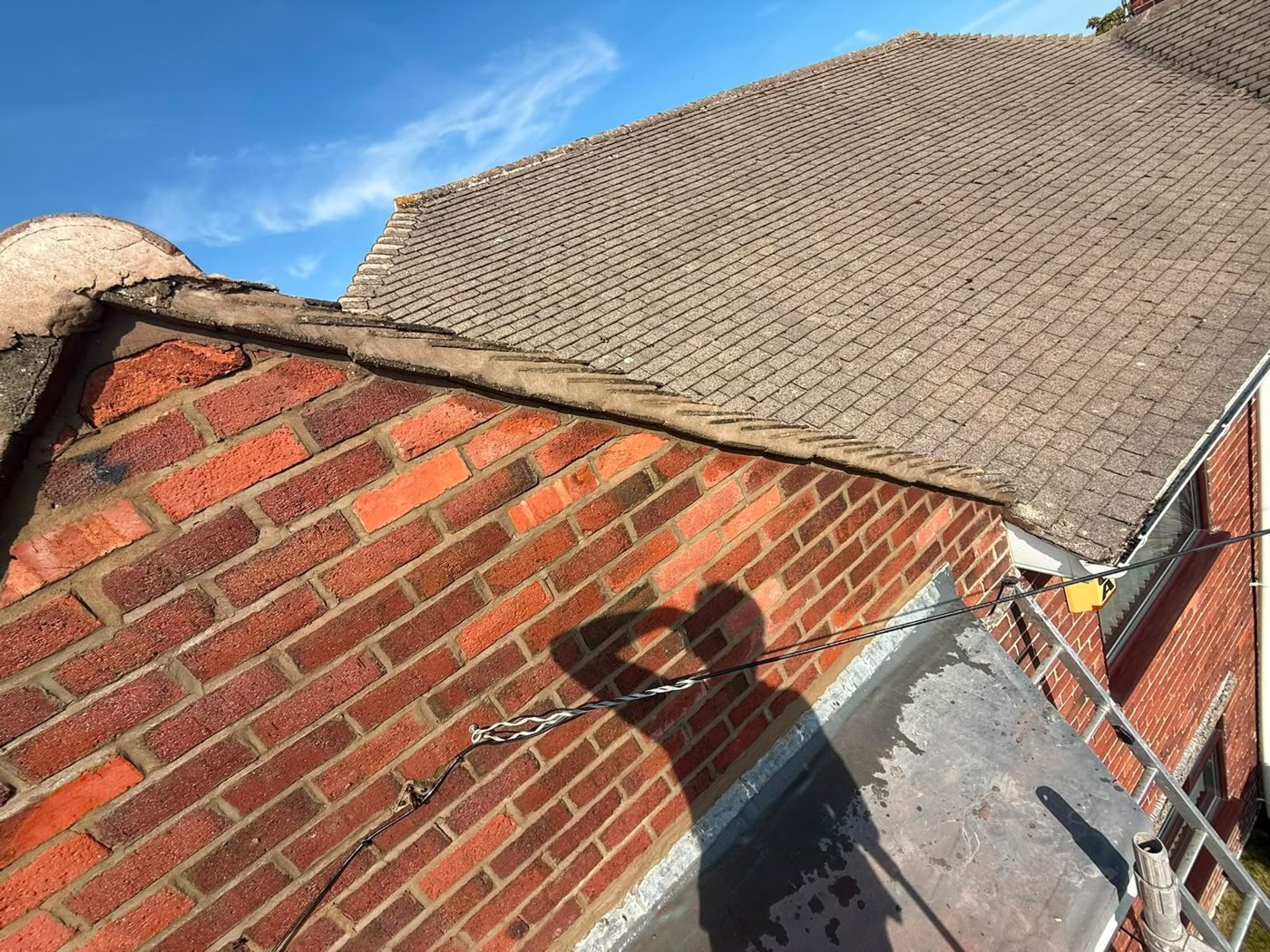
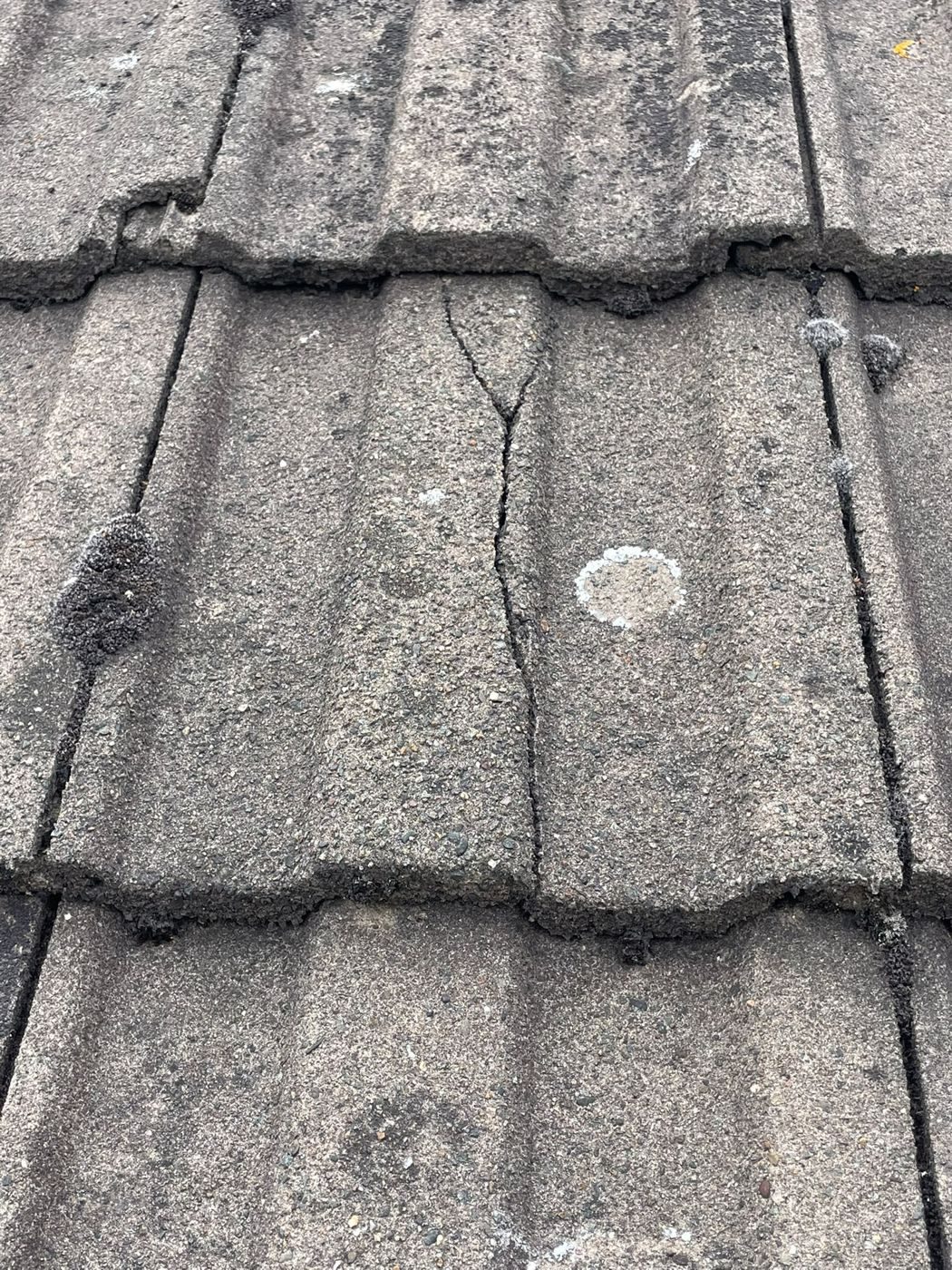
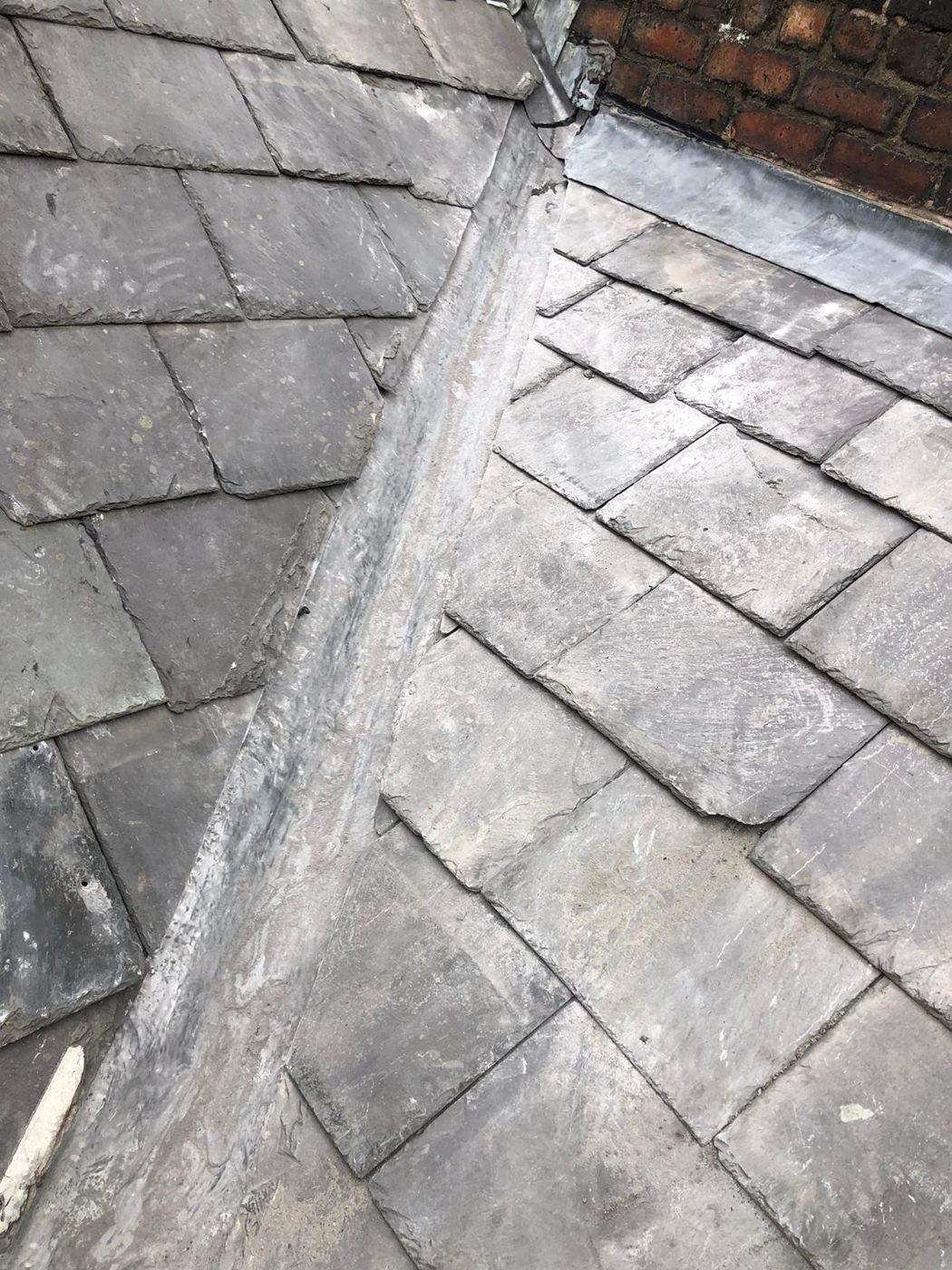
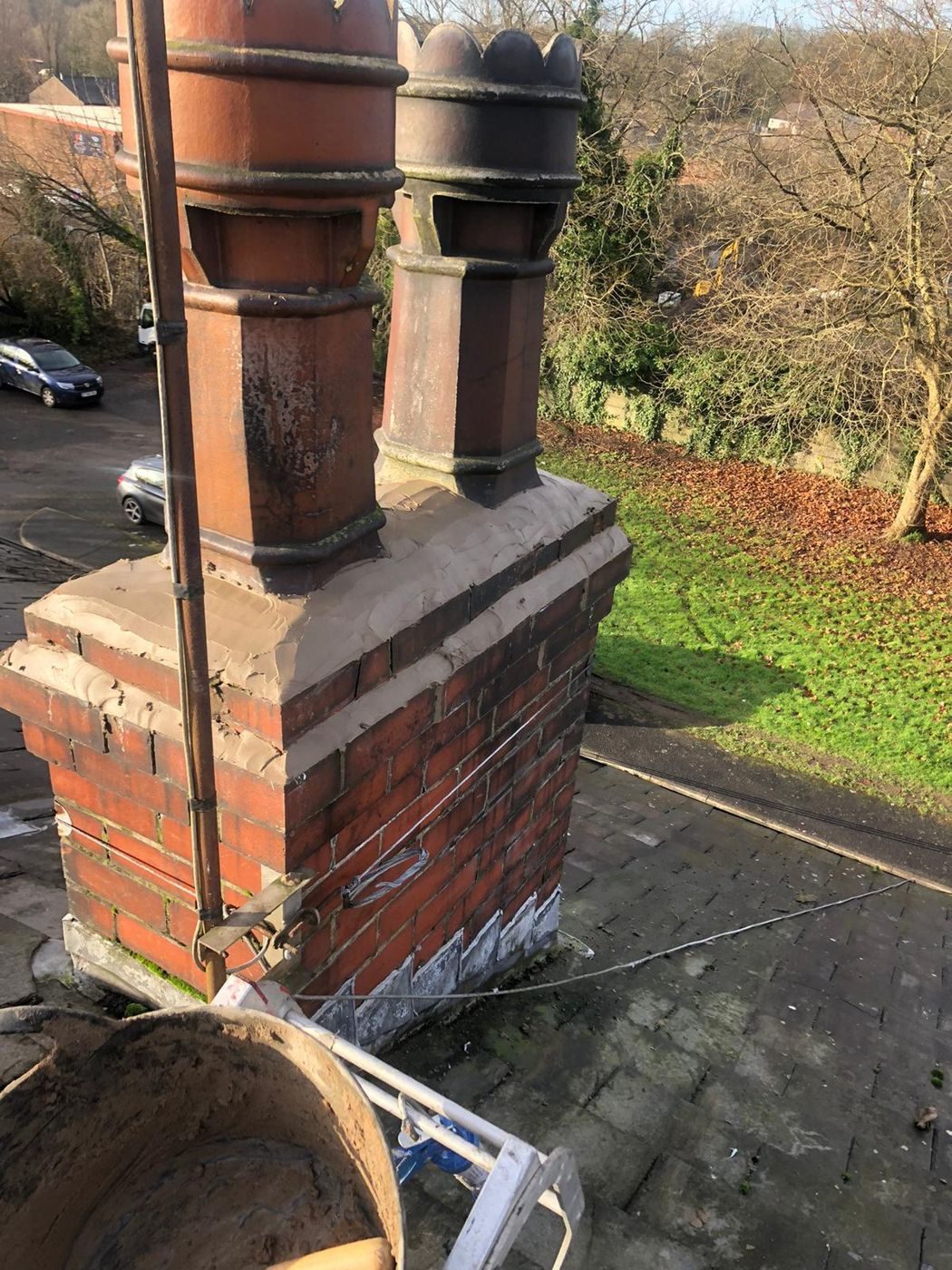
Photographs of our own work. None of them is a storm job — they show the parts that fail and how they are put right. More on the storm damage hub.
On an exposed low roof the sequence is rarely dramatic at the start. A trim has worked slightly loose, or the bond along one edge was thin, and a small lip of covering lifts in the gusts. Each blow after that lets in a little more air, the opening grows, and the covering is drawn back from the edge a hand’s width at a time. By the end of a long blow, a sheet that was perfectly sound across the middle can be hanging over the fascia or lying in the garden.
Salt is what makes the first weakness in Hoylake. Spray carried in off the water settles on every metal fixing, and screws, clips and edge trims that were fine when fitted corrode slowly until they hold far less than they once did. Nothing about the covering itself need be at fault. The anchorage has simply worn away, and a gale finds out on the night that nobody was looking. It is also why we replace worn fixings with stainless ones rather than refitting what came off.
Garages and extensions are especially open to this because they stand alone in the air stream, with no taller roof beside them to break the wind. Older felt coverings with a soft timber batten along the edge peel quickly; EPDM held down with a good perimeter bond behaves better, but only where the edge detail was done properly. Our flat roof repairs in Hoylake page covers how we detail the edge on an exposed roof, and the same thinking applies to low pitched roofs on the shore side.
You can learn a good deal without leaving the ground. Walk round the outbuilding or extension and look along the edge from each end, then check what has landed on the path, the lawn or the car below. A strip of black rubber, a curl of felt or a length of metal trim in the garden has come from somewhere, and the place it came from is usually the corner nearest the water.
Inside, wind-driven rain gives itself away by timing: a patch that appears only when it blows hard from one direction, and stays dry in steady drizzle, is water being pushed in under an edge rather than falling through a hole. Photograph it before anything is moved, and ring us rather than going outside to look more closely.
Most of the roofs in this pattern are single storey, so getting to them is usually simpler than on a tall stack or a high gable. Many Hoylake plots have a drive or a side gate, which means a tower can often be set up beside the roof instead of a full scaffold. Where it can, we say so and quote accordingly; scaffolding is quoted separately, and we only suggest it where the edge or the height really calls for it.
Along the front and on the older terraces towards the station the buildings sit close to the pavement, and a platform on the footway needs a licence from Wirral Council that has to be booked before anything is delivered. The weather is the other constraint. We will not put a sheet up or bond a covering in a gale or with salt spray blowing across the work, so a start may move by a day or two. That is a sensible delay, not a lost one.
The make-safe comes first. We cut back or secure whatever covering is flapping, remove loose trim before it lands on a car or a neighbour’s path, and where the weather allows we protect the opening so that water stops getting in. That is a temporary measure and is written up as one. We photograph what we find and what we do, and put it in a report your insurer can use, though what the policy covers is a conversation between you and them.
The permanent repair addresses why the roof failed and not only what it lost. That means checking the edge timber and deck for rot, re-forming the perimeter with a continuous bond up every upstand, and refitting trims with stainless fixings at sensible centres. A part-repair is possible where the rest of the covering is sound, and on a low pitched roof the same principle applies to clips and ridge or verge fixings. If the old covering will not take a bond any more, we tell you that plainly. See the guide to The Parts of a Roof That Fail in Wind — and Why the Edges Decide a Claim for how the usual failure points are laid out.
If water is coming in now, ring rather than fill in a form. Weekday emergency call-outs are answered around the clock; weekend cover runs from eight in the morning until seven in the evening. Please do not go up to look: describe what you can see from the ground.
Photograph everything before anybody tidies or moves anything, because that is the evidence. The steps for the hours after a storm are set out in what to do after storm damage to your roof, and the general picture is on our storm damage hub.
What an insurer means by a storm, why wear and tear turns claims down, what belongs in a roofer's report, who pays for the make-safe, and who is who in a claim. The aftermath itself — what to do first, what to check — is covered in detail on our roof repairs section and linked throughout rather than repeated here.
“job well done good communication throughout the job very clean and tiddy when the job is finish flat roof replacement many thanks.”
Sumit Bal“Excellent service from Buddy and the team in installing a new garage roof in a really professional manner. Was kept updated at all stages and given good advice as to our options. Would highly recommend”
Peter Aspinall“Very professional efficient team great communication
Would definitely recommend made the process quick and easy will definitely look to keep for any future need
Thankyou”
Every town has its own page, written around the roofs that are actually there. Start with the main storm damage page.
Describe the roof and roughly where you are, and we will come back to you — usually the same day. If water is coming in now, please call instead.
Prefer to talk? Call 07464 259566 · WhatsApp 0044 7464 259566 · Email Evensbuddy@yahoo.com
We work across Chester, Cheshire and the Wirral from our base at Elton, just north of Chester.
2 Manley View
Elton
Chester
CH2 4QF
Almost all of our work happens at your property rather than here, so please call before travelling.
Monday – Friday — 24hrs — Emergency Call-Outs
Saturday — 8:00 – 19:00
Sunday — 8:00 – 19:00
Weekday emergency call-outs are answered around the clock. Weekend cover is 8:00 to 19:00.