★★★★★
“Excellent work replacing ridge tiles, repointing chimney and repairing flashing. Also fixed other broken tiles. Clean and tidy job. Would definitely recommend.”
Neil
Roof repairs in Neston and Parkgate — slate roofs, slipped slates and the fixings behind them. Weekday emergency call-outs around the clock.
Neston and Parkgate have a good deal of older property with natural slate on it, and natural slate produces the single most misunderstood roof problem we deal with.
A slate roof almost never fails because the slate has worn out. Good Welsh slate has a working life measured in centuries, and a slate taken off a hundred-year-old roof is usually still perfectly serviceable. What fails is the nails.
Understanding that changes the whole repair-or-replace conversation on a slate roof, and it is the difference between a sensible decision and an expensive one.
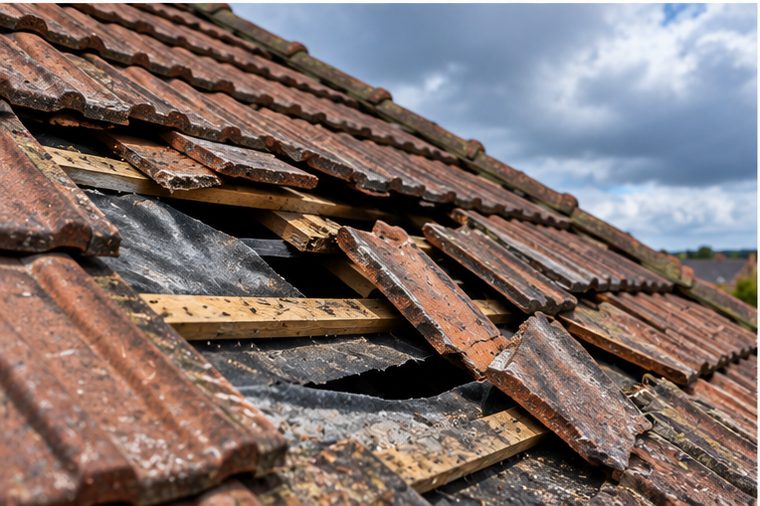
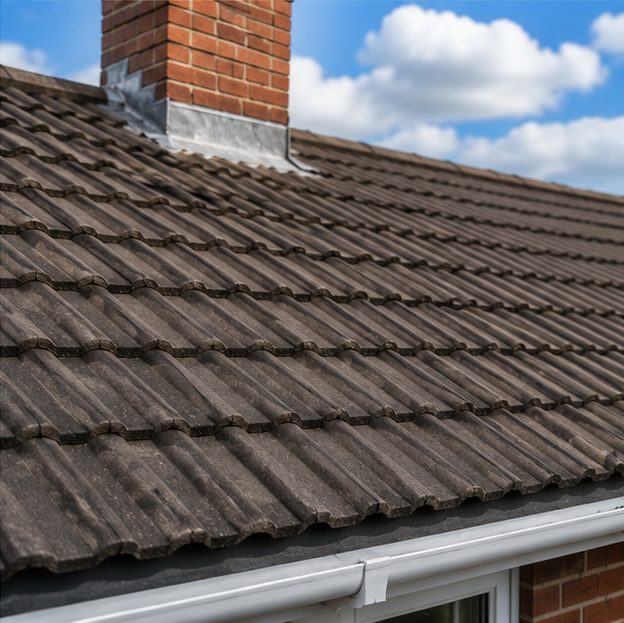
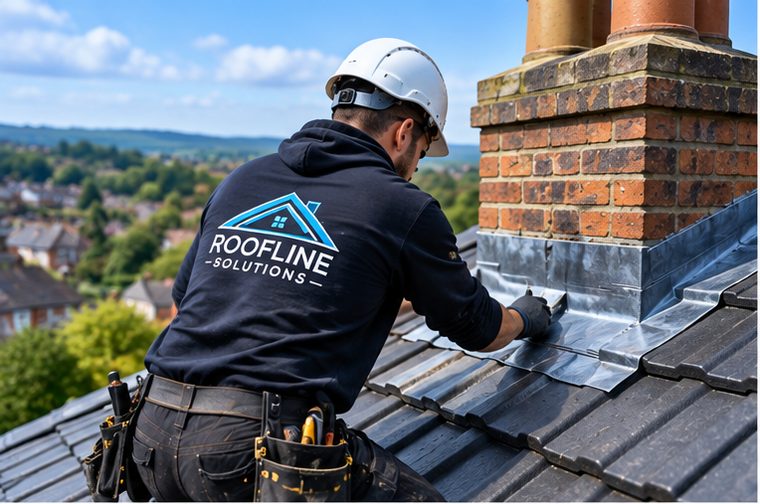
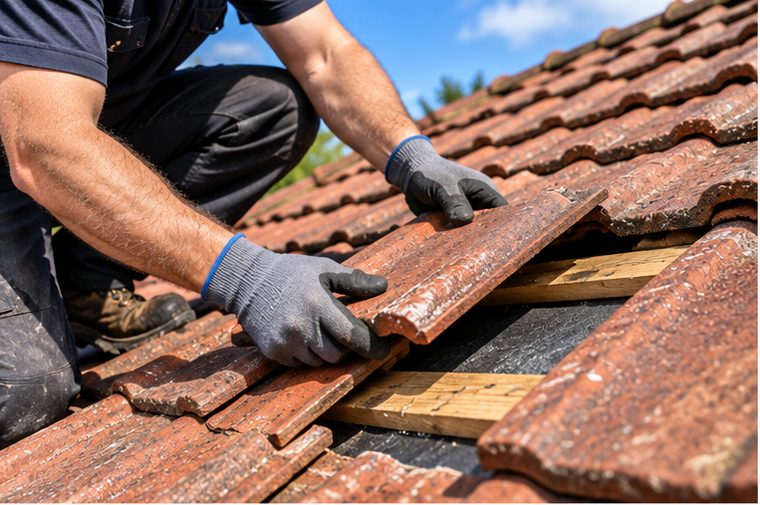
The trade name for it is nail sickness. Slates are hung on two nails each, and on older roofs those nails are iron or mild steel. Over decades they corrode, thin, and eventually give way, at which point the slate slides down the roof and stops on the one below it — or does not stop, and ends up in the garden.
The giveaway is that it happens for no reason. There is no storm, nothing hit the roof, and the slate that slipped looks fine when you pick it up. That is the signature. Damaged slates crack; nail-sick slates simply arrive on the ground intact.
One or two slipped slates on a large roof is normal maintenance and always will be. What matters is the rate. If you have had one a year for ten years, the nails are ageing gently and you are fine. If you had one in 2023, two in 2024 and five last winter, the nails are going as a population and the curve only points one way.
That is the honest way to judge a slate roof, and it is a judgement about numbers over time rather than about how the roof looks. A nail-sick roof can look immaculate from the ground right up until the year it does not.
Repairing individual slates is done with a tingle — a strip of lead or copper nailed to the batten and folded over the bottom edge of the replacement slate to hold it. That is proper practice, not a bodge, because you cannot get a nail into the original hole once the slates around it are in place. A roof with a dozen tingles is a roof that has been maintained. A roof with fifty is a roof that is being kept alive.
The alternative before full replacement is stripping and reslating a whole slope with the existing slates, on new battens and new underlay, with new non-ferrous nails. Sound slates get reused, broken ones are replaced with salvage, and the roof comes back with a fresh century in it at a fraction of the cost of new material. It is not right for every roof — there has to be enough good slate left — but it is a real option and it is worth asking about before anyone quotes you for a new covering.
Parkgate sits on the marsh edge facing the Dee, and the exposure there is noticeably harsher than a few streets inland. Salt in the air accelerates the same corrosion that causes nail sickness in the first place, so slate roofs on the front tend to reach that point sooner than their equivalents further back.
When we refix anything on that side we use non-ferrous fixings as a matter of course. Using the same specification that would be perfectly adequate in Chester is how a repair on the Parkgate front turns into a return visit.
On a slate roof the question is not "is the slate worn out" but "are the nails gone, and is there enough sound slate left to reuse". Those are two different answers and they produce three different jobs: patch repairs, strip and reslate with the existing slate, or a new covering.
We would rather price the middle one where it is genuinely available, because it keeps the material that makes the building look right and it costs considerably less than new. If there is not enough sound slate, we will say so and show you why.
A storm rarely causes nail sickness. What it does is expose it, which is why an old slate roof can lose five slates in one night having lost only one a year previously.
If several slates have come down together and none of them is broken, that is worth telling us. It points at the fixings rather than the weather and it changes the conversation about what to do next.
Emergency call-outs run 24 hours a day, Monday to Friday, with Saturday and Sunday cover from 8:00 to 19:00.
Leaking roofs, slipped and broken tiles, damaged slates, storm damage, valleys, chimneys, leadwork, flat roofs, ridges and verges. The main roof repair page has the detail on each of them.
“Excellent work replacing ridge tiles, repointing chimney and repairing flashing. Also fixed other broken tiles. Clean and tidy job. Would definitely recommend.”
Neil“Highly recommend. Very quick and efficient. Great communication. Went above and beyond to work the weekend to complete the work that needed to be done. Very happy with the results.”
Karen Jones“A great team that really looked after us and have continued to support us. I wouldn’t hesitate to use roofline again or recommend them to family and friends. Buddy takes pride in his work and customer service.”
Samantha MerrickWritten for Neston rather than for roofs in general. The ones not yet published are listed rather than linked, because a link to a page that does not exist yet helps nobody.
Every town below has its own page, written around what the roofs there are actually like.
Describe what is happening and roughly where you are, and we will come back to you — usually the same day. If water is coming in now, please call instead.
Prefer to talk? Call 07464 259566 · WhatsApp 0044 7464 259566 · Email Evensbuddy@yahoo.com
We cover Neston from our base at Elton, just north of Chester.
2 Manley View
Elton
Chester
CH2 4QF
Almost all of our work happens at your property rather than here, so please call before travelling.
Monday – Friday — 24hrs — Emergency Call-Outs
Saturday — 8:00 – 19:00
Sunday — 8:00 – 19:00
Weekday emergency call-outs are answered around the clock. Weekend cover is 8:00 to 19:00.