★★★★★
“I had a leak in my vally had a number of roofers to come and take a look couldn’t find the problem Roofline’s solutions fixed the problem first time. Very happy with these guys thank you for the brilliant service”
Michael PriceMost leaks are found by looking properly. The stubborn ones need method, and the method is less high-tech than people expect.
The two most effective tools are the loft and the calendar, and neither costs anything.
The loft, in daylight, with the lights off. Daylight through the covering answers it in seconds. Then staining on the underside of the underlay and the timbers, and specifically the highest point it reaches - because water runs down and never up, so the fault is at or above that point.
The weather record. Which conditions produce it. Wind from one direction points at a detail on that face; prolonged heavy rain points at drainage; cold dry weather points at condensation rather than a leak.
Between them those two solve the majority of leaks, including a good number that somebody else has already failed to find.
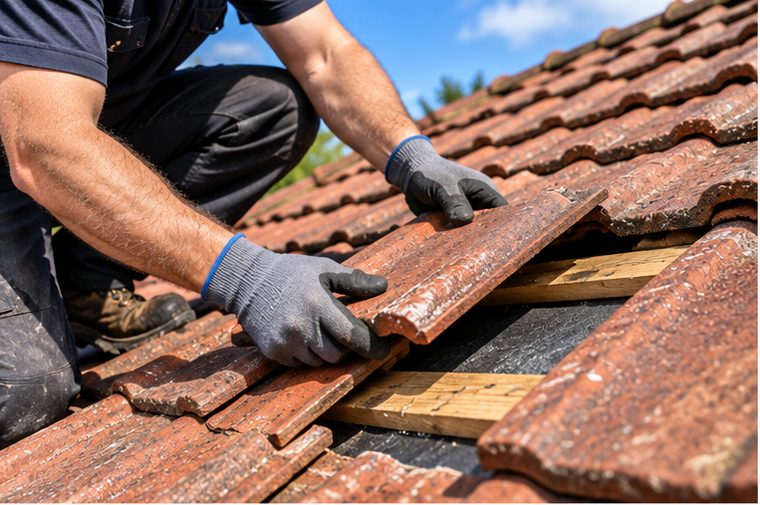
The definitive method, and it is unglamorous.
One person on the roof with a hose, one person inside watching. Wet a small area at a time, starting at the bottom of the slope and working upward, waiting between each.
The order is the whole point. Start at the top and the water runs over everything below it, so when damp appears inside you have learned nothing. Working upward, when the damp appears the last thing you wetted is the source.
It takes hours rather than minutes, and it needs somebody to be paid for those hours. On a leak that has already survived two repairs it is far cheaper than a third guess, and it produces an answer rather than a theory.
On a chimney the same method applies element by element: the apron, then the sides, then the back gutter, then the masonry face, then the top of the stack.
Thermal imaging. A thermal camera shows surface temperature differences. Wet material loses heat differently from dry material, so damp areas can show up as cooler patches. It is genuinely useful for mapping the extent of moisture in a ceiling or a flat roof build-up.
What it does not do is show you a hole. It shows where water has got to, not where it came in - which on a pitched roof is the same problem you started with. It also needs a temperature difference to work at all, so it is far less useful on a mild damp day than in cold weather, and it produces false positives from anything that changes surface temperature.
It is a tool for narrowing a search on a large flat roof, not a leak detector.
Moisture meters. Genuinely useful for telling live damp from historic staining, and for mapping how far moisture extends. Not a locator.
Smoke and dye testing. Occasionally used on flat roofs and drainage. Fine in the right situation, rarely the answer on a pitched roof.
Anybody selling leak detection as a technology rather than a method is usually selling the camera.
The point is after the second failed repair.
A first repair that does not work is unlucky or a misdiagnosis. A second is a pattern, and it usually means one of four things: the wrong element was fixed, the repair was sealant, there are two separate sources feeding the same place, or it was never a leak.
At that point the right purchase is a diagnosis rather than a repair - somebody spending half a day on a proper water test with no assumption about what they will find, and producing a written finding naming the defect and where it is.
It is a strange thing to buy and it feels like paying for nothing. It is considerably cheaper than the third repair.
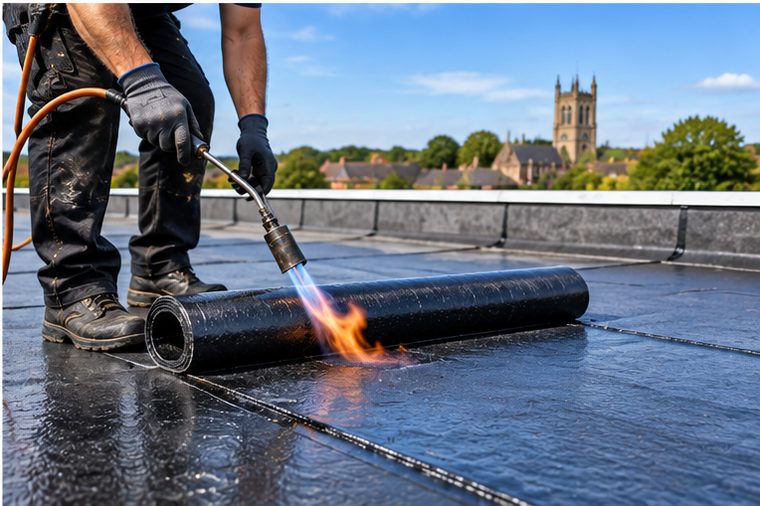
What the fault is, where it is, and how it was established.
"Lead soaker at the third course of the east abutment has slipped; water tracks down the wall plate and appears four feet away on the landing ceiling; confirmed by water test" is a finding.
"Roof repairs needed" is not.
The reason it matters is that it is the only way to tell, if it leaks again, whether the next person is looking at something different or repeating what has already been tried.
The rest of the series, on the questions people ask most.
Every town has its own page, written around what the roofs there are actually like. Start with the main roof repairs page.
“I had a leak in my vally had a number of roofers to come and take a look couldn’t find the problem Roofline’s solutions fixed the problem first time. Very happy with these guys thank you for the brilliant service”
Michael Price“Excellent work from the lads at roofline solutions. I had a leak in my valley, they came out and sorted it within a day.”
Chris Hollewell“Excellent work replacing ridge tiles, repointing chimney and repairing flashing. Also fixed other broken tiles. Clean and tidy job. Would definitely recommend.”
NeilDescribe what is happening and roughly where you are, and we will come back to you — usually the same day. If water is coming in now, please call instead.
Prefer to talk? Call 07464 259566 · WhatsApp 0044 7464 259566 · Email Evensbuddy@yahoo.com
We cover Chester, Cheshire, the Wirral and Flintshire from Elton, just north of Chester.
2 Manley View
Elton
Chester
CH2 4QF
Almost all of our work happens at your property rather than here, so please call before travelling.
Monday – Friday — 24hrs — Emergency Call-Outs
Saturday — 8:00 – 19:00
Sunday — 8:00 – 19:00
Weekday emergency call-outs are answered around the clock. Weekend cover is 8:00 to 19:00.