★★★★★
“A great team that really looked after us and have continued to support us. I wouldn’t hesitate to use roofline again or recommend them to family and friends. Buddy takes pride in his work and customer service.”
Samantha MerrickA proper valley reline is a bigger job than it looks from below, because everything either side has to come off first.
From the ground a valley is a narrow channel. In practice repairing one means removing the tiles or slates along both sides of it for its whole length, because the lining runs underneath them.
That is the part people are not expecting, and it is why a valley reline costs more than the length of lining suggests. It is also why doing it properly is worth it: the covering is off, so everything underneath can be seen and put right at the same time.
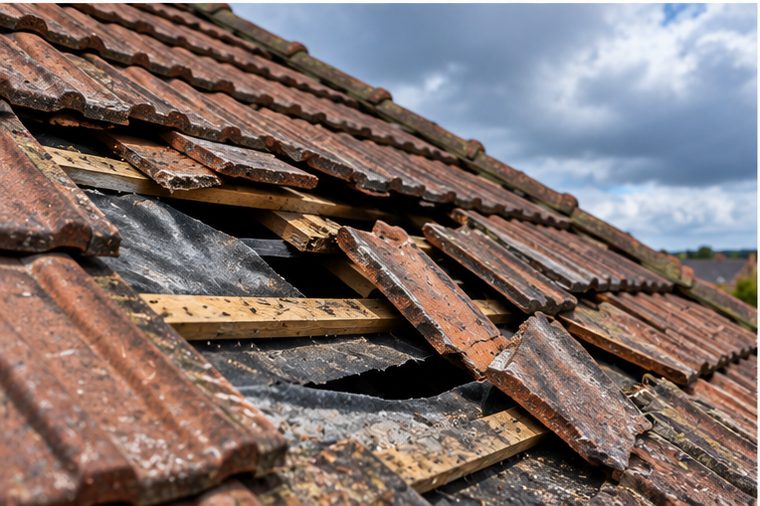
1. Strip back. The cut tiles or slates either side are lifted and set aside carefully. On an older building with matched or salvaged material, this is done with the intention of reusing them, which takes longer than breaking them out.
2. Remove the old lining. All of it, including any sealant or previous patching, which has to come off before anything can be formed properly.
3. Inspect the boards. This is the moment they are visible for the first time in decades. The valley board and the tilting fillets either side get checked for decay, and anything soft is cut out and renewed. Water that has been getting past a failed lining will usually have reached them.
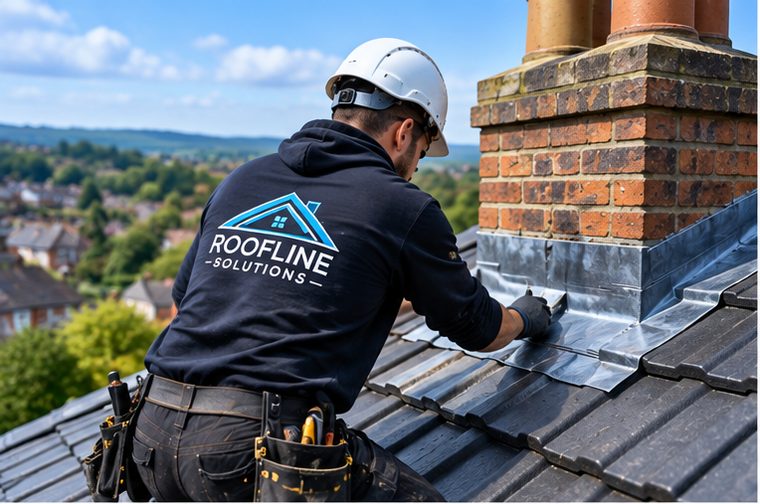
4. Form the new lining. Lead of the appropriate code, in pieces kept short enough to accommodate thermal movement, each lapping over the one below so water passes across every joint rather than into it. Adequate upstand at each side.
5. Re-cut and refix the tiles. Cut on the rake, leaving an adequate clear channel between the two edges - which is the single most important dimension in the whole job and the one most often got wrong. On slate, cut pieces are fixed with tingles as they would be anywhere else.
6. Detail the top and the bottom. Where the valley starts, and where it discharges into the gutter, past the fascia rather than behind it.
Because the covering is off, this is the cheapest moment to deal with everything else in that area.
The battens either side of the valley, which are frequently softened by the same water.
The underlay at the valley edge, and whether it is dressed into the lining properly rather than stopping short.
The condition of the cut tiles, and whether enough are sound to reuse.
And the flow route at the bottom - whether the gutter below is the right size, hung to a fall, and clear.
Ask for photographs of the boards. It is the one part of the roof nobody ever sees, and it is where the money goes if it has decayed.
Knutsford has a substantial conservation area and a large number of listed buildings, and valleys are one of the details where material choice is visible and matters.
Match the lining material. Where a valley is lead, renewing it in lead is like-for-like repair. Substituting GRP or a proprietary trough changes the material and, on a listed building, may need consent - it is also visible at the eaves and at the top of the run.
Match the covering. The cut tiles or slates either side should be reused where sound and matched from salvage where not. Modern replacements down the length of a valley are conspicuous and permanent.
Lime rather than cement for any bedding or pointing on a building constructed in lime, because cement is harder and less permeable than the surrounding fabric and traps moisture in it.
Where a repair might amount to alteration rather than like-for-like, the council is the authority. We will say what we think needs checking rather than getting on with it and letting you find out afterwards - doing work that needed consent without it is a criminal offence rather than a paperwork problem.
The length being relined, and whether it is the whole run or a section.
The lining material and, for lead, the code.
Whether the existing tiles or slates are being reused, matched from salvage, or replaced.
What happens if the boards turn out to be decayed - because that is the finding that changes the job and it cannot be established until the covering is off.
And, on a protected building, what is being matched and what if anything needs checking with the council first.
The rest of the series, on the questions people ask most.
Every town has its own page, written around what the roofs there are actually like. Start with the main roof repairs page.
“A great team that really looked after us and have continued to support us. I wouldn’t hesitate to use roofline again or recommend them to family and friends. Buddy takes pride in his work and customer service.”
Samantha Merrick“I needed help removing a chimney.
Buddy discussed the options available to me, taking into account my budget, timeline and DIY ability.
We settled that his team would remove the chimney to the roofline, using scaffolding and ladders.
He gave a detailed description of the steps his team were going to take, how long it would take them, and provided a fair quote.
His team were pleasant and worked efficiently. They got the job done in the estimated time and I was happy with the end result.”
“Highly recommend. Very quick and efficient. Great communication. Went above and beyond to work the weekend to complete the work that needed to be done. Very happy with the results.”
Karen JonesDescribe what is happening and roughly where you are, and we will come back to you — usually the same day. If water is coming in now, please call instead.
Prefer to talk? Call 07464 259566 · WhatsApp 0044 7464 259566 · Email Evensbuddy@yahoo.com
We cover Chester, Cheshire, the Wirral and Flintshire from Elton, just north of Chester.
2 Manley View
Elton
Chester
CH2 4QF
Almost all of our work happens at your property rather than here, so please call before travelling.
Monday – Friday — 24hrs — Emergency Call-Outs
Saturday — 8:00 – 19:00
Sunday — 8:00 – 19:00
Weekday emergency call-outs are answered around the clock. Weekend cover is 8:00 to 19:00.