★★★★★
“I had a leak in my vally had a number of roofers to come and take a look couldn’t find the problem Roofline’s solutions fixed the problem first time. Very happy with these guys thank you for the brilliant service”
Michael PriceGood lead lasts decades. The question is less "has it failed" than "is this one of the moments when it should be done anyway".
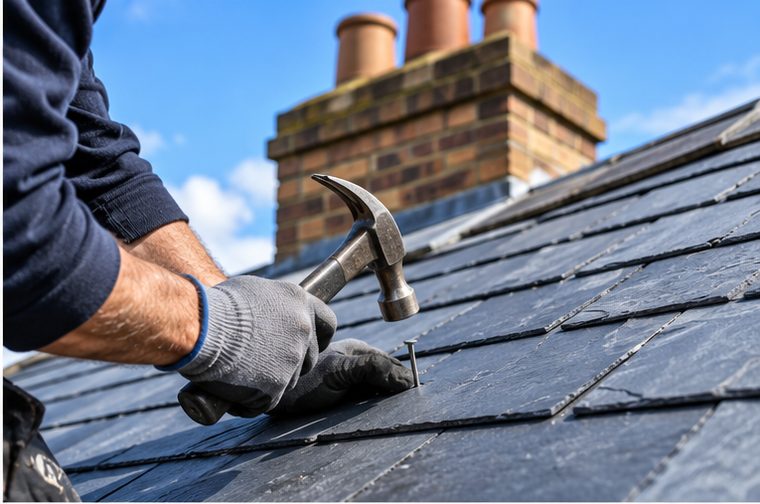
Lead is the most durable roofing material in ordinary use. Properly sized, properly fixed and properly detailed, flashing around a chimney will comfortably outlast a concrete tile covering and can outlast a slate one.
It is specified by code number - a scale that comes from its old weight per square foot - and thickness matters. Code 4 is typical for soakers and cover flashings on a house, Code 5 for aprons and back gutters where more is asked of it. Lead that is too thin for its position works harder, moves more and fatigues sooner.
So a chimney flashing that has failed after fifteen years has almost always failed for a reason other than age, and the reason is usually one of the three below.
A cement fillet instead of lead. Somebody has run a triangular fillet of sand and cement along the junction between the stack and the roof instead of forming it in lead. It is quicker and cheaper and it always cracks, because mortar is rigid and the two materials either side of it move at different rates. Once it cracks it holds water against the joint rather than shedding it. If you have a cement fillet at your chimney, it is not a question of whether it will fail.
Sheets that are too long. Lead expands and contracts noticeably with temperature. An oversized piece cannot accommodate that movement and so it fatigues and splits, usually along a fold. Guidance from the Lead Sheet Association puts sensible maximum lengths for cover flashings at around a metre and a half, with joints lapped. A single continuous run down a long stack is a split waiting to happen.
Sealant. Mastic smeared over a junction sheds water for a season, then shrinks and cracks, and because it is stuck at the edges it now traps water behind itself. If somebody has sealed your flashing, budget for it being done properly rather than done again.
This is the part that saves real money, and it is about timing rather than condition.
When the roof is being re-covered. A re-roof means the tiles around the stack come off anyway, the access is up, and the flashing is fully exposed. Renewing lead at that point costs a fraction of doing it as a separate job later, and putting old lead back under a new covering is a false economy that gets discovered in about eight years.
When the stack is being repointed or rebuilt. The flashing is wedged into raked-out mortar joints. If those joints are being renewed, the flashing has to come out and go back anyway.
When scaffolding is up for anything else. Getting safe access to a chimney is a substantial part of what chimney work costs and it does not scale with the size of the job. If there is a scaffold up for a re-roof, a render job or a window replacement, that is the cheapest the flashing will ever be.
When a flue is being lined or a stack made redundant. Both usually involve work at the top of the stack, and both are a natural point to settle everything else about it.
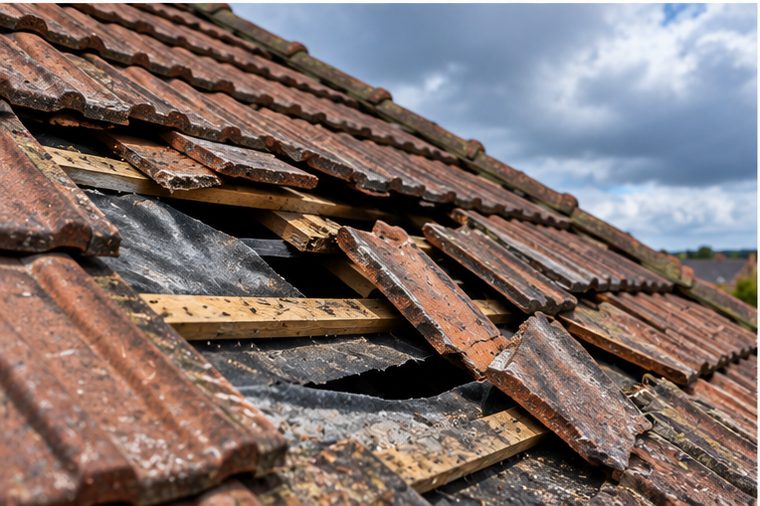
From the ground: a visibly lifted edge, a lead sheet that has pulled away from the brickwork, a dark line of open joint where it should be tight, or a cement fillet with a crack running along it.
From the loft: staining on the timbers around the chimney, particularly on the uphill side where the back gutter is, and damp at the point where the stack passes through the roof.
From inside the room: staining on a chimney breast that appears in wet weather. That said, damp on a breast has causes that have nothing to do with the flashing, and it is worth being sure which you have before anyone quotes.
And the Runcorn-specific one: on the newer estate housing the stacks are shorter and often set into the slope rather than standing free, so the back gutter above them is shallow and silts up. A flashing that looks perfect on a stack whose back gutter is full will still leak, every time it rains hard.
The rest of the series, on the questions people ask most.
Every town has its own page, written around what the roofs there are actually like. Start with the main roof repairs page.
“I had a leak in my vally had a number of roofers to come and take a look couldn’t find the problem Roofline’s solutions fixed the problem first time. Very happy with these guys thank you for the brilliant service”
Michael Price“Excellent work replacing ridge tiles, repointing chimney and repairing flashing. Also fixed other broken tiles. Clean and tidy job. Would definitely recommend.”
Neil“The guys did a great job in repairing our chimney. They were reliable, friendly and efficient. Buddy kept me in the loop throughout the whole process and I would not hesitate to use Roofline again!”
Hollie FurnivalDescribe what is happening and roughly where you are, and we will come back to you — usually the same day. If water is coming in now, please call instead.
Prefer to talk? Call 07464 259566 · WhatsApp 0044 7464 259566 · Email Evensbuddy@yahoo.com
We cover Chester, Cheshire, the Wirral and Flintshire from Elton, just north of Chester.
2 Manley View
Elton
Chester
CH2 4QF
Almost all of our work happens at your property rather than here, so please call before travelling.
Monday – Friday — 24hrs — Emergency Call-Outs
Saturday — 8:00 – 19:00
Sunday — 8:00 – 19:00
Weekday emergency call-outs are answered around the clock. Weekend cover is 8:00 to 19:00.