The short version
- Foot traffic causes more broken tiles than weather does
- A crack running in a straight line across several tiles is movement
- Slipped and broken are different faults with different causes
- Where a tile broke matters more than that it broke
Slipped and Broken Are Not the Same Problem
Worth separating before anything else, because they point in different directions.
A slipped tile has come out of position with the tile itself intact. Something that was holding it stopped - a nail, a nib, a batten, or the mortar at a ridge or verge.
A broken tile has failed as a material. Something loaded it, froze it, or struck it.
People use the words interchangeably and roofers do not, because the first is a fixings question and the second is an impact or weathering question.
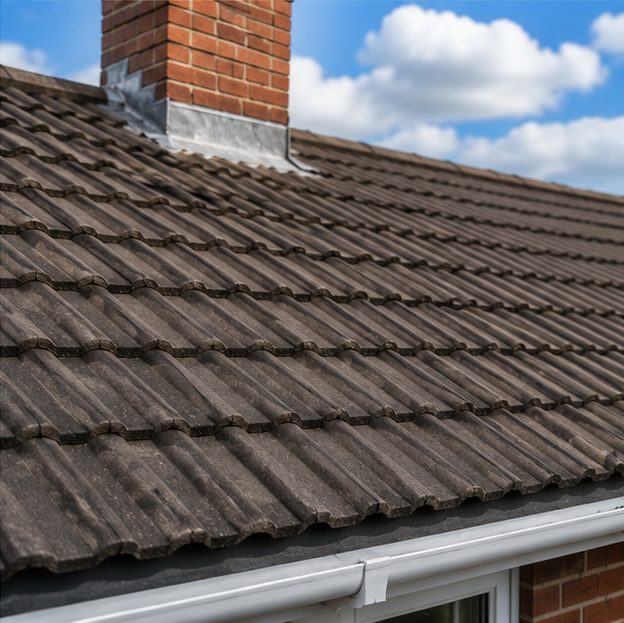
The Causes, In the Order We Actually Find Them
1. Somebody walked on it. This is genuinely the commonest cause of a broken tile and almost nobody guesses it. Aerial fitters, satellite installers, window cleaners, solar installers, previous roofers and homeowners have all been up there. A tile stepped on in the wrong place cracks straight away or is left with a hairline that opens over the following winter. If a tile broke shortly after somebody was on the roof, that is your answer.
2. Fixings and battens. Nails corrode, battens soften, nibs snap. The tile slides. This produces slips rather than breaks, and it produces them gradually across a whole elevation.
3. Frost. Water absorbed into a tile expands as it freezes. Do that enough times and the tile crazes, spalls or splits - concentrated on the north-facing slopes that stay wet longest.
4. Wind. Uplift at edges, verges and ridges. Produces slips and losses at the perimeter rather than breaks in the middle.
5. Impact. Branches, debris in a gale, a dislodged aerial, occasionally hail.
6. Mortar failure at ridge and verge. Not the tile at all, but it is what puts ridge and verge tiles on the ground.
The Northwich Exception: When the Building Moved
There is a seventh cause that matters more here than in most of Cheshire, and it has a signature you can recognise.
Salt has been extracted from beneath Northwich for a very long time and the town has a documented history of ground movement as a result. Most of it is historic and long since settled, but buildings that have moved once carry the legacy in their walls and their roof lines.
When a building moves, the roof has to take up the difference at its joints. The signature is a line. Cracks that run in a straight line across several tiles rather than appearing at random. Ridge mortar that has failed along a run rather than in patches. A gap that opens at one end of a verge and not the other. Damage that is concentrated at one corner of the building.
Ordinary weathering is even, because the whole elevation gets the same weather. Movement damage is asymmetric and linear. If your tiles have broken in a line, the tiles are not the problem.
That changes the repair. Rigid mortar packed into a joint that is going to open again is a repair with a known expiry date; a mechanically fixed dry ridge and a properly lapped flashing cope far better. And if what we find suggests the movement is ongoing rather than historic, the right person is a structural engineer, and we will say so rather than keep selling you roof repairs.
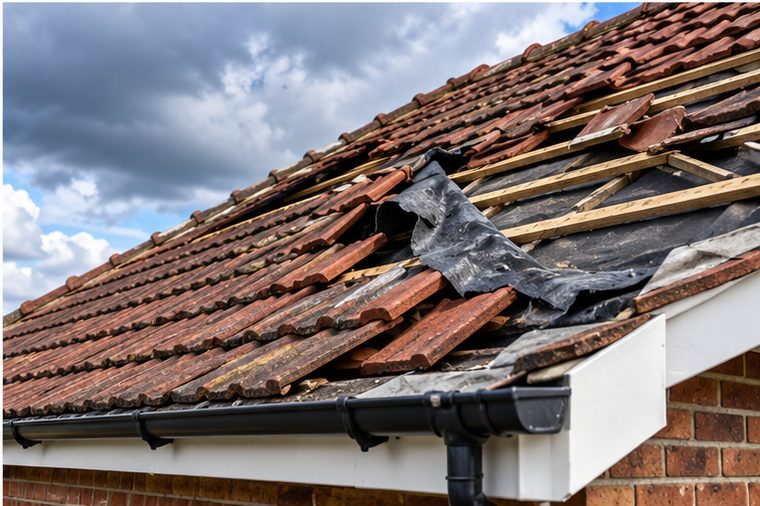
Where the Damage Is Tells You What Caused It
Middle of a slope, one or two tiles, clean break - foot traffic or impact.
Perimeter, verge, ridge or corner - wind.
North slope, widespread surface crazing and spalling - frost and age.
Scattered slips with intact tiles across a whole elevation - fixings.
In a line, or concentrated at one corner - movement.
It is worth photographing what you can see from the ground before anyone comes out, because the pattern is the diagnosis and it is easier to see in a photograph than from memory.