The short version
- Lead expands and contracts a great deal with temperature
- Sheets longer than about a metre and a half fatigue and split
- A split almost always runs along a fold, not across a flat area
- Lifting is a fixing problem, and on this coast fixings corrode faster
Lead Moves, and That Is the Whole Story
Lead has a high coefficient of thermal expansion - it grows and shrinks measurably as the temperature changes, and a dark lead flashing on a south-facing stack goes through a very wide temperature range in a single summer day.
A correctly detailed flashing is designed around that. It is made in pieces of a sensible length, each lapped over the next, with each piece free to move independently and fixed at one point rather than pinned along its whole length.
Get that right and the lead simply grows and shrinks a few millimetres each day for the next fifty years and nothing happens.
Get it wrong and the lead cannot move, so instead it works - and metal that is worked repeatedly in the same place fatigues and eventually splits.
Why It Splits Along a Fold
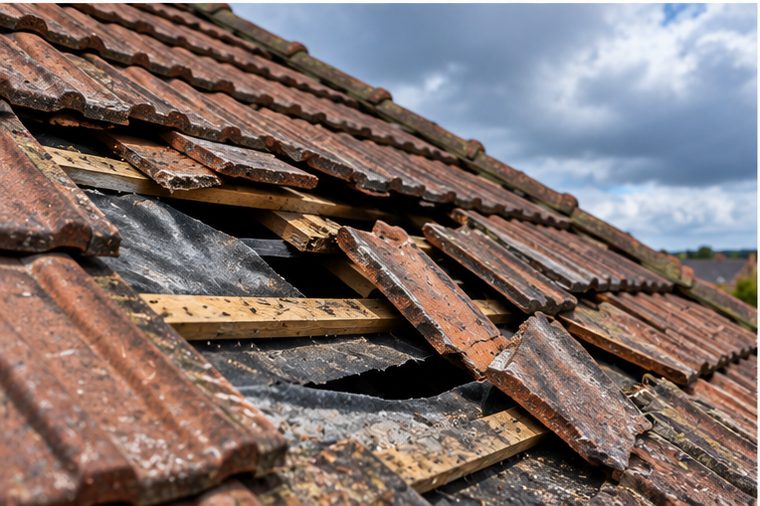
Look at a cracked flashing and the crack is nearly always along a line where the lead is bent - the fold at the top edge, the line where it turns down over the tiles, the corner of an apron.
That is because a fold is where the movement concentrates. The flat parts can expand into the space around them; the folded part is being flexed open and closed a fraction of a millimetre every time the sheet grows and shrinks. Thousands of cycles later it fails there.
The commonest underlying cause is a piece that is simply too long. Lead Sheet Association guidance puts sensible maximum lengths for cover flashings at around a metre and a half, with lapped joints between pieces. Somebody running a single continuous length down a long stack has saved themselves two joints and bought themselves a split.
The other cause is a piece that is fixed at both ends. Lead should be fixed so it can move; nailed or screwed rigidly top and bottom, it has nowhere to go.
Thickness matters too. Lead is specified by code number, and lead that is too thin for its position moves more readily and fatigues sooner. Code 4 is typical for cover flashings and soakers, Code 5 where more is being asked of it.
Why It Lifts
Lifting is a different failure from splitting and it is a fixing problem.
A cover flashing is turned into a chase - a groove raked out of a mortar joint - and held there with lead wedges driven in at intervals, then pointed. The bottom edge, over the tiles, is held by clips or by its own weight and dressing.
It lifts when the wedges come out, when the pointing over them erodes and lets them go, or when the bottom edge has no clips and enough wind gets under it.
And on the Hoylake and Meols coast there is a fourth reason: the clips and fixings themselves corrode. Salt in the air accelerates the corrosion of steel considerably, so a specification that would hold perfectly well inland gives up sooner here. Non-ferrous fixings are not a nicety on this coast.
And Why the Wind Finds It Here First
Wind loads a roof by suction rather than pressure, and that suction is strongest at the edges, the ridge and around anything that projects - which is exactly what a chimney is.
A stack standing proud of a roof facing open water is in the most aggressive part of the wind field on the whole building. The air accelerating around it produces genuine uplift on the flashings, every time it blows.
That is why an apparently intact flashing on a Hoylake seafront property can be lifted along one edge while the same detail on the sheltered side of the same house is untouched.
What a Repair Should Put Right
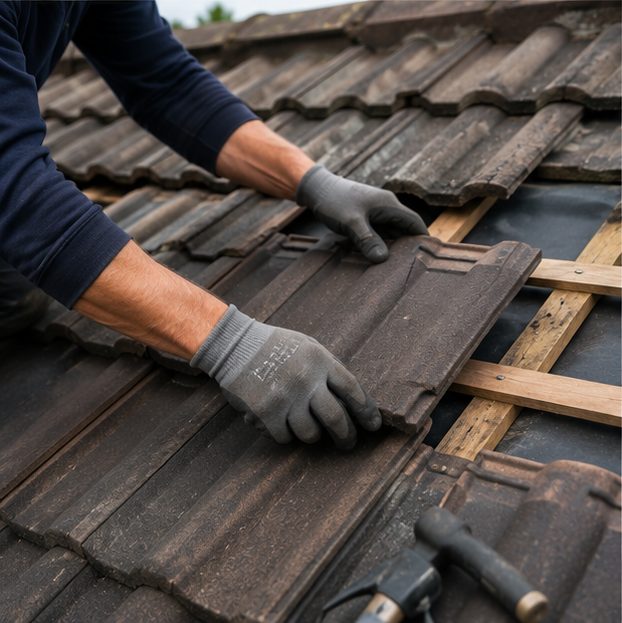
Not just the split. A split is the symptom; the sheet length or the fixing arrangement is the cause, and putting a new piece of the same length back in the same way buys another decade at best.
So a proper renewal uses correctly sized pieces with lapped joints, into a chase raked out properly rather than a sealant bead, wedged and pointed, with clips at the free edge where exposure demands them - which on this coast it does.
And patination oil on new lead, which stops the white carbonate bloom washing down and staining the tiles below. It is cosmetic rather than structural, but leaving it off is a visible sign of a job done in a hurry.