The short version
- Count the patches, not the years
- Three repairs in five years is a covering, not three faults
- Access is a fixed cost and it is paid every single visit
- A repair that buys two years is worth having if replacement is years off
The Number That Actually Decides It
Not the age of the roof. Not what it looks like. How many separate repairs it has needed, and over what period.
One repair, with an identifiable cause - a lifted trim after a gale, a blocked outlet, something dropped on it - is a fault. Fix it and forget about it.
Three repairs in five years, in three different places, with no particular cause each time, is not three faults. It is one covering producing a new one every eighteen months, and the interval is shortening.
That is the whole test, and you can apply it yourself before anybody comes out.
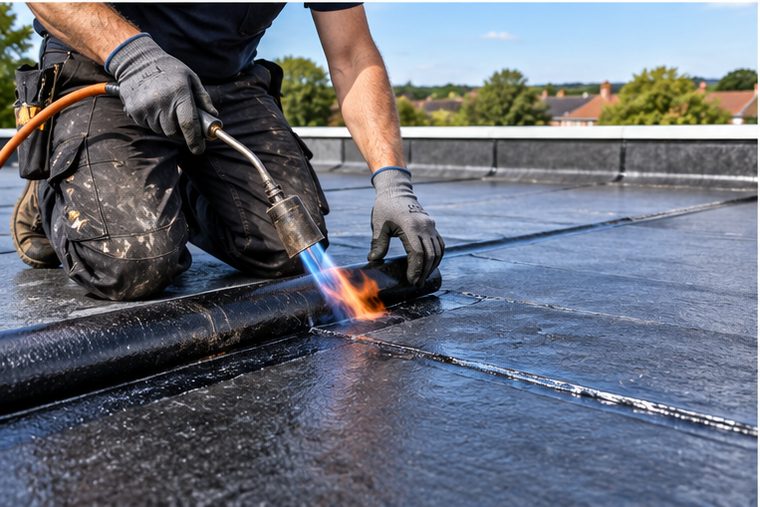
The Cost of Repeating
The reason repeated patching goes bad faster than people expect is that every visit carries the same fixed costs regardless of how small the repair is.
Getting to the roof safely. Getting materials there. Somebody's time in travelling and setting up. On a garage roof reachable from a step ladder that is modest; on a first-floor extension or a dormer needing a tower it is most of the bill.
So four small repairs do not cost four times a small amount. They cost four times the access, plus four small amounts.
Add them up over five years and compare that with a replacement, and the answer frequently surprises people in both directions - sometimes the patching has already cost more, and sometimes it plainly has not and the sensible thing is to keep going.
When Repairing Is Genuinely the Right Answer
When the covering is sound and the fault is a specific component - a trim, an upstand, an outlet, a penetration. Those are the four places flat roofs actually leak, and all four are repairable on a covering with life left in it.
When the deck underneath is dry and solid. This is the one to insist on being told about, because it is invisible from below and it decides everything.
When you are going to be doing other work in the next few years - an extension, a loft conversion, a re-roof - that will change the flat roof anyway. Buying two years cheaply so the flat roof can be done as part of that is sensible sequencing, not procrastination.
And when the money is not there. A patch that buys eighteen months is a legitimate thing to want, provided somebody has told you honestly that it is a patch.
When It Is Not
When the covering itself is crazed, brittle or blistered across the whole area rather than at one point. That is the material at the end of its life and the next patch buys a season.
When the deck is soft. A new covering over a deck that has taken water will not perform, and on the older housing around Ellesmere Port the chipboard decks common in that era do not recover once wet.
When there is already standing water sitting for days after rain. Patching a covering that spends its life submerged is a different proposition from patching one that drains.
And when the same area has been patched twice. A repair that has failed once has usually failed because the covering around it could not hold the patch.
One Local Note
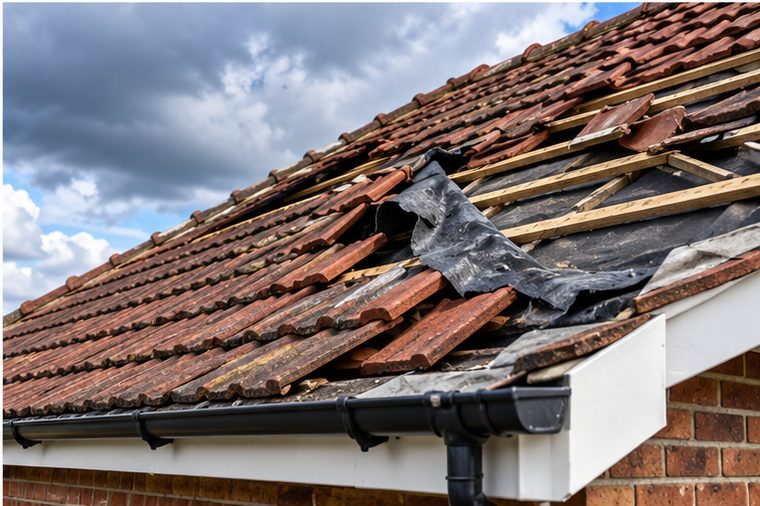
A good proportion of what gets reported as a flat roof leak in this town turns out to be rainwater goods - a blocked or overflowing gutter above an extension, or water getting behind a fascia and running along the top of a wall.
The tell is where the damp is. Flat roof leaks generally show on the ceiling below the flat roof. Drainage problems generally show on a wall, as a vertical damp strip, and generally after prolonged heavy rain rather than after wind.
Worth ruling that in or out before anybody prices a covering, because it is the cheapest possible outcome and it costs nothing to check.