★★★★★
“Excellent work replacing ridge tiles, repointing chimney and repairing flashing. Also fixed other broken tiles. Clean and tidy job. Would definitely recommend.”
NeilIt depends entirely on what was repaired and why it failed. Here are honest expectations by type, and what to ask for instead of a promise on paper.
People asking this are usually asking something else: how do I know this repair is any good?
The honest answer is that the lifespan of a repair depends almost entirely on whether it addressed the cause or the symptom, and you can assess that yourself from what you are told about the diagnosis.
A repair that fixed the actual fault, in the correct material, sized and detailed properly, lasts as long as that component should last. A repair that patched over something without establishing why it failed lasts until the same thing happens again.
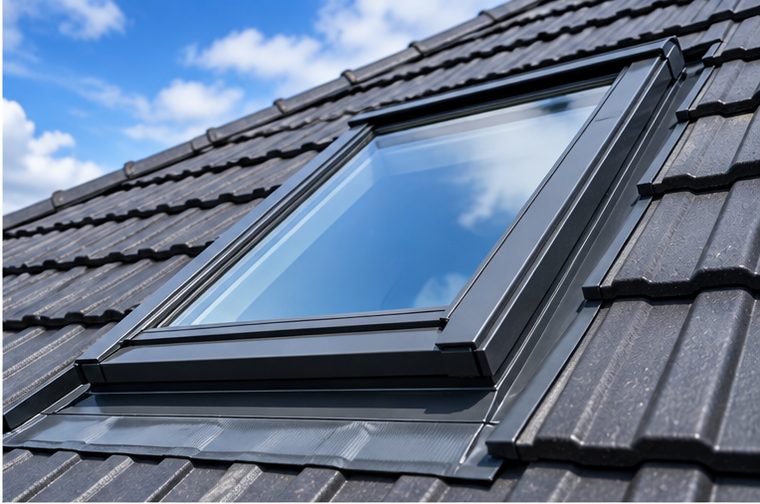
Replaced tiles or slates on a sound roof: as long as the rest of the covering. There is no reason a correctly refixed slate should not outlast you.
Leadwork - flashings, valleys, aprons: decades, if correctly sized with lapped joints and wedged into a proper chase. Lead does not perish. What kills it early is pieces made too long.
Mortar bedding - ridges, verges, flaunching: a decade or two at best, and less on an exposed site. Mortar is rigid against things that move and frost gets into every crack. This is why dry-fixed systems exist.
Repointing a chimney: a couple of decades on a sheltered stack, noticeably less on an exposed one, and less again near the coast where salt accelerates erosion.
Flat roof patches: years if the covering has life in it, months if it does not. Entirely dependent on the state of the material around the patch.
Clearing debris: until it fills up again. A year, near trees.
Sealant over anything: a season. That is not a repair.
Whether the cause was found. The single biggest factor. A leak repaired at the wrong element fails immediately; the same work at the right element lasts.
Whether the failure mode was addressed. Renewing a lead flashing that split because it was too long, with another piece that is too long, gets the same split. Rebedding a ridge that failed from movement, in the same rigid mortar, gets the same failure.
The condition of what is around it. A perfect tile in a bed of soft battens will slip. A perfect patch on brittle felt will crack alongside itself.
Exposure. The same repair on the Parkgate front and two miles inland has two different lifespans, and any roofer who does not adjust the specification for that is going to be back.
Weather at the time it was done. Mortar laid in a frost, adhesive applied to a damp surface, resin cured in the cold - all produce work that fails in a few years rather than a few decades.
We do not publish a promise about how long a repair will last, because such a promise is only as good as the diagnosis behind it, and a piece of paper is easier to produce than a proper inspection. What is worth asking for instead:
What was the cause? A specific answer - "the lead soaker at the third course had slipped" - tells you the repair was aimed at something.
Why did it fail? "It was at the end of its life" and "the piece was made too long" lead to different repairs.
What was found underneath? Battens, boards, fixings. That is what determines whether the repair has something to hold on to.
What did you rule out? Knowing what is sound is as useful as knowing what is not.
Can I have that in writing, with photographs? A written finding is worth more than a promise on paper, because if it does leak again it tells the next person what has already been tried.
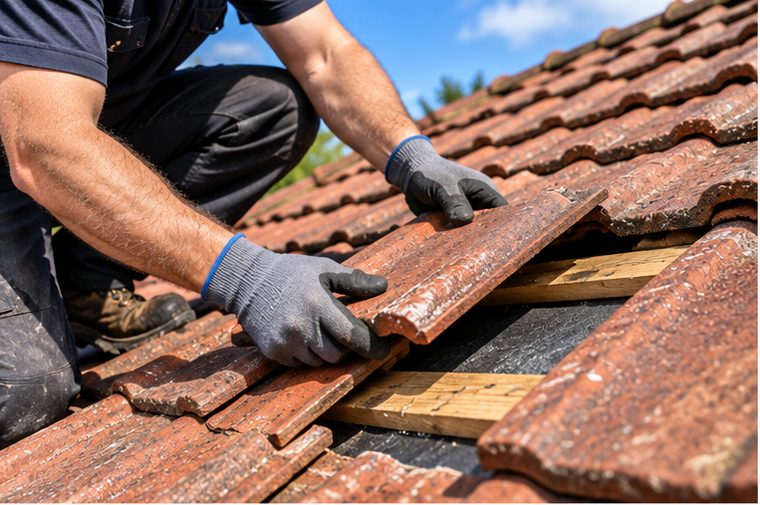
On the older slate roofs common here, there is one more question worth asking after any repair: how many slates has this roof lost, and over what period?
An individual slate refixed properly with a tingle will last. But if the roof is shedding intact slates at an increasing rate, each individual repair is fine and the roof is still going.
That is not a failed repair - it is a covering telling you where it is up to - and the honest conversation is about the slope rather than the slate.
The rest of the series, on the questions people ask most.
Every town has its own page, written around what the roofs there are actually like. Start with the main roof repairs page.
“Excellent work replacing ridge tiles, repointing chimney and repairing flashing. Also fixed other broken tiles. Clean and tidy job. Would definitely recommend.”
Neil“Highly recommend. Very quick and efficient. Great communication. Went above and beyond to work the weekend to complete the work that needed to be done. Very happy with the results.”
Karen Jones“A great team that really looked after us and have continued to support us. I wouldn’t hesitate to use roofline again or recommend them to family and friends. Buddy takes pride in his work and customer service.”
Samantha MerrickDescribe what is happening and roughly where you are, and we will come back to you — usually the same day. If water is coming in now, please call instead.
Prefer to talk? Call 07464 259566 · WhatsApp 0044 7464 259566 · Email Evensbuddy@yahoo.com
We cover Chester, Cheshire, the Wirral and Flintshire from Elton, just north of Chester.
2 Manley View
Elton
Chester
CH2 4QF
Almost all of our work happens at your property rather than here, so please call before travelling.
Monday – Friday — 24hrs — Emergency Call-Outs
Saturday — 8:00 – 19:00
Sunday — 8:00 – 19:00
Weekday emergency call-outs are answered around the clock. Weekend cover is 8:00 to 19:00.