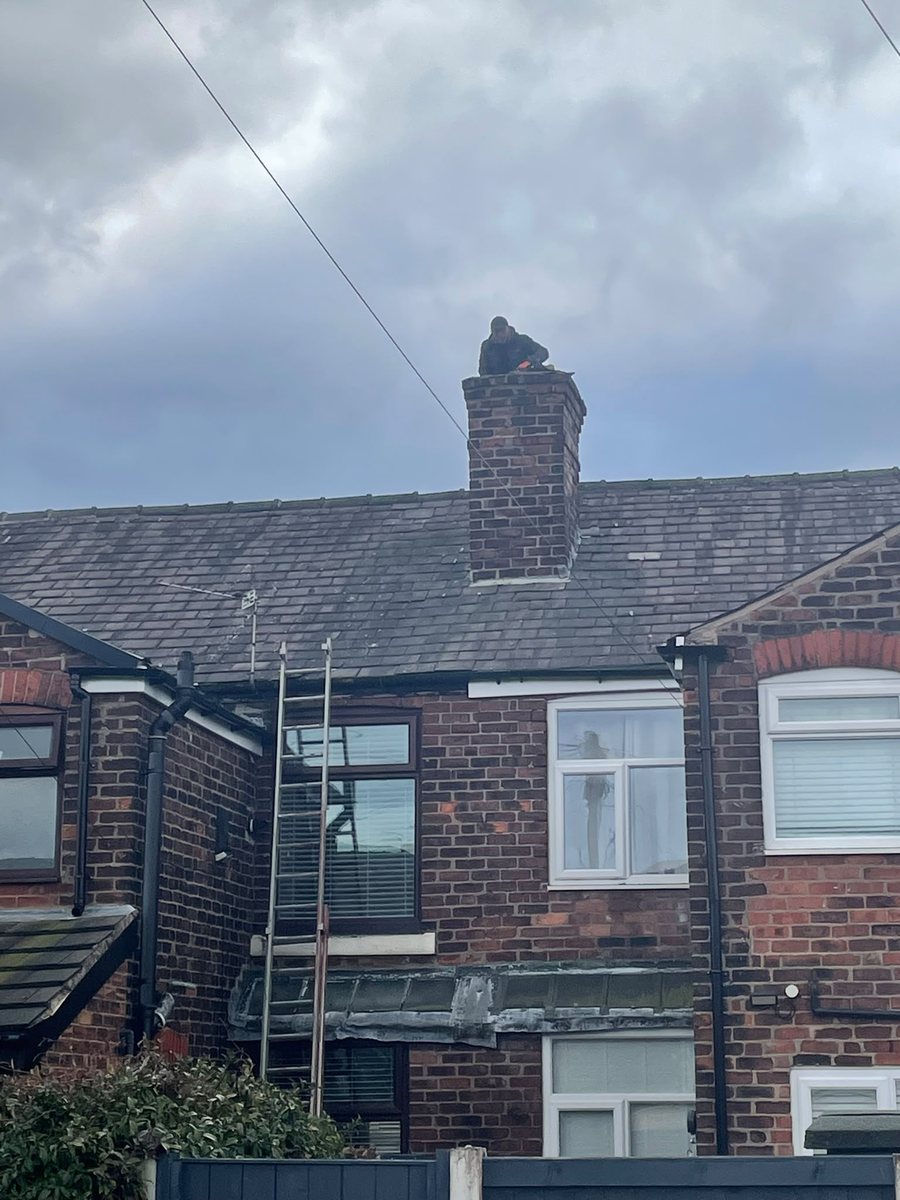
This job was a chimney in Warrington, on a terraced house with a slate roof. The photo shows our roofer up at the top of the brick stack, with a ladder set against the house to get to the roof.
If you have a chimney of your own that needs looking at, our chimney repairs in Warrington page explains what we do, and the main chimney repairs page covers the work in more detail.
A brick stack on a terraced roof
The stack rises from the roof slope in tall brick courses, and at its base you can see the flashing that seals it to the slates. On a terraced house the stack is often shared between neighbouring properties and sits high on the ridge line, so it is exposed to the wind from every side.
The top of the stack takes the weather
In the photo our roofer is working at the very top of the stack, which is the most exposed part of the whole chimney. These are the parts we look at on a brick stack like this one:
- The brick faces and the mortar joints between them
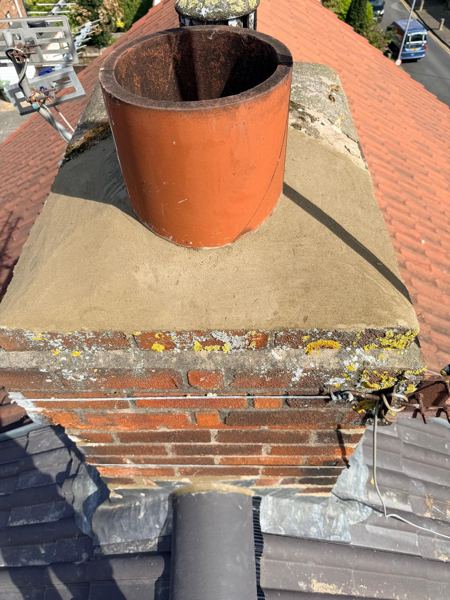
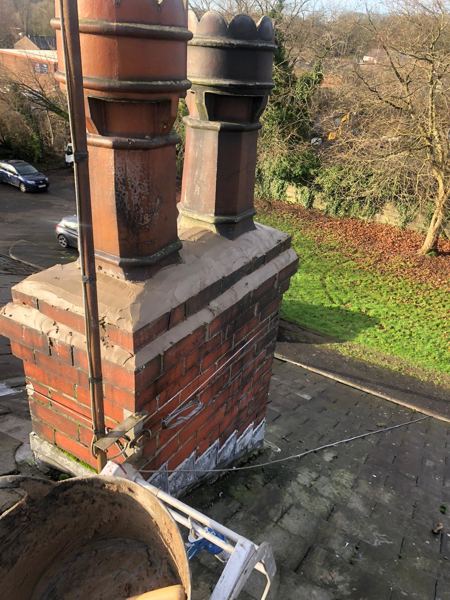
- The mortar cap on top of the stack that holds the pots and sheds the rain
- Any pots or cowls standing on the stack
- The flashing where the stack meets the roof
Getting a chimney looked at
If you can see loose mortar, a leaning stack, or a damp patch on a ceiling near the chimney breast, get in touch with roughly where the property is and what you have noticed. If you are in Warrington or nearby, our chimney repairs in Warrington page has more on the area we cover.
Questions About This Kind of Job
Do you repair chimneys in Warrington?
Yes. Warrington is one of the towns we cover across Cheshire, the Wirral and Deeside. Call, WhatsApp or use the quotation form and tell us roughly where the property is and what you can see.
Which part of a brick chimney wears first?
Usually the top. The upper courses, the mortar joints and the mortar cap that holds the pots take the wind and rain first, long before the lower part of the stack shows any problem.
Why does the flashing at the base of a chimney matter?
It is the seal between the stack and the roof covering. If it lifts or splits, rainwater can run in behind it and reach the ceiling below without anything looking wrong from the ground.