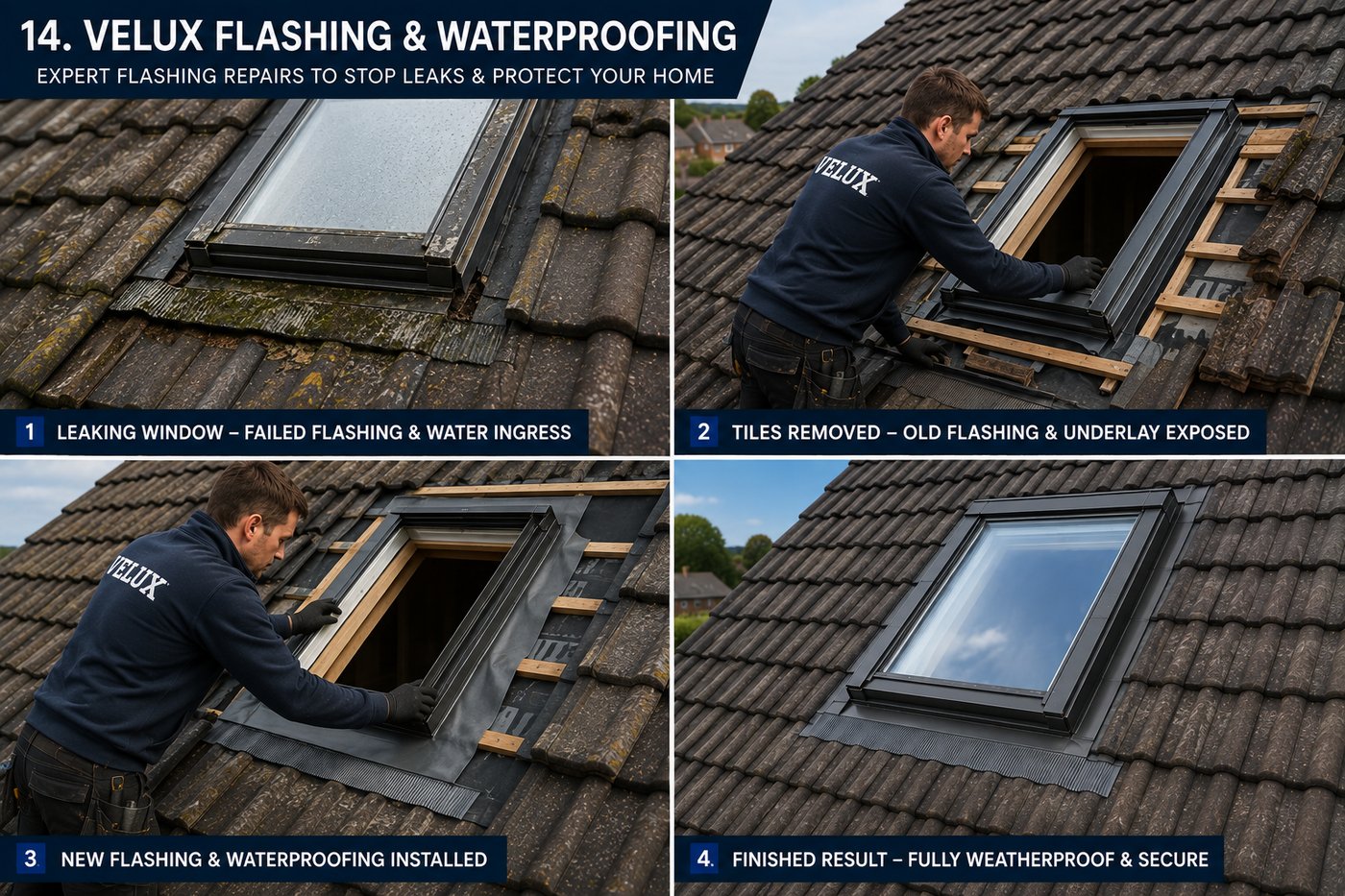
The roof window itself is only part of a successful installation. The flashing system creates the weatherproof connection between the window and surrounding roofing materials. Incorrect, damaged or deteriorated flashing can allow water to enter around an otherwise perfectly serviceable window.
Signs of Flashing Problems
Watch for:
- Damp patches around the window
- Water staining
- Drips during heavy rain
- Damp roof timbers
- Damaged tiles around the window
- Visible deterioration around the flashing
We can inspect the roof window, flashing and surrounding roof covering to determine where water is entering.
Technical Specifications
What the Spec Sheet Says
VELUX makes different flashing systems for different roof coverings, and fitting the wrong one is one of the most common causes of a 'leaking window' that isn't actually the window's fault.
- Separate flashing ranges exist for slate, profiled interlocking tiles, and plain tiles, because each covering sheds water differently around the window opening.
- Combination and replacement flashing kits are also available, for situations where a roof covering has changed since the original installation or several windows are being joined together.
- The flashing — not the window frame — does most of the work of keeping the surrounding roof watertight, so a flashing mismatched to the roof covering can cause leaks even on a perfectly good window.
- We check both the flashing profile and the surrounding tiles or slates when investigating a leak, since damaged roof covering around the window is a common contributing factor.
Figures are typical for the VELUX ranges we install and vary by exact model — we'll confirm the specification that suits your roof at survey.