
After a spell of strong wind and heavy rain, most homeowners in Chester and the Wirral will check their garden and fences before they think about the roof — but a roof is often where the real damage happens, even if it isn't obvious straight away. Storms rarely announce roof damage with a dramatic hole; more often it's a handful of small warning signs that are easy to miss unless you know where to look. Getting into the habit of a quick check after any significant weather event can save a lot of trouble later, since problems caught early are almost always cheaper and simpler to put right.
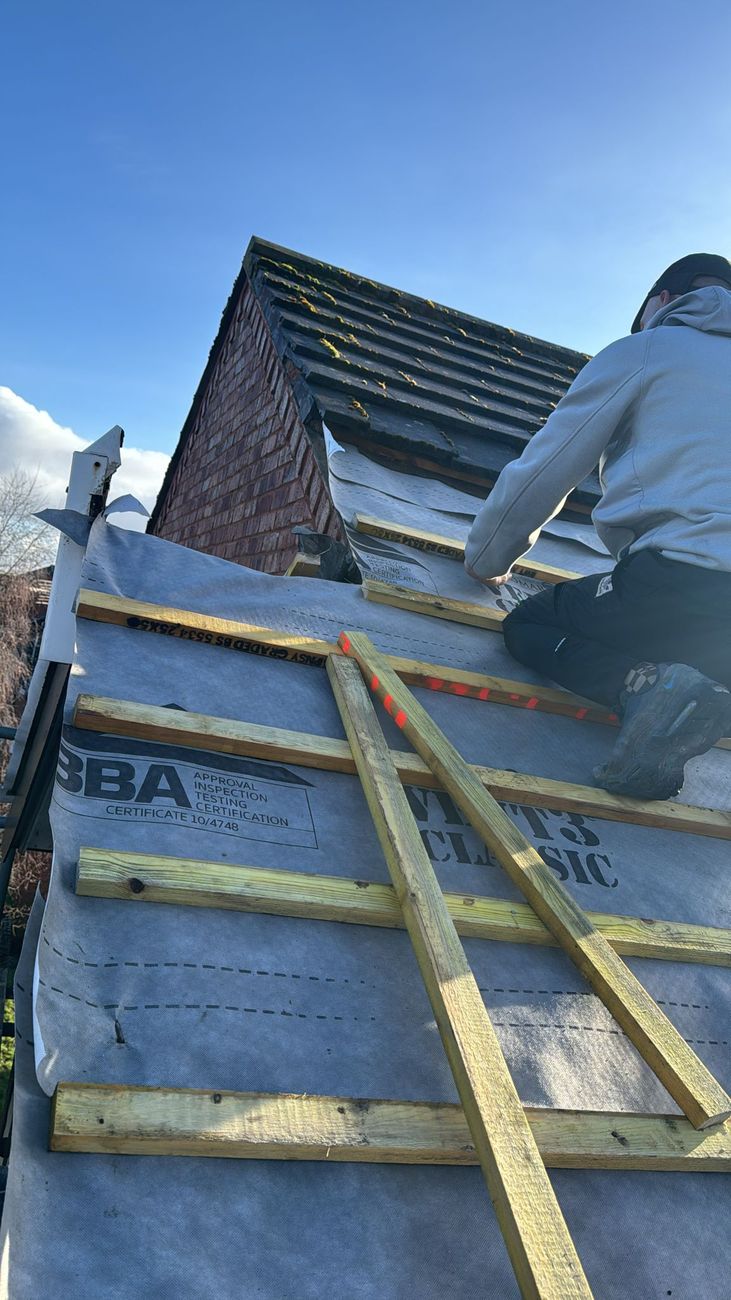
Start at ground level with a visual check from a safe distance, ideally using binoculars rather than a ladder — climbing onto a roof yourself straight after a storm is rarely a good idea. Look across the whole roof slope for tiles or slates that are missing, cracked, or sitting at an odd angle compared to their neighbours. Pay particular attention to the ridge line and hips, where mortar bedding can be shaken loose by wind, and check the roof edges and verges for any gaps that weren't there before. Debris in the garden, such as fragments of tile or slate, is also a useful clue that something has come loose above.
Guttering and downpipes deserve equal attention after heavy rain, since a storm is exactly the sort of event that exposes an existing blockage or a section that's come away from its brackets. Overflowing gutters during rain, water running down the wall rather than into the downpipe, or pooling at the base of the house are all signs worth investigating, since ongoing overflow can lead to damp problems at wall level over time. Downpipes that gurgle or run unevenly can also indicate a partial blockage that's only become apparent under the strain of heavier rainfall.
Inside the house, a torch and a look around the loft can tell you a lot. Check for damp patches on the underside of the roof felt, water staining on rafters, daylight showing through anywhere it shouldn't, or a musty smell that wasn't there before. Ceilings on the top floor are also worth checking for fresh staining, however faint, since this is often the first visible sign that water has been getting in for a while. Even a small, faint mark is worth noting and monitoring, as it can be the first sign of a leak that will otherwise go unnoticed until it's much larger.
In Chester, older roofs with traditional slate or clay tiles can be particularly prone to slipped or cracked tiles after a windy spell, simply because of their age and the way they were originally fixed. On the Wirral, more exposed properties near the coast often see chimney flashing and ridge tiles take the brunt of storm damage, given the additional wind loading those areas experience compared with more sheltered inland streets. Semi-detached and detached homes with larger, steeper roof slopes can also be more exposed than terraced properties, simply because there's more surface area for the wind to catch.
If you spot anything that looks amiss, or you'd simply rather have a professional eye check things over after a bad storm, Roofline Solutions offers storm damage inspections and repairs across Chester and the Wirral, and can usually get out promptly to assess what's needed and carry out any repairs safely.
Get a Free Roofing Quote in Chester & The Wirral
Every roof is different — the fastest way to get an accurate answer is a quick chat with our team.