A roof inspection sounds like a simple job, but a thorough one covers far more than a quick glance from the pavement. Homeowners in Chester and the Wirral usually ask for an inspection after a storm, before buying or selling a property, or simply because a roof hasn't been looked at in several years. Whatever the reason, a proper inspection is really a health check for the whole roof structure, not just the bits you can see from the ground, and it's worth understanding what a competent roofer is actually looking for before you book one in.
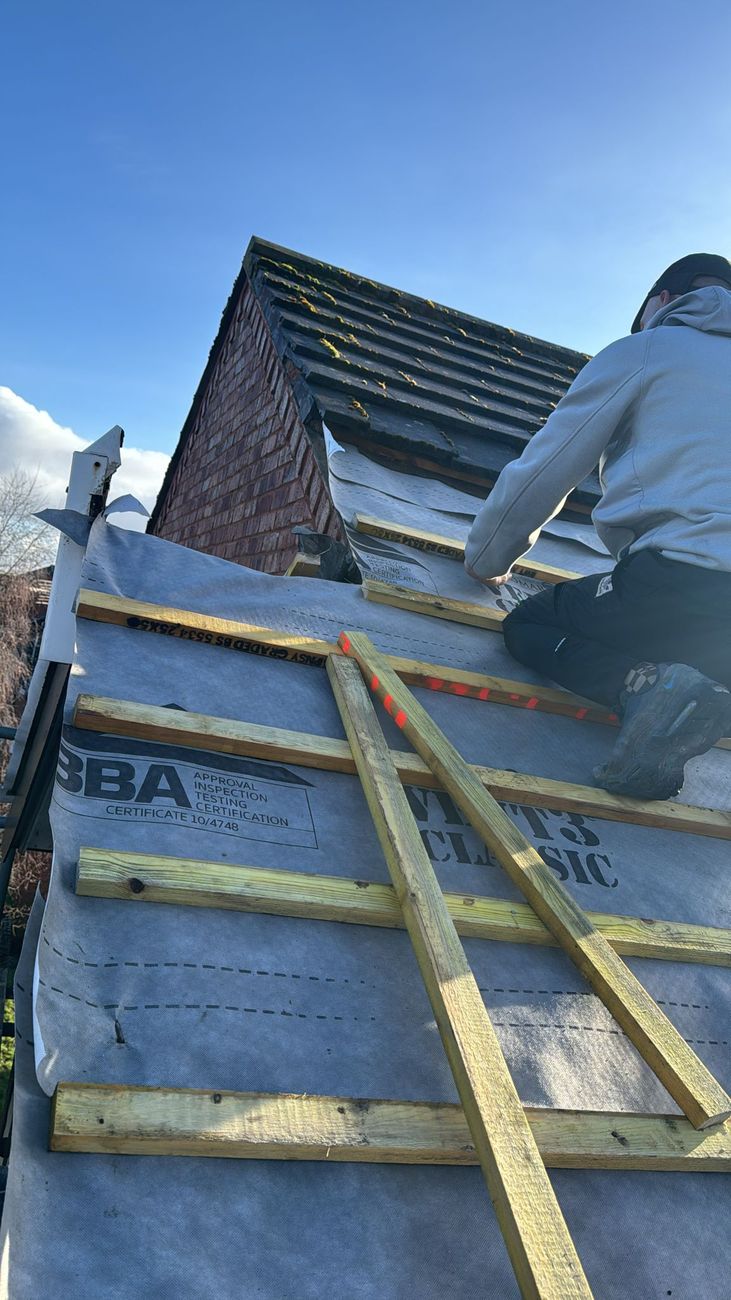
The starting point is almost always the roof covering itself — tiles, slates or sheet materials, depending on the property. A roofer will check for cracked, slipped or missing tiles, worn or lifting slates, and any signs that fixings have failed. On older Chester terraces this often means checking whether nails have corroded and tiles are only being held in place by their neighbours, which can look fine until one gust of wind proves otherwise. Ridge tiles and hip tiles get particular attention too, since the mortar bedding them in is one of the first things to crack and let water in, and once that mortar starts to go, tiles either side can work loose surprisingly quickly.
Flashing is another key area, especially around chimneys, dormer windows and where a roof meets a wall or another roof plane. Lead flashing can lift, corrode or simply come away from its fixings over time, and it's a very common source of leaks that otherwise looks like a mystery from inside the house, since the water often enters at the flashing but tracks along a rafter before it shows up on a ceiling some distance away. A good inspection will also cover valleys, where two roof slopes meet, as these channel a lot of water and tend to show wear well before the rest of the roof does. Skylights and roof windows, where fitted, are checked in a similar way for perished seals around their edges.
Guttering, fascias and soffits are usually assessed at the same time, since they're closely tied to how well a roof sheds water. Sagging or blocked gutters, cracked UPVC fascias and soffits with signs of rot or insect damage all point to water not being carried away properly, which can lead to damp creeping into the roofline itself. On coastal parts of the Wirral, salt-laden wind can accelerate wear on these fittings, so a roofer will often look more closely at fixings and sealant joints on exposed elevations, checking for corrosion that wouldn't necessarily appear on a similar property further inland.
Where access allows, the inspection continues inside the loft. This is where a lot of genuinely useful information comes from — daylight showing through the roof deck, damp staining on timbers, sagging rafters, compressed or displaced insulation, and signs of condensation or poor ventilation. Timber condition matters just as much as what's happening outside, since a roof covering can look reasonable while the structure underneath is quietly deteriorating. A roofer will also note the general age and type of construction, as this affects how the rest of the findings should be interpreted.
Once all of this has been checked, a professional roofer should be able to give a clear picture of the roof's overall condition, flag anything urgent, and advise on what can reasonably wait until a later date. At Roofline Solutions, our inspections are carried out with exactly this level of detail, whether it's a routine check across Chester and the Wirral or a closer look after a spell of bad weather. If it's been a while since your roof was properly assessed, or you've noticed something that doesn't look quite right, getting a professional opinion sooner rather than later is generally the more cost-effective route in the long run.
Get a Free Roofing Quote in Chester & The Wirral
Every roof is different — the fastest way to get an accurate answer is a quick chat with our team.