
Roof damage rarely announces itself with a dramatic event. Far more often it builds up quietly over months or even years, which is exactly why so many homeowners in Chester and the Wirral end up dealing with a bigger repair bill than they needed to, simply because the early signs went unnoticed. Learning to recognise those early warning signs is one of the most useful things a homeowner can do to protect both their property and their budget.
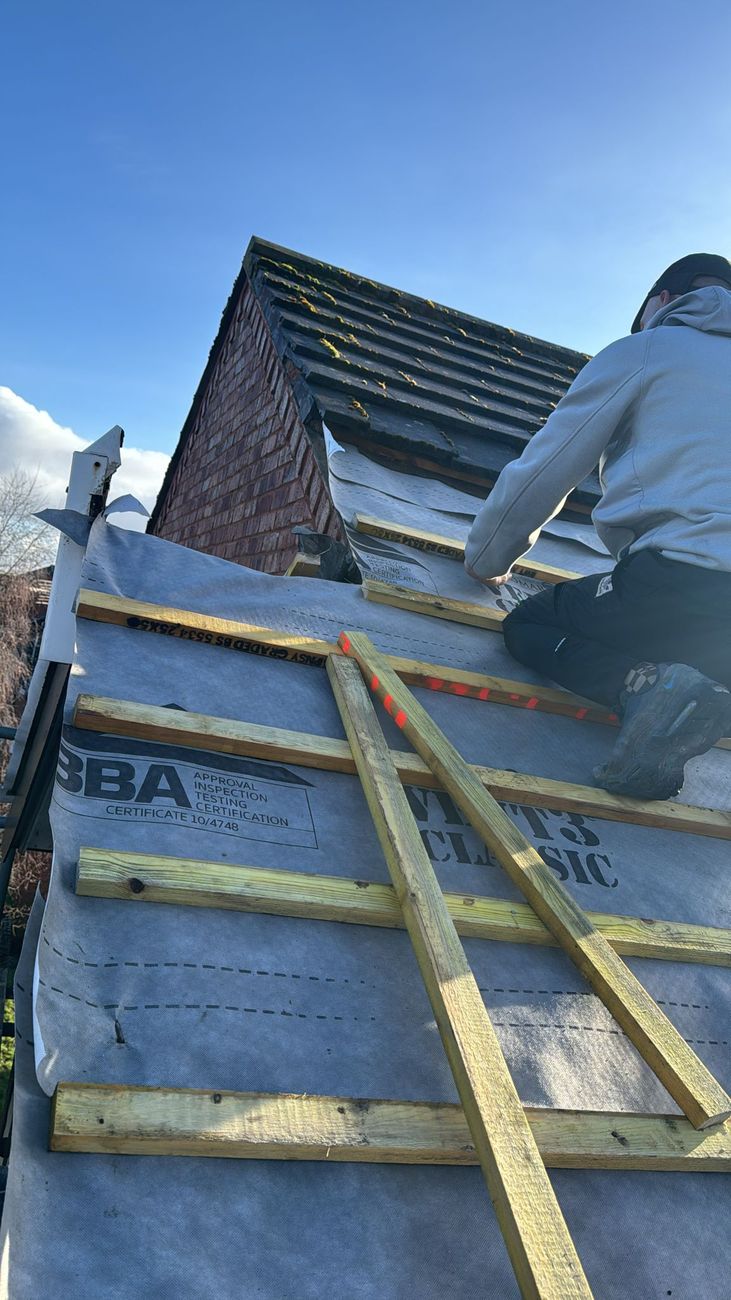
Start with what you can see from ground level. A pair of binoculars or a quick walk around the outside of the property can reveal tiles that are cracked, slipped out of alignment or missing altogether. Look too at the ridge line for any tiles that appear to be sitting unevenly, and check chimney stacks for cracked pointing or flashing that has visibly lifted away from the brickwork. On older Chester properties in particular, these small movements are often the first sign that fixings have deteriorated with age.
Inside the house, the loft space tells you a lot more than most people realise. Daylight visible through the roof timbers, damp or discoloured patches on the underside of the felt, and any musty smell are all signs that water is finding its way in somewhere. Even without an active leak, black mould spots on timber or insulation point to a ventilation or moisture problem that's worth addressing before it affects the structural timbers. Ceiling stains in upstairs rooms, especially ones that appear or grow after heavy rain, are one of the clearest indicators that a repair is overdue rather than optional.
Guttering can also give useful clues about roof condition. Granules from asphalt-style felt or coating washing into the gutters, sagging sections pulling away from the fascia, or water overflowing during rainfall all suggest the roof drainage system needs attention, and sometimes that overflow is actually being caused by a blockage or damage higher up on the roof itself. On the Wirral, where coastal winds and driving rain are more frequent, it's also worth checking after any period of stormy weather for tiles that may have shifted, since salt air can accelerate the corrosion of fixings over time.
A good general rule is that if a problem is visible from the ground, noticeable in the loft, or has already caused a mark on a ceiling, it has likely been developing for a while and shouldn't be left any longer. Minor repairs caught early are almost always cheaper and less disruptive than the timber replacement or internal redecoration needed once water has been getting in for months. It also helps to know the difference between something cosmetic and something structural, even as a non-expert. A light dusting of moss or a single hairline crack in a fascia board is rarely urgent, but a tile that has slipped completely out of place, a sagging section of roofline, or timber that feels soft or spongy to the touch are all signs that the problem has moved beyond routine maintenance. Seasonal changes are worth watching too — a roof that seemed fine in summer can reveal weaknesses once autumn winds and winter rain put it under real pressure, so it's worth doing a visual check after the first serious storm of the season, particularly if your property is on the more exposed side of the Wirral.
If you've spotted any of these signs, or you simply want peace of mind, it's worth having a qualified roofer take a proper look rather than waiting to see if it gets worse. Roofline Solutions covers Chester and the Wirral and can carry out a thorough inspection to identify exactly what's going on and what needs doing about it.
Get a Free Roofing Quote in Chester & The Wirral
Every roof is different — the fastest way to get an accurate answer is a quick chat with our team.